Autumn Allergy Medicine Cabinet Checklist
Autumn allergy season is back and your drawer is a mess again. See how to check expiry dates and organize your home medicine cabinet for indoor allergens.
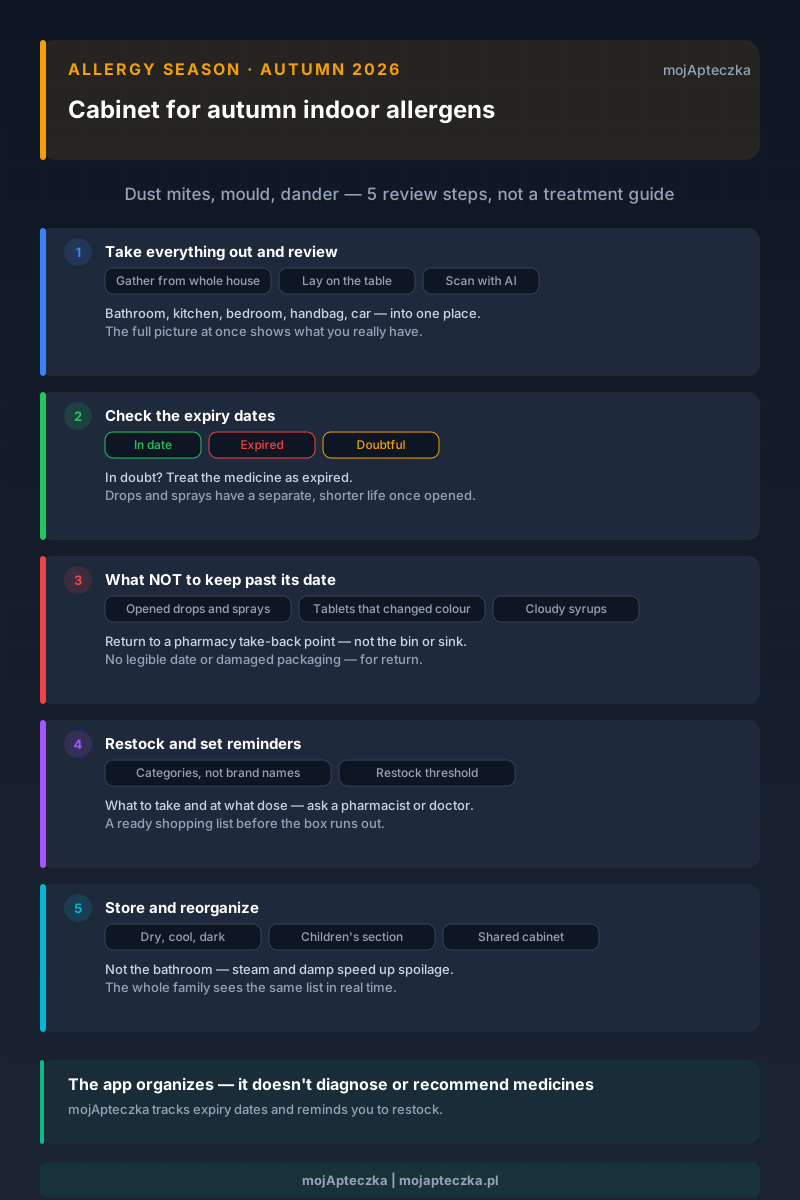
The first cold evening. You switch the heating on for the first time since spring, and an hour later someone at home starts sneezing, with a runny nose and itchy eyes. You reach into the drawer of medicines — and it begins all over again, just like every year. Three half-used boxes, one with no date, some drops you don’t remember, and a firm belief that there was one more spray somewhere, only nobody knows where.
For many families, autumn means allergy symptoms returning. Not because of pollen — the main outdoor seasons are behind us — but because of the allergens that circulate indoors at this time of year. So this is a good moment to do one proper review of the home medicine cabinet, rather than hunt for medicines through the drawers mid-sneeze. This article is not about treating allergies. It is about organizing the cabinet for the autumn season: what to review, what to throw out, what to restock and how to set reminders, so the next cold evening doesn’t start in chaos.
This isn’t pollen season — it’s indoor allergens
If you’re looking for information about spring pollen and what to have at home for it, we have a separate piece: spring allergies and what’s worth keeping at home. Here we deal with something else — autumn indoor allergens and organizing the cabinet for that period.
In autumn it isn’t so much the pollen calendar that changes as the way we live. We spend more time in closed rooms, air them out less, and the heating lifts back into the air everything that settled over summer. Three groups of allergens usually sit in the background:
- House dust mites — microscopic organisms living in bedding, carpets, upholstery and curtains. Their numbers rise in autumn and winter, because a warm, less-aired home is ideal for them.
- Mould — mould spores thrive on moisture. After a rainy autumn, in the bathroom, kitchen or by poorly insulated windows, their concentration can climb noticeably.
- Pet hair and dander — when a dog or cat spends more time indoors instead of in the yard, animal allergens build up faster.
For someone with an allergy, the effect can resemble spring hay fever: a watery nose, sneezing in bursts, itchy eyes, a blocked nose. What changes is the source — and since the source is different, it’s worth checking afresh whether the cabinet is ready for this season.
One important caveat right at the start: diagnosing an allergy, establishing what exactly you react to, and choosing treatment are jobs for a doctor and pharmacist, not for an app or an article online. Below we talk solely about organizing the cabinet.
Step 1: Take everything out and review it
The worst moment to check your cabinet is the one when you actually need a medicine. In a rush, with a sneezing child, nobody reads the small print of expiry dates. So do the review ahead of time — ideally before symptoms appear.
Start by taking everything out. Don’t peer into the drawer and shuffle boxes around — that doesn’t work; something always slips through. Gather medicines from every spot in the house: the bathroom, the kitchen, the bedroom, a handbag, the car. Lay them out on the table so you can see the whole picture at once.
Even this one step can be revealing. Most people are surprised by how much has piled up: two half-used nasal sprays, eye drops opened a year ago, a pack of antihistamine tablets everyone had forgotten. The point of the autumn review isn’t to buy everything from scratch, but to see what you actually have.
If you want to turn this into a lasting list rather than a one-off pile of boxes on the table, you can scan the packages at this stage. AI recognition in mojApteczka lets you photograph a box with your phone camera — the app reads the name, dose, form and expiry date and saves them to a digital list. Instead of copying data by hand from each box, you take a photo and move on to the next.
Step 2: Check the expiry dates on last year’s leftovers
This is the heart of the autumn review. Allergy medicines are often seasonal — bought for the previous flare-up, used for a few weeks, then put away “for later”. That “later” has now arrived, except a whole year has passed.
Pick up each box and sort the medicines into three groups:
- Readable future date — also check the storage conditions and the post-opening period described in the leaflet.
- Past the expiry date — set it aside and follow the leaflet and local medicine-collection rules.
- Doubtful — you can’t see the date, the packaging is damaged, the medicine was opened long ago or has changed appearance. Set it aside and ask a pharmacist what to do next.
With allergy medicines, pay particular attention to products that have a separate shelf life once opened. Eye drops, nasal drops and sprays, and saline solution typically have a shorter use-by period after opening than the date stamped on the box — you’ll find the exact number of days or months in the leaflet. If the package was opened last season and you do not remember the opening date, set it aside for a leaflet check or a conversation with a pharmacist.
This is exactly the moment that’s easiest to miss without a system. If your medicines are on a digital list, expiry alerts do this work for you all year round. Each medicine is colour-coded: green means in date, amber means expiring within 30 days, red means expired. You open the app and see the state of the cabinet at a glance, no flashlight or squinting at small print. The app also sends a notification before a medicine expires — so you won’t discover at the peak of the season that your only box is fit for the bin.
Step 3: What NOT to keep past its date
An expired medicine isn’t just wasted space in a drawer — it is a signal to check the leaflet, local disposal rules or ask a pharmacist. In an allergy sufferer’s cabinet, the items that most often need separate checking are:
- Eye and nose drops and sprays opened in the previous season — check the period after opening in the leaflet.
- Tablets that have changed colour — yellowing, dark spots or crumbling are a reason to set the package aside and check it.
- Cloudy or separated syrups — sediment, a change in consistency or an odd smell are worth discussing with a pharmacist.
- Anything without a legible date or in damaged packaging — a cracked blister or broken seal is a reason not to guess and to check how to proceed safely.
Don’t put medicines for return in the ordinary bin or flush them down the toilet. The active substances then reach the environment and burden water-treatment systems. Return them to a medicine take-back point — most often found at a pharmacy. We cover how to do this properly in a separate piece: what to do with expired medicines.
Step 4: What’s worth having on hand — in general
Once you’re left only with medicines that are in date and in good condition, you’ll see what’s missing. Here we deliberately stay at the level of broad categories — because choosing a specific product, dose and form is a conversation with a pharmacist or doctor, not a decision made on the basis of an article. Your cabinet for the autumn allergy season usually covers a few groups:
- General over-the-counter antihistamine products — the foundation of many allergy sufferers’ home cabinets. Ask at the pharmacy which one is right for you.
- Nasal products — saline solution for rinsing and, if you use them, nasal sprays chosen earlier with a pharmacist or doctor.
- Moisturizing and soothing eye drops — if you are considering such a product, check the leaflet and ask a pharmacist whether it suits your situation.
- Soothing skin products — if you react with itching or a rash after contact with an allergen.
- Children’s versions — if there’s an allergic child at home, you need separate products in the right forms (syrups, drops). Whether a given medicine is suitable for a child is something to check on the leaflet and with a paediatrician, never by guesswork.
Notice that nowhere here do we say “what to take” or in what dose. That’s deliberate. A medicine cabinet is a store — keeping order in it is our job. What you actually use from that store, and when, you decide with a pharmacist, a doctor or the leaflet that comes with the medicine.
If you want to quickly check which of these categories you already have at home, search by indication in mojApteczka lets you type a term and see which medicines in your cabinet match it. Instead of stocking up on something already sitting in a drawer, you first check what’s genuinely missing.
Step 5: Set restock reminders
The most frustrating scenario in allergy season isn’t running out of a medicine entirely — it’s finding the empty box exactly when it’s needed. Friday evening, the pharmacy closed until Monday, and two tablets left in the box because nobody checked the stock.
Here it helps to turn a one-off review into a system that works all year. In mojApteczka you set a restock threshold for each medicine — when stock drops below that value, the item moves to your low-stock shopping list. You then walk into the pharmacy with a ready, up-to-date list on your phone, instead of trying to remember on the way what was missing.
If someone in the family uses seasonal medicines regularly, reminders can also help — you set specific days and times, and confirm a dose was taken with one tap. The confirmation automatically lowers the stock count, so the two mechanisms link into one: the app knows not only when a medicine was used, but how many are left in the box. This is pure organization — the app recommends nothing, it just keeps track of the numbers you set yourself.
Step 6: Store and reorganize for the new season
Once you have a full set of in-date, checked medicines, arrange them so that next time you don’t start by digging through the drawer.
Store in the right conditions. Most medicines like a dry, cool, dark place — which means not the bathroom, where steam and damp speed up spoilage. A cabinet in the bedroom or hallway works better. Keep medicines that need the fridge separately, in a closed container, away from food and labelled so nobody throws them out. You’ll find the storage details on the box and in the leaflet — we’ve gathered more practical rules in our piece on how to store medicines at home.
Sort into categories and set aside a children’s section. Allergy medicines in one place, cold remedies in another, dressings separately. If you have room, clearly label the shelf with children’s medicines so nobody confuses the doses.
Set apart what’s used most often. In season you reach for allergy products in a hurry — keep them at the front, not behind a stack of boxes.
If the allergy affects several people at home, and whoever buys and gives the medicines isn’t the one who later looks for them, it helps to share a single view of what’s in the cabinet. A shared family cabinet lets several people see the same list in real time — a parent, partner or carer can check stock and dates without phoning each other to ask “do we still have that spray”. This is especially handy for parents when the symptoms affect a child and one or other adult gives the medicine.
What mojApteczka does NOT do
It’s worth saying this plainly, because that’s what an honest approach means. mojApteczka does not diagnose allergies and won’t tell you what you react to. It does not recommend specific medicines or doses and won’t tell you “what to take”. It does not replace a pharmacist, a doctor or the leaflet — those are the source of information about treatment.
What the app does is narrower and concrete: it helps you organize what you already have, keeps track of expiry dates, reminds you to restock, and lets you share the list with family. Medicine data comes from Poland’s National Register of Medicinal Products, and basic interactions are checked against the DDInter 2.0 database — this is organizational support, not a medical decision-making system. We hold the line between “organize” and “treat” deliberately, because crossing it would be a promise no app should make.
An autumn reset that pays off all year
An autumn cabinet review is ten to twenty minutes of work once a year that saves a lot of nerves later. You take everything out, check the dates, return the expired, top up the gaps in the general categories and arrange the rest so it can be found. And if you scan your medicines into mojApteczka along the way, you’ll start the next season not with chaos in a drawer but with a single glance at your phone. The Android app is available on Google Play.
Because the autumn evening with the heating on and the first sneeze is coming either way. The only question is whether it finds you with a cabinet where you know what you have — or with a drawer full of mysteries.
Disclaimer: This article is for information and organization only. It is not medical advice and does not replace a consultation with a doctor or pharmacist. For choosing and using allergy medicines, ask a pharmacist or doctor and read the leaflet that comes with the medicine. In the case of a severe allergic reaction (anaphylaxis) — call your local emergency number (112 in the EU).
Questions about organizing your home medicine cabinet? Write to us: kontakt@mojapteczka.pl
Frequently asked questions
- How do I check whether last year's antihistamine is still in date?
- Pick up the box and find the expiry date — usually on the back of the carton or printed on the blister, marked EXP or “Use by”. If the date has passed or you can't read it clearly, set the medicine aside and check the leaflet or ask a pharmacist. In the mojApteczka app you scan the box once, and the app then reminds you as the date approaches.
- What should I do with old eye or nose drops after the season?
- Drops and sprays have a separate shelf life once opened — usually shorter than the date on the box and stated in the leaflet. Check the leaflet for the period after opening, and if you do not remember when you opened it, ask a pharmacist what to do. Do not throw them in the bin or down the sink — use a medicine take-back point.
- How do I avoid forgetting to restock the cabinet before the season?
- Set a restock threshold for each medicine you use seasonally. In mojApteczka, when stock drops below the threshold, the item moves to your shopping list — so you have a ready list for the pharmacy before the box runs out completely.
- Where do I check what I actually need for my allergy?
- Choosing specific products is a conversation with a pharmacist or doctor, not a job for an app. Ask at the pharmacy, read the leaflet that comes with the medicine, and book an allergist if symptoms are severe. mojApteczka helps you organize what you already have — it does not replace advice.
- How do autumn allergens differ from spring pollen?
- Spring is dominated by outdoor plant pollen. In autumn, as we spend more time indoors and the heating goes on, indoor allergens take over — dust mites, mould and pet dander. That shifts which items are worth having on hand, which is why a separate cabinet review makes sense.
- Do I have to throw out all of last year's allergy medicines?
- Do not judge them only by the fact that they are from last year. Check the expiry date, storage conditions and the period after opening in the leaflet, and ask a pharmacist if anything is unclear. After that review, you will see what is missing from the cabinet.