"Can I…?" Where to check medicine info fast
It's 10 p.m. and you don't know if you can mix two drugs, take one with alcohol or drive. Here's where to find a reliable answer to any "can I" question.
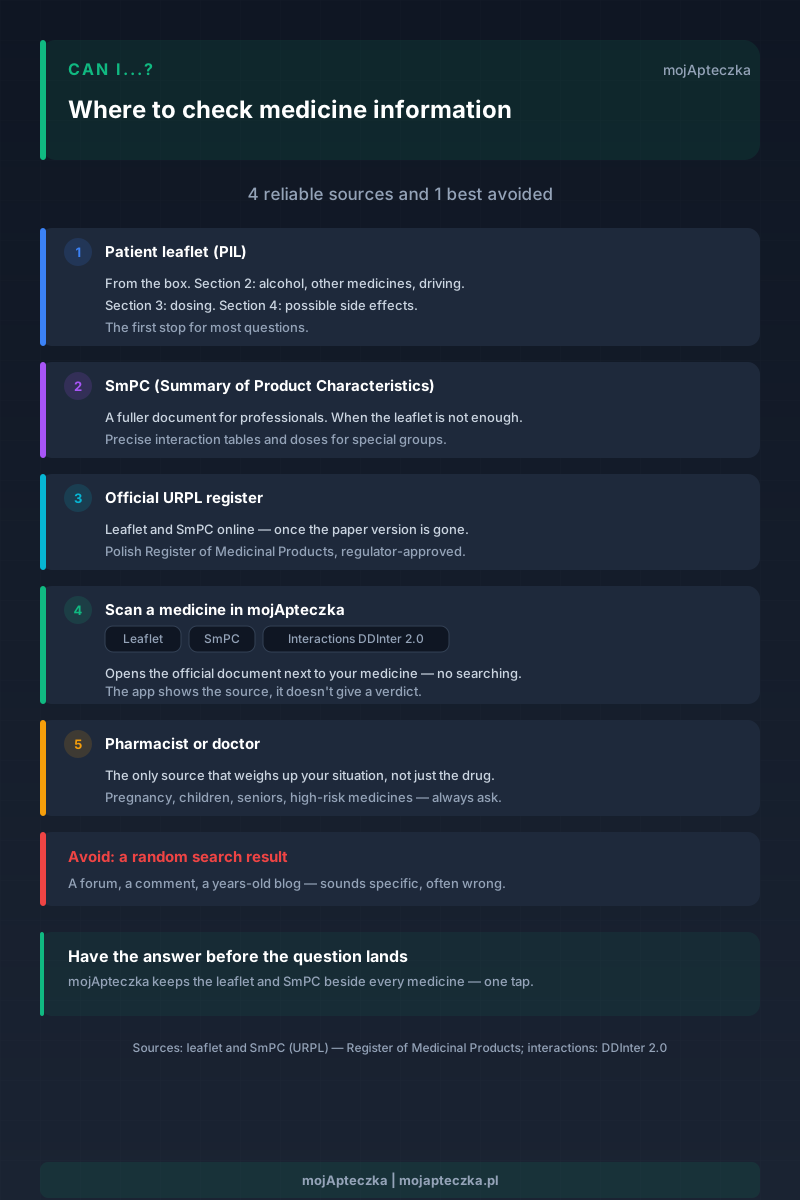
It’s 10:14 p.m. The kids are asleep, you’ve got a headache tablet in one hand and your phone in the other. And one question won’t let go: “can I take this after a glass of wine?” Or: “can I combine it with the blood-pressure pill I take every morning?” The pharmacy is shut, the clinic stopped answering hours ago, and the search engine spits out four different answers from four different forums.
This is the moment when what matters most isn’t the answer itself, but where to reach for it. Because a reliable source exists, it’s free, and it’s usually closer than you think. This guide won’t answer any “can I…?” for you — most of those questions hinge on your individual situation, which a doctor or pharmacist knows. What it will show you is where and how to find trustworthy information in a couple of minutes, instead of wandering through search results.
Four places to look — and one to avoid
Start with the map. When you ask yourself “can I…?”, you have four solid sources at hand and one that only looks like one.
- The patient leaflet (PIL) — the slip from the box, written in reasonably plain language. The first stop for most questions.
- The SmPC (Summary of Product Characteristics) — a fuller, official document for professionals. You reach for it when the leaflet isn’t enough.
- The official medicines register — where the leaflet and SmPC live online, even after you’ve long since binned the paper version.
- A pharmacist or doctor — the only source that weighs up your situation, not just the medicine.
And the source that only looks like one? A random search result: a forum, a comment, a blog from five years ago. It sounds specific, it can be persuasive, and it can be wrong on exactly the things where a mistake costs the most. The rest of this article is a manual for using those four reliable sources — and for keeping them to hand before it’s 10 p.m. again.
The leaflet — your first stop (and where to find what)
The leaflet looks like a chaos of tiny print, but it has a fixed, numbered structure. Once you know which section holds what, you find your answer in a dozen seconds. Here’s the map of specific “can I…?” questions.
- “Can I take it with alcohol / food / milk / grapefruit?” → section 2, subsection “Taking this medicine with food, drink and alcohol”.
- “Can I combine it with another medicine?” → section 2, subsection “Other medicines and this one”.
- “Can I drive / operate machinery?” → section 2, subsection “Driving and using machines”.
- “How much can I take, and what about a missed dose?” → section 3, “How to take this medicine”.
- “Is it normal that…?” (a symptom after the medicine) → section 4, “Possible side effects”.
The key rule: the leaflet gives you information, but it won’t make the final call for you, because it doesn’t know your other medicines, your conditions, or your child’s age. Treat it like an instruction manual — it tells you what to watch for, not “yes, you can”. If you want to learn to read a leaflet section by section, we have a separate, detailed guide to the leaflet and SmPC.
The SmPC — when the leaflet isn’t enough
Sometimes the leaflet answers too vaguely. “Caution is advised in patients with kidney disease” — but how much caution, and at what degree? That’s when you reach for the SmPC, the Summary of Product Characteristics. It’s the same medicine, but described in the language of doctors and pharmacists: with precise interaction tables, data for special groups, and exact dose ranges.
The SmPC isn’t included in the box, but it is publicly available. The simplest way to reach it is through the official Polish medicines register kept by URPL (the Office for Registration of Medicinal Products). Centrally authorized products go through the EMA and European Commission procedure, so it is safer to speak about official regulatory sources rather than one approval path for every medicine. The SmPC gives more context, but it has the same limit as the leaflet: it describes the medicine in general, not you in particular. If you’re after the interactions section, we’ve separately covered how to read interaction warnings in both documents.
Scanning a medicine in mojApteczka — leaflet and SmPC without digging through boxes
The biggest problem with leaflets is a banal one: you lose them. You bin the box along with the slip, and two weeks later you need to check something — and the drawer-rummaging or the typing-the-name-into-a-search-engine-and-guessing-which-result-is-right begins.
mojApteczka takes that step off your hands. When you add a medicine to your kit — by hand or by photographing the box with medicine scanning — the app links it to the official documents. On the medicine card, “Leaflet” and “SmPC” buttons appear (access to leaflets and SmPC), leading straight to the same official sources we describe above. You don’t retype the name, you don’t filter results, and you don’t risk opening a different strength or a different product with a similar name. You open exactly what you have at home.
What matters: the app shows you the document, not its own answer. It won’t say “yes, you can after wine” — it shows the official leaflet so you can check there yourself. That’s deliberate. mojApteczka is an organising tool, not a medical adviser. Part of that documentation (the SmPC docs with nine clinical sections) even works offline — handy when a “can I…?” catches you at a cottage or on a plane with no signal.
Quick cheat-sheet: “Can I…?” and where to check it
When the question is burning at 10 p.m., you don’t want paragraphs — you want one line that says where to look. Here are the most common “can I…?” questions in a table. None of them gives a “yes”/“no” — each points to the place where you’ll find that answer.
| Question | Where to check |
|---|---|
| Can I take it with alcohol? | Leaflet, section 2 “Taking this medicine with food, drink and alcohol” |
| Can I take it with another medicine? | Leaflet, section 2 “Other medicines and this one” + interaction checker |
| Can I take it with a supplement or herbs? | Leaflet, “Other medicines” section — enter the supplement in the checker too |
| Can I drive? | Leaflet “Driving and using machines” |
| Can I give it to a child? | Leaflet, section 3 “How to take it” — and a pharmacist if in doubt |
| Can I take it in pregnancy or breastfeeding? | Leaflet/SmPC suggests the questions — make the decision with a doctor |
| Can I take it on an empty stomach or after food? | Leaflet, section 2 “Taking this medicine with food and drink” |
| What’s the maximum I can take? | Leaflet, section 3 “How to take this medicine” (maximum dose) |
| Can I skip a dose? | Leaflet, section 3, the note on a missed dose |
| Is this effect normal? | Leaflet, section 4 “Possible side effects” |
Each of these documents — the leaflet and the SmPC — sits next to the relevant medicine in your mojApteczka kit, so you don’t waste time working out which version to open. You still read the source; the app simply takes the searching off your hands. And when the question is about a child, a pregnancy or a high-risk medicine, the table points to the same thing as this whole article: check what the leaflet says, and call a pharmacist.
”Can I combine two medicines?” — the most common evening question
This one deserves its own paragraph, because it comes up most often and is the easiest to get wrong. The doctor prescribed something new, you’re already taking two other preparations and a supplement — and nobody has pieced it all together.
The first step never changes: read the “Other medicines and this one” subsection in every leaflet. The second step lets you speed that review up. On the mojApteczka site there’s a public interaction checker — you enter the medicine names, and the tool shows which pairs have a known interaction and how serious it is, based on the open scientific database DDInter 2.0. It needs no account and no login.
And here’s the key caveat, so you don’t mistake the tool’s role. The checker result (or the automatic interaction check inside the app itself, which compares all the medicines in your kit at once) is a signal of where to look deeper, not a verdict of “yes” or “no”. No database covers 100% of combinations, and none knows your doses or your conditions. An interaction flagged as serious is a cue: stop, read the leaflet carefully, and call a pharmacist — not a green light for a solo decision. If you want to see it step by step, we’ve described checking interactions at home in a separate piece.
The pharmacist and doctor — when they’re the only right source
The four sources above share one limit: they describe the medicine, but they don’t know you. Your pregnancy, your kidneys, the other ten tablets, your child’s weight. Some questions no leaflet, SmPC or app should answer — because the answer depends precisely on those things. Then the leaflet and the checker serve only to help you know what to ask about.
You skip the searching and call straight away when:
- you suspect an overdose or worrying symptoms appear after a medicine,
- the question concerns a child or a senior — doses depend on weight and age, the margin for error is small,
- you are pregnant or breastfeeding,
- high-risk medicines are involved: blood thinners, anti-epileptics, insulin, immunosuppressants.
Remember that you can ask a pharmacist about a medicine in a pharmacy, but the scope and availability of that conversation depend on the pharmacy. And in a life-threatening emergency you don’t search the app, you call 112. To make the conversation with a doctor or pharmacist precise, it helps to have your medicine list ready — that’s what an up-to-date medicine list for a visit is for, and mojApteczka keeps it for you.
Have the answer before the question lands
The best time to organise your medicine information isn’t 10 p.m. with a tablet in your hand — it’s a calm afternoon. If your medicines are saved in one place together with their leaflets and SmPCs, the next “can I…?” stops being a panicked internet search and becomes a single tap. Especially if you manage a whole family’s kit — we’ve covered that on the for caregivers page, because that’s where “can I…?” questions simply pile up.
Gather your home medicines in one place at mojapteczka.pl — with the official leaflet and SmPC beside each one. Next time “can I…?” returns at 10 p.m., you’ll know exactly where to check. The app is also available on Google Play and the App Store.
Have a question about where to check medicine information? Write to kontakt@mojapteczka.pl — we’re glad to help you find the right source.
Frequently asked questions
- Can I take this medicine with alcohol?
- You'll find this in the leaflet, section 2 — "Taking this medicine with food, drink and alcohol". If the leaflet isn't to hand, open it in mojApteczka from the card of your scanned medicine, or find the SmPC in the official register. When in doubt, ask a pharmacist; the scope and availability of that conversation depend on the pharmacy.
- Can I combine two medicines at once?
- First read the "Other medicines and this one" section in both leaflets. A quick check of drug pairs is also offered by the public interaction checker on mojapteczka.pl, which flags interaction severity using the DDInter 2.0 database. Treat it as a signal of where to look deeper and whom to ask, not a final verdict on combining them.
- Can I drive after taking this medicine?
- Check the leaflet, especially the section "Driving and using machines". If the packaging is gone, open the leaflet from the medicine card in mojApteczka or find it in the official medicines register.
- Can I take this medicine while pregnant or breastfeeding?
- Always direct this question to a doctor or pharmacist — the answer depends on your individual situation. Before you call, have the exact name and dose ready. The leaflet (section "Pregnancy and breast-feeding") and the SmPC suggest what to ask about, but they do not replace a consultation.
- Where do I find the SmPC if I threw away the leaflet?
- The SmPC (Summary of Product Characteristics) is publicly available in the official Polish medicines register kept by URPL. In mojApteczka you reach the leaflet and the SmPC straight from the card of a medicine saved in your kit — no retyping the name into a search engine.
- Can I increase the dose because the medicine isn't working?
- Don't make this decision on your own and don't look for it online. Maximum doses and intervals are in the leaflet (section "How to take this medicine"), but any change of dosing should always be discussed with a doctor or pharmacist.
- How do I know an online source is trustworthy?
- Two official documents are trustworthy: the patient leaflet (PIL) and the SmPC — approved by the relevant authority in the authorization procedure. For many medicines you can check them in the URPL register, while centrally authorized products go through the EMA and European Commission procedure. A forum, a blog or a random search result are not official sources. mojApteczka shows the official leaflet and SmPC next to your medicine, so you read the source itself, not someone else's interpretation.
- When should I just call instead of searching the app?
- Call without searching when the stakes are high: a suspected overdose, a medicine for a child or a senior, pregnancy, blood thinners, anti-epileptics or insulin, or any worrying symptoms. In a life-threatening emergency call 112. The app organises information — it doesn't assess your condition.