How to check drug interactions at home
How to check drug interactions at home — free and without signing up. Learn the methods, tools and a few examples of risky combinations worth verifying.
Most households keep a dozen or more medicines at home. Painkillers, allergy tablets, blood pressure medicines, supplements, leftover antibiotics. When someone in the family feels unwell, the natural instinct is to reach into the home medicine cabinet for something that helped before.
Start here: If you want orientation in the full drug-interactions ecosystem — categories, severity, and situations that need extra attention — begin with Drug interactions — a complete guide. This article dives deep into one specific category.
But what if two of those medicines should never be taken together?
Drug interactions are one of the most underestimated risks in managing medicines at home. A 2024 study published in the British Journal of Clinical Pharmacology found that nearly 1 in 4 hospital admissions related to adverse drug reactions involved an avoidable interaction. The problem is not limited to prescription medicines — OTC medicines, herbal supplements, and even certain foods can create dangerous combinations.
In this article, we show you how to check interactions at home in seconds — what methods you have, how each works, and when a free online tool with no sign-up is enough. We’ll start with a few examples that explain why spotting interactions yourself can be tricky.
Looking for the full list of specific combinations? We cover the 10 most common dangerous interactions, with a table, in a separate article: 10 most common drug interactions you might have in your cabinet. Here we focus on how to detect them.
What Is a Drug Interaction?
A drug interaction occurs when one substance affects how another substance works in your body. This can happen between:
- two prescription medicines (e.g. a blood-thinning medicine and an anti-inflammatory),
- a prescription medicine and an OTC medicine (e.g. an antidepressant and a cold remedy containing dextromethorphan),
- a medicine and a supplement (e.g. warfarin and St John’s wort),
- a medicine and food (e.g. statins and grapefruit juice).
The result may be reduced effectiveness or serious side effects — including an increased risk of bleeding, dangerously low blood pressure, or serotonin syndrome.
Why Checking Interactions at Home Matters
You might assume your doctor or pharmacist has already checked everything. In many cases they have — for the medicines on the prescription. But they may not know about:
- OTC medicines you bought yourself,
- supplements or vitamins you take daily,
- medicines prescribed by a different specialist,
- medicines left over from a previous treatment that you still take occasionally.
When your full medicine picture is scattered across multiple prescriptions, pharmacy visits, and your home medicine cabinet, nobody has the complete view. That is why checking interactions at home is essential.
Three examples that show why checking matters
We cover the full list of 10 most common dangerous combinations (with a table) in a separate article — 10 most common drug interactions you might have in your cabinet. Here, three examples are enough to show how varied these interactions are and why they’re hard to catch by eye.
Drug + drug: ibuprofen + anticoagulants (warfarin, aspirin)
Ibuprofen increases the risk of gastrointestinal bleeding on its own. Combined with a blood-thinning medicine, the risk rises many times over. Many people take aspirin daily to protect their heart and reach for ibuprofen when they have a headache — without realising the danger.
Safer alternative: Paracetamol is generally safer to combine with blood-thinning medicines, but it is still worth checking.
Drug + food: statins + grapefruit juice
Grapefruit inhibits an enzyme (CYP3A4) that metabolises many statins. Drinking grapefruit juice while taking atorvastatin or simvastatin can dramatically increase the level of the medicine in your blood, raising the risk of muscle damage (rhabdomyolysis). This one is easy to forget because grapefruit does not look like a “medicine” — it is just a glass of juice with breakfast.
Hidden duplicate ingredient: paracetamol + cold medicines
This is not a classic drug-drug interaction, but a hidden overdose risk. Many cold and flu remedies (e.g. Fervex, Theraflu, Coldrex) already contain paracetamol. Taking additional paracetamol can push you past the safe daily limit (4 g for adults), risking liver damage.
What to do: Always check the active ingredients list on a cold medicine before taking paracetamol separately.
Three different mechanisms, three different pairs — and these are just examples. That’s exactly why it helps to have a way to check all the combinations in your cabinet at once, not only the ones you happen to think of.
Important: The examples above are for information only. Always consult a pharmacist or doctor before changing how you take your medicines.
How to Check Drug Interactions at Home
There are several ways to verify whether your medicines are safe to combine:
Option 1: Ask Your Pharmacist
Your pharmacist can check interactions on the spot. This works well for new prescriptions, but is less practical for your existing home medicine cabinet — you would need to bring in or list every medicine.
Option 2: Use a Free Online Interaction Checker
You can check interactions right now — no account needed:
Check your drug interactions for free — enter two or more medicine names and get instant results with severity ratings and management advice. Powered by the DDInter 2.0 database.
Other online tools like Drugs.com and WebMD also offer interaction checkers. For a detailed comparison, see our Best Drug Interaction Checker Apps 2026 guide.
Option 3: Use a Medicine Cabinet App with Built-In Interaction Checking
This is the most practical approach for families. Once your medicines are in the app, interactions are checked automatically across your entire inventory — every time you add a new medicine.
mojApteczka does exactly this. The app checks interactions between all medicines in your home medicine cabinet using the DDInter 2.0 database, which contains over 300,000 known drug-drug interactions. Results are sorted by severity:
- Severe — avoid this combination entirely.
- High — use only under medical supervision.
- Moderate — be aware and monitor symptoms.
- Low — minimal risk, but worth noting.
Each interaction includes a description and advice on what to do, so you know the next step — not just that a problem exists.
Why Automatic Checking Beats Manual Lookups
With a manual checker you need to remember to check every new combination. With a cabinet-based approach:
- Interactions are checked across all medicines simultaneously, not just pairs you think of.
- New interactions are flagged the moment you add a medicine to your inventory.
- The check covers medicines for all family members in your shared home medicine cabinet.
- You do not need to type medicine names — mojApteczka lets you scan the pack with your phone camera, and the AI fills in the details.
What to Do If You Find an Interaction
Finding an interaction does not always mean you must stop taking a medicine immediately. Here is what to do:
- Do not panic. Many interactions are low-severity and simply mean you should be aware of potential side effects.
- Check the severity level. Severe interactions need immediate attention. Moderate ones may be manageable with monitoring.
- Contact your doctor or pharmacist. Share the specific interaction details. They can adjust doses, suggest alternatives, or confirm that the combination is safe in your case.
- Never stop a prescribed medicine on your own without consulting a healthcare professional.
How Often Should You Check?
- Every time you add a new medicine to your cabinet — whether prescribed or bought over the counter.
- When you start a new supplement — especially St John’s wort, ginkgo biloba, or high-dose vitamin K.
- At your quarterly cabinet review — when you check expiry dates (you do review quarterly, right? See our guide to managing your home medicine cabinet).
Start Checking Today
You do not need a medical degree to keep your family safe from drug interactions. You need a complete picture of what is in your medicine cabinet and a tool that checks combinations automatically.
Check your interactions now — free, no account needed
Or try the full app at mojapteczka.pl — it is free to use, works in your browser, and checks interactions across medicines for the whole family. Add your first medicine by scanning the pack — the AI reads the name, dose, and expiry date for you. The Android app is also available on Google Play.
Related mojApteczka features: Drug Interactions · AI Scanning · Medicine Substitutes
See also: Best Drug Interaction Checker Apps 2026 — Free Tools Compared · Supplements and Drug Interactions
Have questions about drug interactions or treatment safety? Write to us at kontakt@mojapteczka.pl — we are happy to help.
Frequently asked questions
- What are the most dangerous drug interactions?
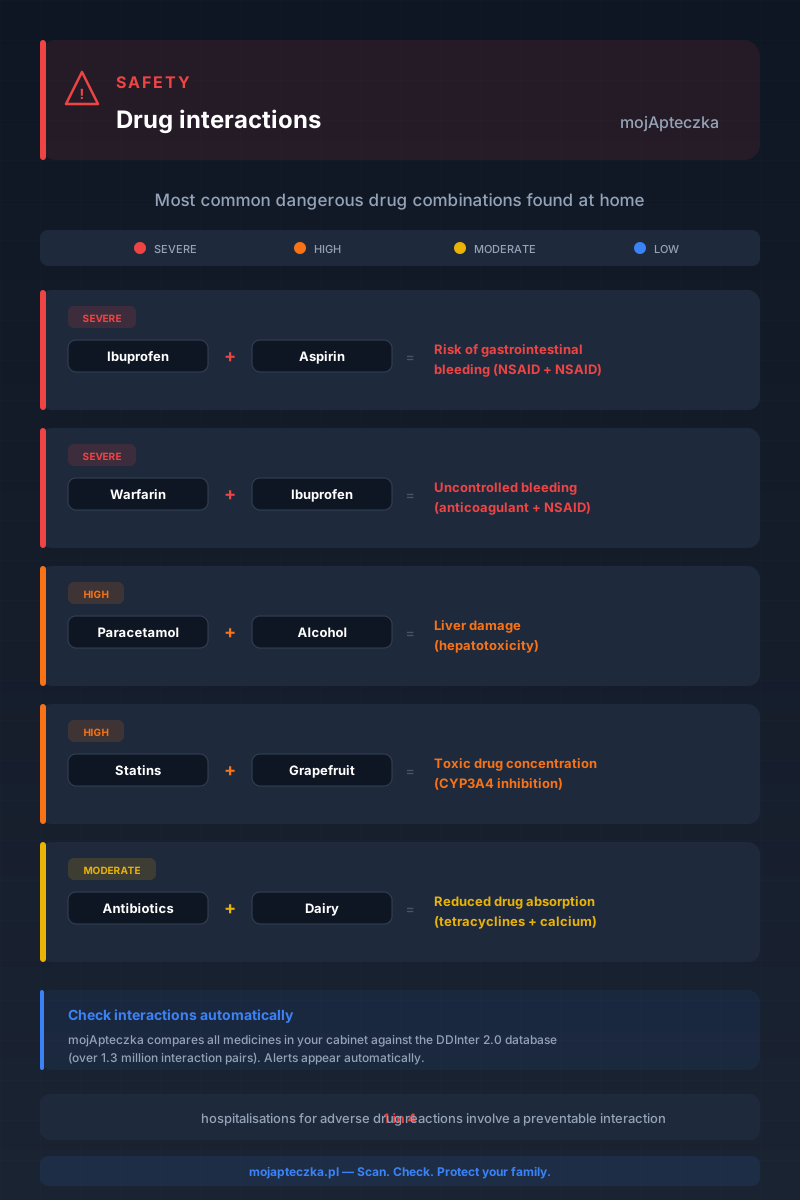
- Among the most serious are: combining NSAIDs (ibuprofen + aspirin), which increases the risk of bleeding; paracetamol with alcohol, which can damage the liver; warfarin with NSAIDs, which can cause uncontrolled bleeding; and grapefruit with statins, which can raise statin levels to toxic concentrations.
- Can food interact with medicines?
- Yes — grapefruit inhibits the CYP3A4 enzyme, increasing the levels of many medicines. Dairy reduces the absorption of tetracycline antibiotics. Vitamin K in green vegetables alters the effect of warfarin. Alcohol increases the effect of many sedative medicines.
- How does mojApteczka check interactions?
- mojApteczka automatically compares all medicines in your home medicine cabinet against the DDInter 2.0 database, which contains over 300,000 interaction pairs. When you add a new medicine, the system immediately flags potential conflicts with medicines you already have.
- Should I check interactions for supplements too?
- Yes — supplements can have serious interactions with medicines. St John's wort weakens contraceptives and antidepressants. Iron reduces the absorption of levothyroxine. High-dose vitamin K disrupts the effect of warfarin.
- Is there a free drug interaction checker that works without an account?
- Yes. mojApteczka offers a free online interaction checker at mojapteczka.pl/check-interactions — no account or download needed. Enter two or more medicine names and get instant results with severity ratings and management advice.
- How accurate are online drug interaction checkers?
- Accuracy depends on the database. mojApteczka uses DDInter 2.0, a peer-reviewed database covering over 300,000 interaction pairs. No tool detects 100% of interactions — always consult a pharmacist if your medicine schedule is complex.
- Can I check drug interactions on my phone?
- Yes. mojApteczka works in any mobile browser and is also available as an Android app on Google Play. You can scan medicine packs with your camera, and the AI fills in the details automatically.
- What is the best drug interaction checker app in 2026?
- It depends on your needs. For one-off lookups, Drugs.com is popular. For managing a whole family's medicine cabinet with automatic interaction checking, mojApteczka is the most complete option — it combines AI scanning, expiry tracking, and interaction checking in one tool.