Storing Medicines in Winter: Radiators and Frost
The heating season sets new traps for your medicines: a cupboard over the radiator, a cold windowpane, a frozen car boot. Where to keep medicines in winter.
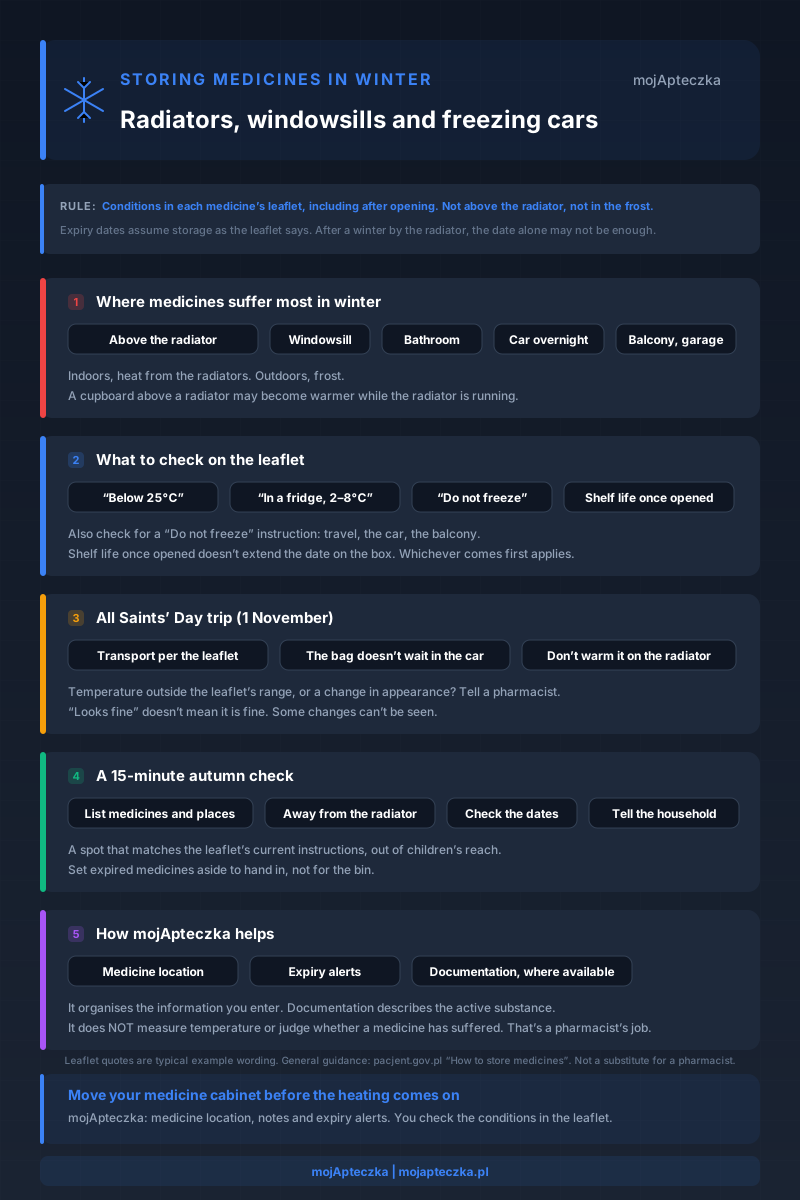
October, the first chilly evening. Someone turns the kitchen radiator right up, and in the cupboard above it sits the box with the whole family’s medicines. Nobody gave it a thought all summer. Now it will spend the next six months in the heat rising off that radiator from morning till night.
In summer we protect medicines from the heat. In winter there are two threats, and they pull in opposite directions: warmth inside your home and frost outside it, in the car, on the balcony or in an unheated garage. In this guide we go through the places medicines most often end up in winter, show you what to check on the box and the leaflet, and suggest a quick autumn check of your medicine cabinet. It’s an organisational guide: it won’t tell you whether a particular medicine is still fit to use. That’s what the leaflet and your pharmacist are for.
Why the heating season changes the rules
The manufacturer prints the storage conditions on the box and the leaflet, for example “Do not store above 25°C” or “Store in a refrigerator (2°C–8°C)”. Those are the conditions under which the medicine’s stability was tested. The expiry date on the box assumes you follow them. If a medicine spends the whole winter somewhere warmer or colder than recommended, the date alone may no longer be enough.
In winter, some spots at home can be noticeably warmer than the rest of the room while the heating is on, and for months at a time. Add cold windowpanes and steam in the bathroom. And once you head out, medicines in your bag or in the car are exposed to frost. Many leaflets say it in so many words: “Do not freeze”. It applies all year round, but in winter it’s easy to fall foul of it.
For more on the markings themselves, including the expiry date and batch number, see our guide to the markings on medicine packaging.
Five places where medicines have the hardest time in winter
The cupboard above the radiator. Warm air rises from a radiator while it’s on, so a shelf or cupboard above it can warm up, day after day, all through the season. In many kitchens that’s exactly where the “medicine box” lives, because it’s within easy reach. In winter it’s one of the worst spots in the house.
The windowsill. In winter a windowsill is a place of extremes. The radiator underneath warms it from below, cold comes off the glass, and on a sunny day there’s direct light on top of that. Medicines on the windowsill get all of it at once.
The bathroom. A hot bath or shower pushes up both humidity and temperature, and how long the damp lingers depends on the ventilation. The bathroom is a bad place for a medicine cabinet all year round. We go into this in more detail in our piece on ten medicines you store wrong.
The car. In summer a car heats up; in winter it gets cold. Parked overnight, it can drop below zero inside. A medicine left in the glovebox or in a bag in the boot overnight can freeze. What belongs in the car’s own first aid kit is a separate question, covered in our guide to car first aid kits. The family’s medicines are another matter: they come back into the house with you.
The balcony, cellar or garage. A stock of medicines “for later” sometimes ends up in an unheated storage space because there’s no room in the flat. In winter the temperature there can drop below zero, and it’s often damp too. That’s no place for a medicine cabinet.
The common thread hasn’t changed: the reference point is the storage conditions in the leaflet for each specific medicine. For most medicines that means somewhere away from the radiator, the cold glass and the steam, but out of the frost. Most homes do have a spot like that. It’s just rarely the one where the medicines actually are.
What to check on the box and the leaflet
Rather than memorising lists, check what the manufacturer says about the specific medicine. Look for the storage section in the leaflet and for wording such as:
- “Do not store above 25°C” or “Do not store above 30°C”: read the exact limit on the leaflet. A cupboard above a radiator that’s on may go over it.
- “Store in a refrigerator (2°C–8°C)”: the medicine belongs in the fridge, on a shelf, not in the door or next to the freezer compartment.
- “Do not freeze”: this medicine must not be exposed to frost. In winter that matters most when you’re travelling and in the car.
- “Store in the original package in order to protect from light” (or “from moisture”): keep the parts of the packaging that the leaflet names as protection, and don’t tip tablets into other containers.
Also look out for the shelf life after first opening. Syrups, drops and ointments often have this stated separately. It doesn’t extend the date on the box: whichever date comes first applies. For a step-by-step walk through the whole leaflet, see our guide to reading a medicine leaflet.
If medicine documentation is available for a medicine in the mojApteczka app, you’ll find a “Storage” section in it. It describes the active substance, so you check the conditions for your own pack, including after opening, on the box and in the leaflet.
Frost and travel: the All Saints’ Day trip
In Poland, 1 November is All Saints’ Day, when many families travel to visit relatives’ graves and stay the night with parents or grandparents. Medicines go along in a bag with the rest of the luggage, and the car sits for hours in a cemetery car park or all night outside the family home. A few habits for a trip like that, or any winter journey:
- Transport as the leaflet says. Before you set off, check what each medicine needs. The car itself, whether the cabin or the boot, doesn’t guarantee those conditions, and the temperature inside it changes.
- The medicine bag doesn’t wait in the car. At the cemetery and overnight at the family home, you take it with you.
- Medicines that need to be kept cold: ask before you travel. A cool bag slows down the exchange of heat, but it doesn’t control the temperature. Agree with a pharmacist how to transport these medicines. A frozen ice pack touching the pack can freeze the medicine in places.
- No radiator when you get back. Don’t warm the packs on the radiator. Put each medicine back where its leaflet says.
If you suspect a medicine has frozen despite a “Do not freeze” warning, or you’re not sure whether the leaflet’s conditions were kept, don’t judge it by eye. Note where it was and for how long, and describe that to a pharmacist.
A visit to your parents is also a good chance to take a look at their medicine cabinet. For what it should contain, see our guide to a senior’s home medicine cabinet.
What to note before asking a pharmacist
If a medicine looks different from the description in its leaflet, or the packaging is damaged, for example a damp blister, write down what you can see. That’s information for the pharmacist, and the assessment of the specific medicine is theirs to make.
Important: a medicine that looks fine isn’t necessarily fine. Some changes caused by overheating or freezing leave no visible trace. If you know a medicine spent a night in a freezing car or the whole winter next to a radiator, its appearance alone isn’t enough to go on. Jot down a short note: where the medicine was, for how long, and what you can see. It makes it easier to ask at the pharmacy.
A 15-minute autumn medicine cabinet check
The start of the heating season is a good moment for a quick check. This isn’t a big clear-out, just a look at what’s where:
- List your medicines where they are. Kitchen, bathroom, bedroom, fridge, handbag, car, balcony. In winter, medicines tend to scatter.
- Check what’s sitting near sources of heat and cold. Everything from the cupboard above the radiator, from the windowsill and from unheated spaces goes into the check.
- Match the spot to the leaflet. Give each medicine a place that fits its storage conditions, away from the radiator and the window, and out of children’s reach. If the leaflet’s current instructions say to refrigerate, that spot is the fridge. For the rest, a cupboard in the bedroom or the hallway often works well.
- Check expiry dates and opening dates. Set aside anything out of date to be handed in for disposal. For what to do with it, see what to do with expired medicines.
- Make sure everyone at home knows where the medicines are. If you move the medicine cabinet and the rest of the family looks for it in the old place, then when someone develops a fever one evening, it turns into a frantic search through the cupboards.
We’ve gathered the general rules that apply all year round in our guide to storing medicines at home. The summer companion to this piece is our guide to storing medicines in hot weather. And if the check leaves you with questions about specific medicines, our list of questions to ask a pharmacist after a medicine cabinet clear-out may help.
How mojApteczka helps in winter
The app won’t replace a pharmacist, and it won’t keep an eye on the temperature in your cupboard. What it does do is help you stay on top of what you have and where it is, especially when medicines are kept in several places and the whole family uses them.
- A pointer to where to look. If documentation is available for a medicine, its “Storage” section describes the active substance. Always check the instructions for your own pack, including after opening, on the box and in the leaflet.
- A record of where each medicine is. For every medicine you can enter its location, for example “hallway cupboard”. When the medicine cabinet moves for the winter, you just update it. In notes you can add the rest, such as “don’t leave in the car” or the date you opened a syrup.
- Separate medicine cabinets. With medicine grouping you can set up several cabinets, for example “Home” and “Travel bag”, instead of keeping everything on one long list.
- Expiry dates. Expiry alerts remind you when a saved expiry date is coming up.
- The same list for the whole family. With the shared family medicine cabinet, everyone at home sees the same medicines along with their saved location, so once the medicine cabinet has moved, nobody goes looking for it in the old place.
If you look after your parents’ or grandparents’ medicines, take a look at our page for caregivers too.
What the app won’t do
To be clear: mojApteczka does not measure temperature and has no sensor. It won’t detect that a medicine spent the whole winter above a radiator or froze in the boot, and it won’t judge whether a medicine is still fit to use. It stores the information you enter yourself and helps you find it quickly.
Whether a particular medicine is still safe and effective is for a pharmacist or doctor to decide. In winter, a few habits are enough: the leaflet first, then the place, away from the radiator and the cold glass, never in the car overnight, and a question at the pharmacy whenever you’re unsure.
Sources
Frequently asked questions
- Can I keep medicines in a cupboard above the radiator?
- Better not. Warm air rises from a radiator while it's on, so a cupboard above it can warm up throughout the heating season. Choose a place for each medicine that matches the conditions given in its leaflet, away from sources of heat and out of children's reach.
- What does “Do not freeze” on a medicine box mean?
- It's a storage condition set by the manufacturer. A medicine like this shouldn't go in the freezer or be left out in the frost, for example in the car or on the balcony. If you suspect it has frozen, don't judge it yourself. Tell a pharmacist where it was and for how long.
- Can I leave medicines in the car in winter?
- In winter the inside of a parked car can drop below zero, and how long it was parked doesn't tell you whether the leaflet's conditions were kept. It's safer to take your medicines with you and to plan the journey according to the leaflet. Agree with a pharmacist how to transport medicines that need to be kept cold.
- Do I need to do anything after bringing medicines in from the cold?
- Check the leaflet for that specific medicine's storage conditions, including any that apply after opening, and put it back where it belongs. Don't warm the packs on the radiator. Warming a medicine up doesn't settle anything: if you suspect the leaflet's conditions weren't kept, ask a pharmacist.
- Does mojApteczka measure the temperature I keep my medicines at?
- No. The app has no sensor and doesn't know that a medicine sat next to a radiator or in a cold car. What it does is help you organise your medicine cabinet: for each medicine you can note where you keep it and keep track of expiry dates. Where documentation is available for a medicine, it has a “Storage” section describing the active substance. You check the conditions for your own pack in its leaflet.