Questions to Ask a Pharmacist After a Clear-Out
Sorted your medicine cabinet and still unsure? Storage, shelf life after opening, a lost leaflet, unwanted medicines: a list of questions for your pharmacist.
Everything is out on the table. A syrup someone opened “sometime last winter, probably”. Eye drops without their box. A blister strip with two tablets left and the print half rubbed off. An ointment that spent the whole summer in the cupboard above the cooker. You have already put the expired packs to one side. That was the easy part. The hard part is what is left in the middle: things you’re not sure what to make of.
You won’t settle these at the kitchen table, and that is fine, because this is exactly what pharmacists are for. 25 September is World Pharmacists Day, which makes it a good moment to say so. You won’t find ready answers about specific medicines here. You will find a list of questions and a note on what to bring to the pharmacy, so the conversation is quick and to the point.
If you haven’t sorted your cabinet yet, start with our complete guide to the home medicine cabinet. This article picks up where that one ends.
Before you go: what to bring to the pharmacy
The pharmacist doesn’t know your cupboard. They know medicines, but to answer a question about a particular pack they need to see it, or at least know what you mean. Bring:
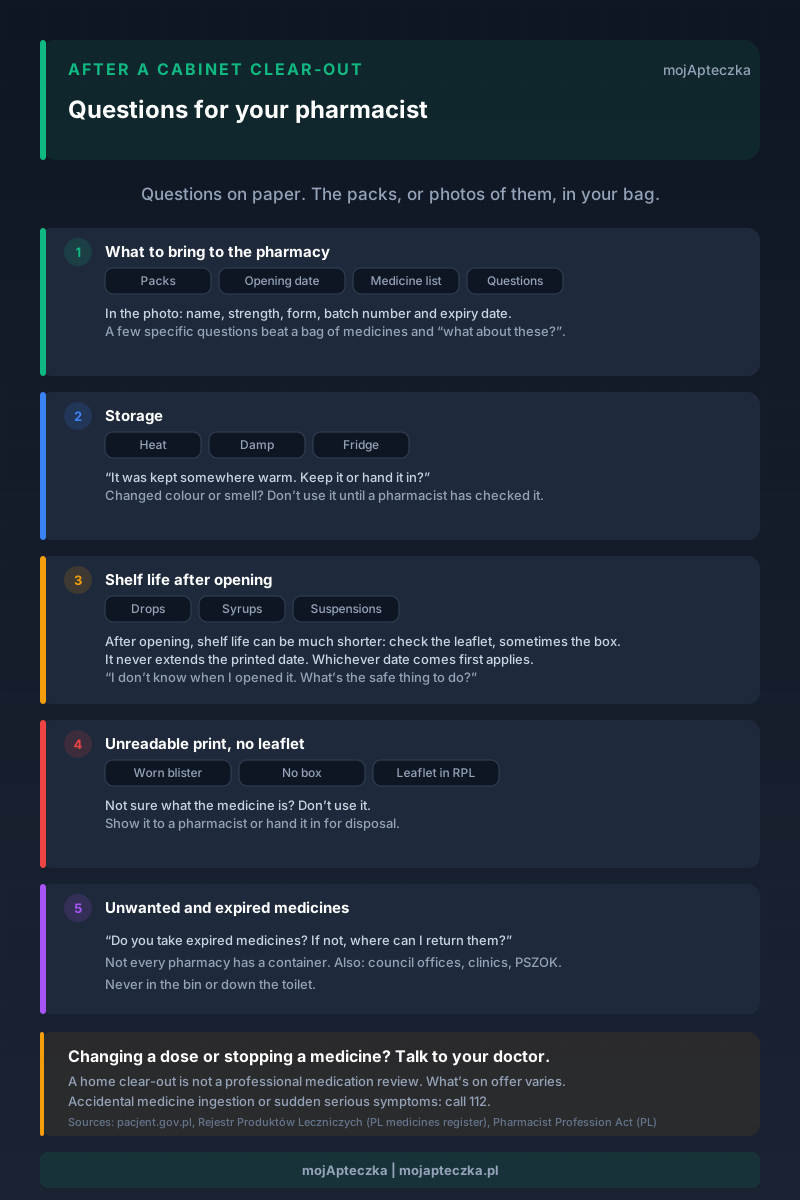
- The packs you are asking about, or clear photos of them. The photo should show the name, the strength (for example 200 mg), the form (tablets, syrup, drops), the batch number and the expiry date. We explain what EXP and LOT mean in our piece on reading medicine packaging.
- The date you opened it, if you wrote it down. For liquids and drops, this is often the most useful fact in the whole conversation.
- A short list of medicines that someone at home takes regularly. This conversation is not an assessment of anyone’s treatment, but it is easier to answer when they know whether you are asking about a “just in case” medicine or something a person takes every day.
- Your questions on a piece of paper. At the counter, with a queue behind you, it is easy to forget half of them.
If your medicines are already in your phone, part of this list takes care of itself. You can show the pharmacist your screen instead of the boxes, or share the list with a QR code: they open it in a browser without installing anything, and the link expires after 24 hours. They will see names, strength, active substance, form and expiry date. The link does not show notes attached to medicines.
Questions about storage
Most medicines have storage requirements printed on the pack or in the leaflet. If there is nothing there, pacjent.gov.pl (the Polish government’s patient information site) advises keeping the medicine at room temperature, meaning 15–25°C, away from sunlight and damp. The bathroom and the kitchen are poor choices, because that is where temperature and humidity change the most. We cover the usual mistakes in our guide on how to store medicines at home.
The trouble starts when a medicine has spent some time in the wrong place. Worth asking:
- “This medicine was in a warm place for a few weeks. Can I keep it in the cabinet, or should I hand it in?”
- “The leaflet says to keep it in the fridge. Does that change once it’s opened?”
- “Can I move these tablets into a weekly pill box, or should they stay in the blister?”
- “The syrup has changed colour or smell, but it hasn’t expired yet. What should I do with it?”
The last question matters most. If a medicine has changed in appearance, smell or texture, do not use it until a pharmacist has looked at it. Do not decide by sniffing it.
Questions about shelf life after opening
Once opened or prepared, some products, especially eye drops, syrups and suspensions, keep for much less time than the date on the box. That shorter period never extends the printed expiry date: if the box date comes first, it still applies. Look for this in the storage section of the leaflet, and sometimes on the box too. Our guide to reading a medicine leaflet shows where to find it.
The leaflet isn’t enough if you don’t know when the pack was opened. Then you ask:
- “I’m not sure exactly when I opened these drops. How should I treat them?”
- “The leaflet says ‘use within a set time after opening’. Does that count from the first use?”
- “Does this medicine need to go in the fridge once it’s opened?”
If you don’t know the opening date, don’t expect to hear “it’s still fine”. The pharmacist is more likely to suggest the safe way to handle it.
Unreadable labels and medicines without a leaflet
Print rubbed off a blister, a box thrown out years ago, loose tablets in a little bag. You come across these often when clearing out a cabinet. They are also the riskiest, because a medicine you cannot identify for certain is easy to mistake for another.
If you do not know for sure what a medicine is, do not use it. Show it to a pharmacist or hand it in for disposal. Questions:
- “Only part of the name is visible on the blister. Is there a way to tell what this is?”
- “I’ve lost the leaflet. Where can I find the current version for this strength?”
- “I have two packs of the same medicine with different dates. Can I keep them together?”
You can also find the current leaflet yourself in the Rejestr Produktów Leczniczych, Poland’s official medicines register, by entering the medicine’s name and strength. The catch is that you need to know exactly which medicine it is. If you don’t, start with the pharmacist, not the search box.
Unwanted and expired medicines: where to return them
Expired medicines do not go in the bin or down the toilet. In Poland they go into dedicated containers which, according to pacjent.gov.pl, are found in pharmacies and in some council offices, clinics and hospitals. Municipal selective waste collection points (PSZOK) accept them too. The cardboard box and the leaflet go in paper recycling.
Not every pharmacy has a container, because it depends on the pharmacy’s agreement with the gmina (the local municipality). That makes this one of the most practical questions to ask at the counter:
- “Do you take expired medicines? If not, where’s the nearest place I can return them?”
- “The treatment is over, but there’s medicine left. Can I hand it in even though it hasn’t expired?”
- “I have strong painkillers left over from a loved one who died. Where can I return them, and how should I store them until then so nobody takes them?”
We go through the whole process step by step in our guide on what to do with expired medicines.
What not to expect from a chat at the counter
A pharmacist can do a lot, but a pharmacy conversation after a cabinet clear-out has its limits. It helps to know them so you don’t leave empty-handed.
- Changing the dose of a medicine your doctor prescribed, or stopping it, is a matter for a doctor’s appointment. Our guide on how to talk to your doctor about medicines explains how to prepare.
- Sorting your cabinet at home is not a professional medication review. The Polish Pharmacist Profession Act describes pharmaceutical care, including consultations and medication reviews, but what is actually available depends on the pharmacy. Don’t assume that every pharmacy will have someone sit down with you and go through your whole cabinet. Ask what they can offer.
- How much time you get depends on the time of day and the queue. A few specific questions are more likely to get a specific answer than a bag of medicines and “what do I do with all this?”.
And if someone, especially a child, has swallowed a medicine by accident, or there are sudden, serious symptoms such as difficulty breathing or loss of consciousness, you don’t go to the pharmacy. You call 112.
How mojApteczka helps you prepare
The app will not answer any of these questions in place of a pharmacist. What it can do is keep the things the pharmacist will ask you about in one place.
- A photo instead of copying details by hand. Medicine recognition from a photo reads the name, strength and expiry date, and fills in the rest, such as the form, from the Rejestr Produktów Leczniczych. It does not read storage conditions from the photo.
- All expiry dates on one screen. Expiry alerts use colours to show which medicines are about to expire or already have. Your clear-out then starts from a list, not from pulling out every box.
- The opening date and the pharmacist’s answer in a note on the medicine. The app has no separate field for the opening date, so you type it into a note. That is also where you write down what you were told at the pharmacy, so you don’t have to ask again next time.
- The leaflet without searching. Each medicine’s card links to its leaflet and SmPC (the summary of product characteristics, ChPL in Polish) in the official register. You need an internet connection to open them. The leaflet is where you check the storage conditions for that specific product.
What mojApteczka does not do
- It does not judge whether a medicine is fit to use. Not after the expiry date, not after opening, not after it has sat somewhere warm. That is a question for a pharmacist.
- It does not work out shelf life after opening. There is no field for the opening date, and the app does not know the after-opening shelf life of a specific product. You record the date yourself, in a note.
- It does not tell you where to return medicines. The pharmacy map shows addresses and opening hours, but it does not know which pharmacies collect expired medicines. You need to check in person or on your gmina’s website.
- It cannot identify a medicine when the box is gone and the name on the blister has worn off. In that case, ask the pharmacist.
- It does not replace a pharmacist or a doctor. It is a tool for keeping your home medicine cabinet in order. It does not give advice, choose doses or assess treatment.
Cheat sheet: questions for your pharmacist
Print it or copy it into your phone. Tick the ones that apply to you.
- Can this medicine stay in the cabinet after it has been somewhere warm, in the sun or in the damp?
- How should I store this medicine once it’s opened? In the fridge?
- When does the after-opening shelf life start, and what if I don’t know when I opened it?
- The syrup or ointment has changed in appearance or smell. Should I hand it in?
- Can you tell what this medicine is when the print is unreadable?
- Where can I find the current leaflet for this strength?
- Do you take expired medicines? If not, where can I return them?
- The treatment is over, but there’s medicine left. Where can I return it?
After the conversation, write the answers down straight away, next to the medicine they apply to. Next time you clear out the cabinet, you won’t have to ask again. If you look after medicines for the whole family, see our page for families too.
Sources
Frequently asked questions
- What should I ask a pharmacist after clearing out my home medicine cabinet?
- The things you cannot settle from the box alone: how to store a particular medicine, whether an opened pack is still fine to use, what to do with a medicine that has no leaflet or an unreadable label, and where near you to return medicines you no longer need. Leave decisions about changing the dose of a prescribed medicine, or stopping it, for your doctor.
- What should I bring to the pharmacy so the conversation is quick and to the point?
- The packs you are asking about, or clear photos of them: name, strength, form, batch number and expiry date. Also the date you opened them, if you wrote it down, and a short list of medicines that someone at home takes regularly.
- Will a pharmacist review all my medicines?
- Do not assume so. The Polish Pharmacist Profession Act describes pharmaceutical care, but which services are on offer depends on the pharmacy. Sorting your cabinet at home is not a professional medication review. Ask your pharmacy what they can offer.
- Where can I return expired or unwanted medicines in Poland?
- To a dedicated container for expired medicines. You will find them in some pharmacies and in some council offices, clinics and hospitals, as well as at municipal selective waste collection points (PSZOK). Not every pharmacy collects medicines, so ask when you are there or check your gmina's (municipality's) website. Do not throw medicines in the bin or flush them down the toilet.
- What should I do if I have lost a medicine leaflet?
- You can find the current leaflet in the Rejestr Produktów Leczniczych, Poland's official medicines register, by searching for the medicine's name and strength. If the pack is unreadable and you do not know what the medicine is, show it to a pharmacist before you use it.