Home Medicine Cabinet: The Complete Guide 2026
Everything you need to know about a home medicine cabinet in one place. What it should contain, how to organise it, how to track expiry dates, and how to protect your family. A complete guide for 2026.
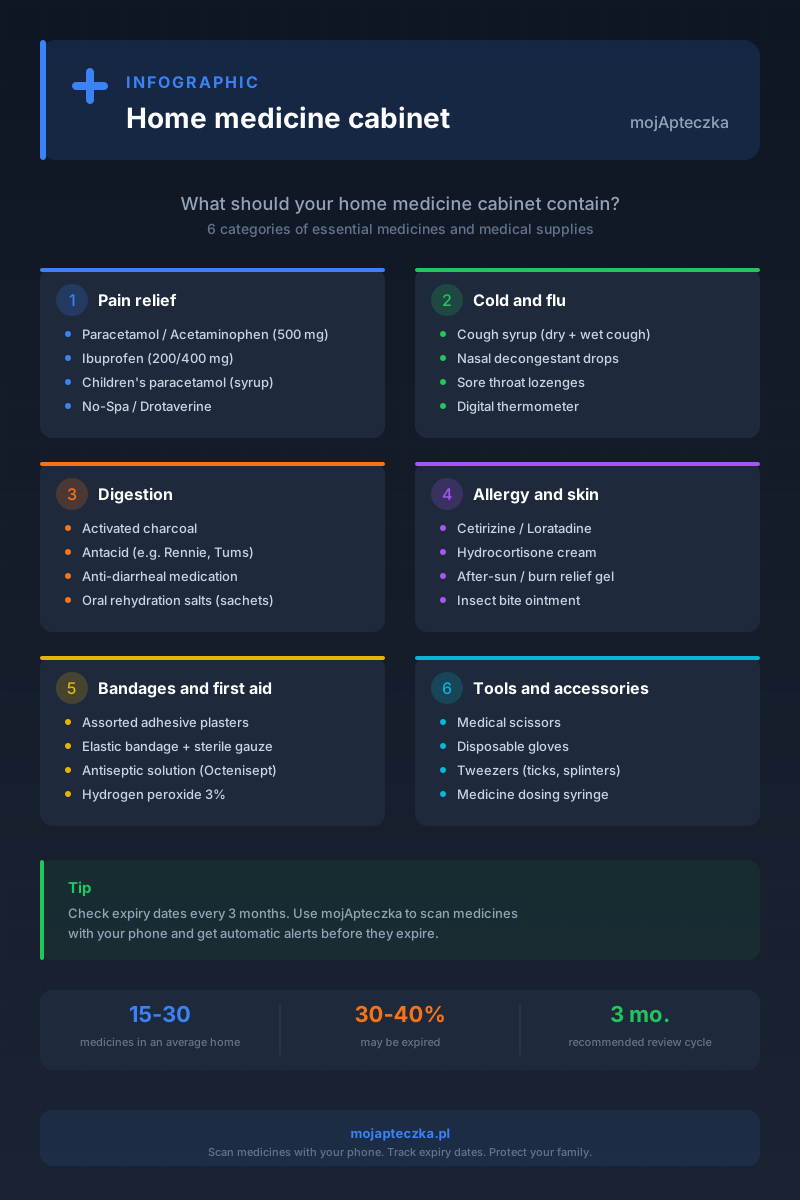
You open the medicine cupboard because your child has a fever. It is ten o’clock at night and the pharmacy is closed. You look for ibuprofen syrup. It is there, but the expiry date says January 2025. You reach for paracetamol. Adult tablets, not something you can give a child. In the corner of the cupboard there is some syrup, but the label is smudged and you cannot tell whether it is for coughs or fever. At the back are grandma’s medicines, your medicines, your partner’s vitamins and a burn ointment from four years ago.
This is not an extreme scenario. It is a Thursday evening in millions of homes.
A home medicine cabinet is one of those places everyone has, but hardly anyone keeps under control. Then comes the surprise: when a medicine is needed, it turns out to be expired, unsuitable or simply missing.
This guide exists so you do not have to go through that. We have brought everything together here: a complete contents checklist, storage rules, seasonal updates and digital tools. If you are interested in a specific topic, use the table of contents. If you have time, read the whole guide and get your medicine cabinet sorted once and for all.
What a Home Medicine Cabinet Should Contain: Complete Checklist
A home medicine cabinet should contain medicines for the most common ailments, dressings, medical tools and products suited to the people in your household. The checklist below covers 90% of typical situations at home.
Pain and Fever
This is the most common reason for reaching into the medicine cabinet. Two medicines form the basis:
- Paracetamol — the first-choice medicine for pain and fever. Gentle on the stomach and can be used during pregnancy after consulting a doctor. For adults: 500 mg tablets. For children: syrup or suppositories in the right age-appropriate dose.
- Ibuprofen — works for pain and inflammation. Do not take it on an empty stomach. For adults: 200-400 mg tablets. For children: suspension or suppositories.
It is worth keeping both, because they work differently and can be alternated, but never at the same time without consulting a pharmacist. If there are children at home, paediatric versions of both medicines are essential.
Colds and Upper Respiratory Infections
The infection season runs from October to March, but colds do not follow the calendar:
- Nasal drops or spray — xylometazoline or oxymetazoline. They unblock the nose for 6-8 hours. Do not use them for longer than 5-7 days. Children need a separate version with a lower concentration.
- Cough syrup — a dry cough needs an antitussive medicine; a wet cough needs an expectorant. It is worth keeping both types or a combined product.
- Tablets or lozenges for a sore throat — with an antiseptic or anti-inflammatory ingredient.
- Vitamin C and zinc — they do not cure a cold, but may shorten the duration of symptoms.
Allergy
The pollen season in Poland runs from March to September. But allergy is not only pollen. Dust, pet hair, insect bites and even food can trigger a reaction:
- Cetirizine or loratadine — second-generation antihistamines. They do not cause drowsiness, or cause very little. One tablet works for 24 hours.
- Antihistamine gel or cream — for skin reactions and insect bites.
- Eye drops with an anti-allergy ingredient — for itchy, watery eyes during pollen season.
You can find a detailed allergy-season guide in spring allergies: which medicines to keep at home.
Stomach and Digestive System
Stomach problems can come on suddenly and can be very unpleasant:
- Activated charcoal — first aid for mild food poisoning and bloating. It absorbs toxins in the digestive tract.
- Loperamide — for acute diarrhoea. Do not use in children under 6 without consulting a doctor.
- Oral rehydration salts — for dehydration after diarrhoea or vomiting. Especially important for children and older adults, who dehydrate faster.
- Medicine for heartburn and excess acid — a product with calcium carbonate, magnesium carbonate or omeprazole.
- Medicine for bloating — simeticone or dimeticone, particularly useful for babies and young children in paediatric form.
Dressings and Wound Disinfection
This is the second layer of the medicine cabinet: for cuts, grazes, burns and minor injuries:
- Plasters — different sizes, including waterproof ones. A standard set plus butterfly plasters for closing wound edges.
- Elastic bandages — for wrapping sprained joints and holding dressings in place.
- Sterile gauze pads — for covering larger wounds.
- Wound disinfectant — octenidine spray, chlorhexidine solution or hydrogen peroxide.
- Burn ointment — with panthenol. For minor kitchen burns and sunburn.
- Antibiotic ointment — for example with neomycin, for minor infected wounds and available over the counter.
- Disposable gloves — at least 2-3 pairs.
- Scissors with rounded tips — for cutting plasters and bandages.
Tools and Accessories
- Digital thermometer — non-contact or classic. Not mercury; these should no longer be in any home.
- Tweezers — for removing splinters and ticks.
- Tick remover — tick season runs from March to November. Every family should have a tool for removing ticks.
- Triangular bandage — for immobilising a limb.
- Insulated bag or cold pack — for compresses and transporting medicines that require refrigeration.
How to Organise a Home Medicine Cabinet
The contents are only half the job. The other half is organisation: the way you arrange medicines determines whether, in an emergency, you find the right product in 10 seconds or 10 minutes.
Organising by Purpose
Group medicines according to what they are for:
- Pain and fever — paracetamol, ibuprofen (adult and child versions)
- Colds — nasal drops, cough syrups, throat lozenges
- Allergy — antihistamines, eye drops, skin gel
- Stomach — charcoal, loperamide, oral rehydration salts, heartburn medicine
- Dressings — plasters, bandages, gauze pads, disinfectant
- Prescription-only medicines — separately for each household member
- Tools — thermometer, scissors, tweezers, tick remover
You can use boxes, wash bags, organisers with compartments or simply labelled shelves. What matters is that the system is clear to every household member, not just to you.
Organising by Person
In multi-generational homes, an additional person-by-person split works well:
- Shared medicines — OTC medicines, dressings and tools that everyone can use
- Children’s medicines — paediatric versions of medicines, on a separate shelf or in a separate container
- Grandma’s/grandad’s medicines — prescription-only medicines, with clear dosage notes
- Specialist medicines — for example medicines for asthma, food allergy or diabetes
This layout reduces the risk of mistakes. A three-year-old should not have access to grandma’s medicine section, and grandma should not accidentally reach for a child’s syrup instead of her own.
You can read more about grouping medicines and practical organisation systems in medicine grouping: order without chaos.
Organising by Location
Not all medicines have to be kept in one place:
- Main medicine cabinet — bedroom, hallway or living room. This is where you keep most OTC medicines, dressings and tools.
- Fridge — medicines that require refrigeration, such as insulin, some antibiotics, probiotics and eye drops. Set aside a separate shelf or container so they do not mix with food.
- Grab-and-go kit — a small wash bag with paracetamol, a plaster and disinfectant. For a handbag, backpack or car.
Expiry Dates: How to Track Them and What to Do with Expired Medicines
An expiry date is not a suggestion. It is the date until which the manufacturer guarantees the full effectiveness and safety of the product, provided it has been stored correctly. After that date, the active ingredient may have degraded and the medicine may not work as it should.
The Scale of the Problem at Home
Studies indicate that 30-40% of medicines in Polish homes are expired. With an average of 15-30 packs per family, that means statistically 5-12 products that are no longer suitable for use. You probably have some in your cupboard right now. Not because you are irresponsible, but because no one reminds you.
Want to see what it looks like in your home? Read how many expired medicines you have at home — the data may surprise you.
How Often Should You Check the Cabinet?
We recommend a review every 3 months. The easiest way is to link it to the change of season:
- Spring — spring medicine cabinet cleanup. Remove everything that expired over winter. Restock allergy medicines, as the pollen season starts in March.
- Summer — check that you have medicines for insect bites, sunburn and travellers’ diarrhoea. Add sunscreen and oral rehydration salts. More in summer medicine kit 2026.
- Autumn — restock cold and flu medicines before the infection season. Check cough syrups and nasal drops.
- Winter — check your supply of fever medicines, especially paediatric ones. Ensure you have oral rehydration salts in case of stomach flu.
Between reviews, the most effective solution is an automatic alert system. In mojApteczka, every scanned medicine has an assigned expiry date, and expiry date alerts send a notification several weeks before it passes.
What Should You Do with Expired Medicines?
Do not throw them in the household bin. Do not flush them down the toilet. Active ingredients enter soil and water, and from there the wider ecosystem.
Safe disposal is simple: take expired medicines to a pharmacy. Most pharmacies in Poland accept them free of charge. You can find a detailed step-by-step guide in what to do with expired medicines.
Medicine Storage: Temperature, Humidity and Light
Even the best medicine cabinet loses its purpose if medicines are stored in the wrong conditions. The active ingredient degrades faster, the expiry date becomes meaningless, and you end up taking a medicine that does not work.
Three Storage Rules
1. Temperature of 15-25 degrees Celsius. This is the range for most OTC medicines. A bathroom after a hot shower reaches 28-35 degrees, which is too much. A kitchen next to the oven is too warm. A car in summer is a disaster, reaching 60-70 degrees when closed.
2. Humidity below 60%. A bathroom can exceed 80% after a bath. Steam damages tablets, capsules stick together, and effervescent medicines react inside the blister. The best location is a bedroom, hallway or closed cupboard in the living room.
3. No direct light. UV breaks chemical bonds in active ingredients. Keep medicines in a closed cupboard, not on a windowsill or open shelf. Do not take tablets out of their blisters in advance; the packaging protects them from light.
You can find a detailed article on storage, with specific examples of medicines sensitive to temperature, light and moisture, in how to store medicines at home.
The Most Common Storage Mistakes
- Medicine cabinet in the bathroom — the worst possible place. Humidity and temperature changes damage medicines faster than anything else.
- Medicines in the car — in summer, the temperature in a closed car can break medicines down within days.
- Tablets removed from their blister — a transparent weekly organiser exposes medicines to light and moisture.
- Medicines next to a window — even diffuse light over many hours degrades active ingredients.
- Ignoring the leaflet — “store in a refrigerator” is a requirement, not a suggestion.
Medicines That Require Refrigeration
Some products must be kept at 2-8 degrees. This mainly applies to:
- Insulin before opening
- Some antibiotics in suspension after preparation
- Some eye drops
- Probiotics that require refrigeration
- Some vaccines
Set aside a separate shelf or container for medicines in the fridge. Ensure they do not freeze; do not place them against the back wall of the fridge or in the freezer.
Medicines for Children: What Is Safe and What to Avoid
If there are children at home, the medicine cabinet needs a separate section for paediatric products. This is not just about tidiness; it is about safety.
Basic Paediatric Set
- Paracetamol syrup or suppositories — from 3 months of age (the dose depends on the child’s weight, not age)
- Ibuprofen suspension — from 3 months of age (not on an empty stomach)
- Children’s nasal drops — with a lower concentration of xylometazoline
- Oral rehydration salts for children — flavoured and easier to give
- Simeticone drops — for colic and bloating in babies
- Cream with panthenol — for nappy rash and skin irritation
- Non-contact thermometer — quick measurement without waking the child
What Never to Do
- Do not split adult tablets. The dose will be imprecise, and tablet coatings are not designed to be broken.
- Do not give aspirin to children under 12. Acetylsalicylic acid in children can cause Reye’s syndrome, which is rare but very serious.
- Do not use cough medicines in children under 2 without consulting a doctor.
- Do not give loperamide to children under 6 without consulting a doctor.
How to Check Whether a Medicine Is Safe for a Child
Paediatric classification, which indicates from what age and in what form a medicine is approved for use in children, is essential information in any family medicine cabinet. The problem is that this information is hidden in leaflets, printed in small type and hard to find at two in the morning with a crying child.
Paediatric classification in mojApteczka automatically marks every scanned medicine: safe from birth, from 2 years, from 6 years, from 12 years or for adults only. You open the app, look at the list and know. No searching for leaflets, no reading small print.
You can find a detailed guide to children’s medicines in medicines for children: safety and dosage.
Home Medicine Cabinet for Older Adults: Special Needs
Older adults often take many medicines at the same time, a situation known as polypharmacy. In an older adult’s home medicine cabinet, what matters is not only what is in the cupboard, but how it is managed.
What to Pay Attention To
- Multiple prescription-only medicines — an older adult taking 5-10 medicines a day needs a clear dosage system and drug interaction checks.
- Risk of interactions — the more medicines there are, the greater the chance that two of them will interact harmfully. This also applies to combinations of prescription-only medicines with OTC medicines and supplements.
- Readable labels — small print on packaging can be difficult to read. Dosage notes on a separate sheet of paper or in an app are the minimum.
- Regular medicine-taking — missing a dose of a blood pressure or diabetes medicine can have real health consequences.
How to Help as a Caregiver
If you care for an older parent or grandparent, family sharing in mojApteczka lets you see the contents of their medicine cabinet on your phone, even if you live in another city. You know what they have at home, what is running low and what has expired. You receive the same alerts they do.
You can find a detailed guide to older adults’ medicine cabinets, with a list of OTC medicines, storage rules and a dosage system, in home medicine cabinet for older adults: what it must contain.
Seasonal Medicine Cabinet Updates
A home medicine cabinet is not something you put together once and then forget. The seasons bring different health risks, and your cabinet should adapt to them.
Spring (March-May)
- Restock allergy medicines, as pollen season starts with birch and grasses
- Add anti-allergy eye drops
- Check tick products: repellent and a tick remover
- Review expiry dates after winter; details in spring medicine cabinet cleanup
Summer (June-August)
- SPF 50 sunscreen and after-sun lotion with panthenol
- Insect repellent with DEET or icaridin and antihistamine gel for bites
- Oral rehydration salts for heat and travellers’ diarrhoea
- Loperamide and activated charcoal for holiday stomach problems
- Details in summer medicine kit 2026
Autumn (September-November)
- Restock cough syrups and nasal drops, as the infection season is beginning
- Check your supply of fever medicines for adults and children
- Add vitamin D, as supplementation is recommended from October to March
- Throat lozenges and vitamin C
Winter (December-February)
- Peak infection season: ensure you have a supply of paracetamol and ibuprofen
- Oral rehydration salts for stomach flu
- Cream for cracked hand skin caused by frost and hand washing
- Petroleum jelly or balm for chapped lips
Travel Medicine Kit
Travelling abroad? A travel medicine kit is a separate topic: different medicine names, different customs rules and different health risks. You can find a complete checklist in travel medicine kit: what to take abroad.
Drug Interactions in a Home Medicine Cabinet
Not all medicines in your cupboard can be safely combined. Drug interactions are not only a problem with prescription-only medicines. OTC products, dietary supplements and herbal medicines can also interact in ways you may not know about.
The Most Common Dangerous Combinations in a Home Medicine Cabinet
- Ibuprofen + aspirin — ibuprofen blocks aspirin’s protective effect on the heart. If you take aspirin for cardiovascular prevention, reaching for ibuprofen for a headache may be risky.
- Paracetamol + alcohol — paracetamol and alcohol are metabolised in the liver through the same pathway. Combining them increases the risk of liver damage.
- Antihistamines + cough syrup — some syrups contain sedating ingredients which, when combined with allergy medicines, cause excessive drowsiness.
- Iron supplements + heartburn medicines — medicines that reduce stomach acidity reduce iron absorption. There should be at least a 2-hour gap between taking them.
- St John’s wort + contraception — St John’s wort, a popular mood supplement, reduces the effectiveness of contraceptive pills.
You can find a detailed guide to drug interactions, with a full list of dangerous pairs, in drug interactions: 5 dangerous combinations.
How to Check Interactions in Your Own Cabinet
Manually checking interactions between 15-30 medicines is a job for a pharmacist, not for a parent at ten o’clock at night. That is why drug interaction checking in mojApteczka works automatically. After you add a new medicine to your digital cabinet, the app immediately compares it with all other products on the list, using the DDInter 2.0 database with over 300,000 interaction pairs.
If you also keep dietary supplements in your cabinet, read dietary supplements and medicines: interactions you need to know about.
When to Consult a Pharmacist
A home medicine cabinet is a tool for dealing with minor ailments on your own. But there are situations where a pharmacist, and sometimes a doctor, is essential.
Always Ask a Pharmacist When:
- You are buying an OTC medicine while taking prescription-only medicines — the pharmacist will check interactions and suggest a safe alternative.
- You do not know which medicine to choose — “something for a headache” is not enough. A pharmacist will ask about symptoms, co-existing conditions and other medicines before recommending anything.
- The medicine has not worked after 2-3 days — a cold that is not passing, pain that is getting worse or a fever that keeps returning are signs that you need a diagnosis, not another OTC medicine.
- You are buying medicine for a child, an older adult or a pregnant woman — dosage and safety require specialist knowledge.
- You have doubts about storage — “does this syrup need to be kept in the fridge?” is a question a pharmacist can answer in 5 seconds.
A Pharmacist Is Not a Salesperson
In Poland, a pharmacist holds a master’s degree in pharmacy and is authorised to advise on medicines. They are the first specialist you should turn to with questions about a home medicine cabinet. A pharmacy visit is free, and the advice is immediate.
When preparing to speak with a pharmacist, it is worth having a list of medicines you already take. In mojApteczka, you can share your medicine list by QR code — the pharmacist scans the code and sees the full inventory of your medicine cabinet on their screen.
How mojApteczka Helps You Manage a Home Medicine Cabinet
Everything described so far — the checklist, organisation, expiry dates, interactions and child safety — can be done manually. Paper, pen and checking every pack every quarter. It works, but with 20-30 medicines and 3-4 household members, it becomes impractical.
mojApteczka digitises this process. Here is how individual features solve the problems described in this article:
AI Scanner: Inventory in Minutes
You point the camera at a medicine package, and the AI scanner recognises the product and adds it to your digital medicine cabinet. Name, dose, manufacturer and active ingredient: everything is added automatically from the Register of Medicinal Products. Instead of typing in 20 medicines by hand, you scan them in a few minutes.
Expiry Date Alerts: No More Surprises
Every scanned medicine has an assigned expiry date. Expiry date alerts send a notification several weeks before the date passes. You do not have to remember when your ibuprofen expires; the app remembers for you.
Paediatric Classification: Confidence at Two in the Morning
Your child has a fever and you do not know which medicine in the cupboard is safe. Paediatric classification marks every medicine: from birth, from 2 years, from 6 years, from 12 years or for adults only. You open the app and know.
Drug Interactions: Automatic Checking
You add a new medicine, and drug interaction checking immediately compares it with your whole cabinet. If two products should not be combined, you receive a warning with a description of the risk.
Family Sharing: One Cabinet, the Whole Family
Partner, grandma, caregiver: everyone sees the same medicine cabinet on their phone. You know what is at home, even when you are at the pharmacy. Caring for an older parent? You can see their medicines from your own phone.
Notes: Context for Every Medicine
“Keep in the fridge”, “for grandma — morning and evening”, “do not combine with grapefruit”: notes attached to each medicine help every household member keep the necessary information at hand.
How to Start: A One-Afternoon Plan
You do not have to do everything at once. But if you want to get your home medicine cabinet sorted for good, here is a one-afternoon plan:
- Empty the cabinet — take everything out and lay it on the table. Time: 5 minutes.
- Remove expired medicines — check dates and put expired items in a bag to take to the pharmacy. Time: 10-15 minutes.
- Divide into categories — pain, colds, allergy, stomach, dressings, prescription-only medicines, children’s medicines. Time: 10 minutes.
- Scan medicines in mojApteczka — take a photo of every pack and add the expiry date. Time: 15-20 minutes for 20 medicines.
- Check what is missing — compare your stock with the checklist above and make a shopping list. Time: 5 minutes.
- Restock at the pharmacy — buy missing products on your next pharmacy visit. Time: one pharmacy visit.
In total: 45-60 minutes of one-off effort. After that, you only need to maintain the system: add new medicines after buying them, respond to expiry alerts and do a quick review every quarter.
Frequently Asked Questions (FAQ)
How many medicines should a basic home medicine cabinet contain?
A basic set is 15-20 products and dressings. For a family with children and older adults, it is 25-35, including paediatric versions and prescription-only medicines. It is not about quantity, but about covering the most common situations: pain, fever, colds, allergy, stomach problems and minor injuries.
Should dietary supplements be kept in the medicine cabinet?
Supplements such as vitamin D, magnesium, iron and omega-3 can be stored with medicines, but it is worth marking them separately. Important: supplements can interact with medicines. For example, magnesium reduces the absorption of antibiotics, and iron should not be combined with heartburn medicines.
How do I keep the medicine cabinet safe from children?
A locked cupboard placed high up is the minimum. Children from 2-3 years old can climb onto chairs and reach shelves. Colourful tablets look like sweets. A cupboard with a lock or magnetic catch is the best solution. Keep medicines in the fridge on the top shelf, out of a child’s reach.
Is a car first-aid kit required in Poland?
No. In Poland there is no legal requirement to keep a first-aid kit in a car, unlike in Germany, Austria or Czechia. But it is worth having one. A basic set includes plasters, a bandage, disinfectant, paracetamol, gloves and a triangular bandage. Remember that medicines in a car degrade very quickly in summer, so replace them regularly.
How long can an opened syrup be stored?
Most syrups remain usable for 1-6 months after opening. The exact information is in the patient information leaflet. This is shorter than the expiry date on the pack, which applies to an unopened product. Write the opening date on the bottle with a marker. It is a simple habit that protects you from using spoiled medicine.
Summary
A home medicine cabinet is not a cupboard you open in a panic. It is a system: organised, monitored and adapted to your family’s needs. A complete checklist, correct storage, regular expiry-date reviews, separation of children’s and adult medicines, and awareness of drug interactions are the foundations of medicine safety at home.
Start with one thing: empty the cupboard, remove expired medicines and restock what is missing. Then scan your medicines in mojApteczka, and let technology keep track of the rest for you.
The app is available on Google Play.
Read More
Each topic in this guide has its own detailed article:
- How to store medicines at home — temperature, humidity, light and the 5 most common mistakes
- Medicines for children: safety and dosage — what to give, what to avoid and how to check the dose
- Home medicine cabinet for older adults: what it must contain — polypharmacy, organisation and the caregiver’s role
- Drug interactions: 5 dangerous combinations — the most common pairs to avoid
- How many expired medicines do you have at home? — statistics, costs and solutions
- Medicine safety at home: guide — a complete guide to safety
- Spring medicine cabinet cleanup — what to throw away and what to restock
- Summer medicine kit 2026 — sun, insects, heat and travellers’ diarrhoea
- Travel medicine kit: what to take abroad — customs rules, OTC medicines and prescription-only medicines
- What to do with expired medicines — step-by-step disposal
- Dietary supplements and medicines: interactions — vitamins, minerals and popular supplements
- How AI medicine scanning works — the technology behind the mojApteczka scanner
Have questions about your home medicine cabinet? Write to us at kontakt@mojapteczka.pl — we will be happy to help.
Sources
Frequently asked questions
- What should a basic home medicine cabinet contain?
- A basic home medicine cabinet should include painkillers and fever medicines (paracetamol, ibuprofen), cold remedies (nasal drops, cough syrup, throat lozenges), allergy medicines (cetirizine or loratadine), medicines for stomach problems (activated charcoal, oral rehydration salts), dressings (plasters, bandages, gauze pads, disinfectant) and tools (thermometer, scissors, gloves). Families with children should always keep paediatric versions of key medicines.
- How often should I check medicine expiry dates in my cabinet?
- Review your medicine cabinet every 3 months. The easiest way is to link the check to the change of season. Between reviews, it is worth using automatic alerts in mojApteczka, which notify you several weeks before a medicine reaches its expiry date.
- Where is the best place to store medicines at home?
- Medicines should be stored in a dry, cool place at 15-25 degrees, away from sunlight. The best locations are a closed cupboard in a bedroom, hallway or living room. The worst places are the bathroom, because of humidity and temperature changes, and the kitchen, because of heat from the cooker. Keep refrigerated medicines in the fridge at 2-8 degrees.
- Which medicines in a home medicine cabinet are safe for children?
- Children need medicines in paediatric forms, such as syrups, suppositories and drops in appropriate doses. Children's paracetamol and ibuprofen are the basics. Never split adult tablets into smaller doses, as this can be dangerous. mojApteczka marks each medicine with a paediatric classification, so you can immediately see what is safe.
- What should I do with expired medicines from my cabinet?
- Take expired medicines to a pharmacy. Most pharmacies in Poland accept them for disposal free of charge. Do not throw medicines in the household bin and do not flush them down the toilet, because active ingredients can enter soil and water. Aerosol medicines may require special handling, so ask a pharmacist.
- Is it worth using an app to manage a home medicine cabinet?
- Yes. An app such as mojApteczka lets you scan medicines with your phone, automatically track expiry dates, check drug interactions, verify paediatric safety and share the cabinet with your family. This is especially useful when there are more than 10-15 medicines and more than 2 people at home.