Pet Medicine Cabinet — How to Organize It
Drops, deworming tablets, post-op meds — how to carve out your pet's medicine kit, track expiry dates and share the list, kept separate from human meds.
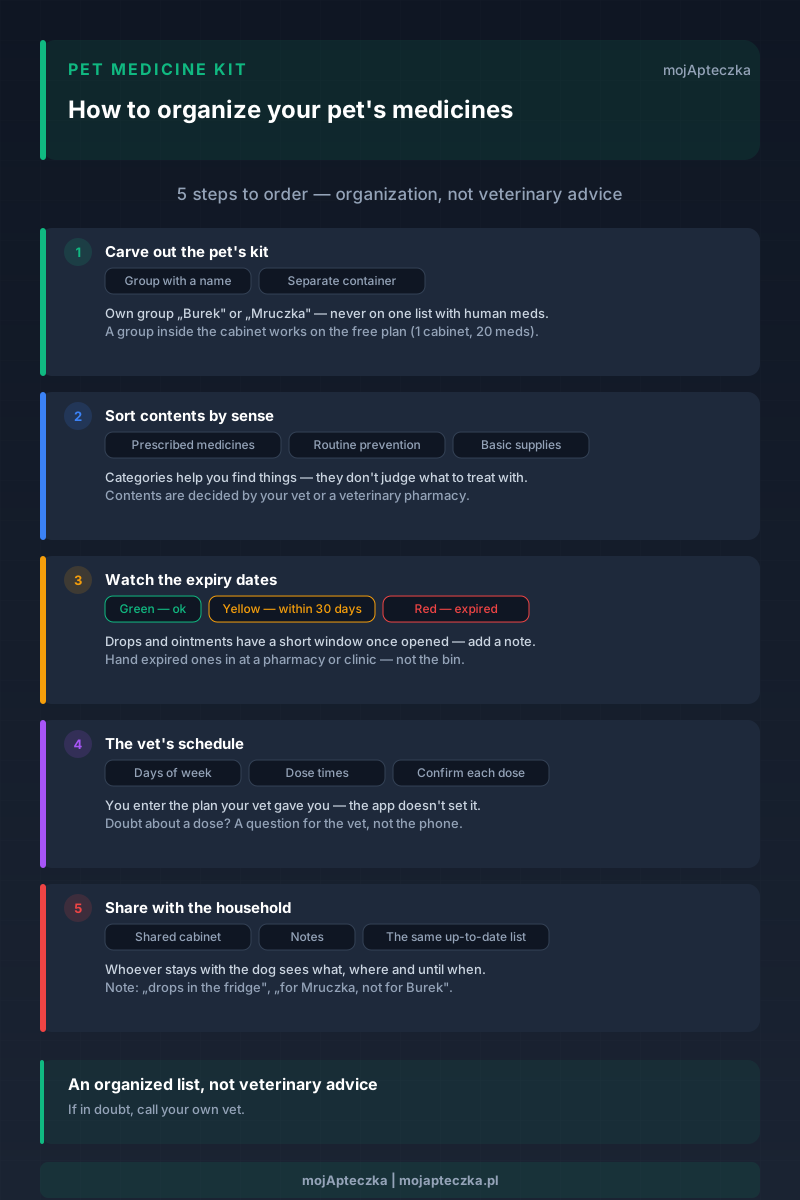
Your dog has its own tick drops, the cat got an ear ointment after a vet visit, an opened bottle sits in the fridge after a procedure, and the deworming tablets are somewhere in a kitchen drawer. All of it ends up next to the human medicines — in the same bathroom cabinet, the same drawer, the same shelf. And a few weeks later nobody knows what is current, what has expired and what is left over from a course of treatment a year ago.
A pet is part of the family, and its medicines are a separate, growing collection that easily slips out of control. This guide is not about what to treat your pet with — that is always the vet’s call. It is about how to organize your pet’s medicine kit: carve it out, keep an eye on expiry dates, and share it with the household so it stops getting lost among the human meds.
If your problem is more like “I have veterinary medicines mixed in with mine and can’t tell them apart”, see the separate piece on how to recognize and safely separate veterinary medicines. Here we go one step further and treat the pet’s kit as its own, well-ordered whole.
Why your pet’s kit deserves its own place
A home medicine cabinet is rarely truly “one” thing. And once your pet’s medicines join it, you end up with a small collection of products with different purposes, different dates and different storage rules. Some sit at room temperature, some need the fridge, and some have to be used within a few weeks of opening.
Mixing them with human medicines creates three everyday headaches. First — mix-ups. A tired person reaches for “those tablets in the cabinet” in the morning, and a misunderstanding is easy when packages look alike. Second — date chaos. Eye drops and ointments have a short shelf life once opened, and among a dozen other boxes nobody keeps watch. Third — information chaos. When you call the clinic or head to a visit, the vet asks what the animal is getting. “Some antibiotic, I don’t remember which” is not enough.
All three problems share one source: no boundary between what belongs to you and what belongs to your pet. Drawing that boundary is the whole trick — and you can do it once, then simply maintain it.
Step 1: Carve out the pet’s kit
The first decision is the most important: your pet’s medicines should have their own place. Not a different shelf in the same cabinet, but a clearly separate set — physically and on the list.
In the digital world, the handiest way is medicine grouping. Instead of keeping everything on one long list, you create a group with the pet’s name — “Burek” or “Mruczka” — and assign all its products to it. From then on you can browse the cabinet by group and see at a glance only what belongs to the pet. The rest of the home cabinet steps out of view when you don’t need it.
This has a practical edge over starting a second, separate cabinet. On the free mojApteczka plan you keep one cabinet of up to twenty medicines — and a group inside it is fully enough to stay tidy without leaving the free tier. If you have more animals, each can get its own group: “dog”, “cat”, “hamster”. Every household member instantly knows where to look.
If you prefer a real-world divide too, add a separate, lockable container for the physical packages. Then the digital group and the physical box describe exactly the same set, and one mirrors the other.
Step 2: Sort the contents by sense, not by substance
With the pet’s kit carved out, it is easier to master what is inside. An important caveat right away: what ends up in the pet’s kit is decided by a vet or a veterinary pharmacist. The contents depend on the species, weight and health of the animal, and those things cannot be guessed from the level of household organization. Your job is to arrange what you already have, not to decide what should go in there.
For the sake of order, thinking in categories helps. Most of what circulates around a home with a four-legged companion fits into three groups:
- vet-prescribed medicines — what is left over from a specific course of treatment or taken on an ongoing basis;
- routine prevention — products used regularly according to arrangements with the specialist (external, oral, seasonal);
- basic supplies — dressings, compresses, anything that is not a medicine but comes in handy before you reach the clinic.
These categories are a pure organizational layer — they help you find things faster, they do not judge what to treat with or when. Agree the specific list of products for your animal with your own vet; the point here is that, once set, the contents are visible and tidy.
Step 3: Keep an eye on expiry dates
This is what fails most often in a pet’s kit. Eye and ear drops, ointments, opened bottles, an antibiotic labelled “use within X days” — all of it has a short shelf life once opened, and in a rush nobody checks the dates in fine print.
This is where a digital cabinet has its biggest edge. The expiry alerts feature automatically tracks the dates of every medicine on the list — including the animal ones. Each product gets a colour label shown right on its card: green when the date is far off, yellow when it expires within the next thirty days, and red when it has already expired or expires today. You open the app and immediately see what needs attention — no digging through the drawer and squinting at a date stamped on a crumpled box.
For medicines with a short window after opening, it is worth noting that in a note on the product — for example the opening date and how many days are left. The note is pinned to the medicine, so anyone who looks at it sees the same context. That turns a scattered “I think we opened it in March” into a clear record.
Expired pet medicines, like human ones, do not go into the bin or down the sink — set them aside for a designated medicine-collection point. Check your gmina, a participating pharmacy or your veterinary clinic. We cover how to tidy up that stage in more detail in the piece on what to do with expired medicines.
Step 4: Move the vet’s schedule into one place
A lot of pet care runs on an established rhythm: a medicine taken for a few days at a fixed time, prevention repeated at intervals set by the specialist, a follow-up dose after a procedure. The problem is not what that rhythm is — that is the vet’s call — but that it is easy to forget between work, kids and daily life.
The reminders feature is a pure organizational tool here. The app does not know and does not suggest how often to give something — you enter the schedule your vet gave you, and it makes sure you don’t miss it. For each medicine you set your own plan: pick the days of the week, add one or several times of day, and after giving it you confirm with one tap. The stock count of that product updates automatically, so you can see when a package is running out.
A key principle: the app organizes what the specialist set — it does not replace their decision. If you have any doubt about a dose, a frequency, or whether to give a medicine at all on a given day, that is a question for the vet, not the phone. The reminder only makes sure a plan, once agreed, does not slip through the cracks of a busy day.
Step 5: Share the list with the household
A pet’s kit is rarely handled by one person. One household member buys a product, another gives it, a third stays with the dog while the rest are away. Without a common reference point, every change is a string of phone calls: “did you give the drops?”, “where’s the ointment?”, “is this package still good?”.
A shared cabinet solves this in one move. You create a common cabinet, invite your family, and everyone with access sees the same up-to-date list of the pet’s medicines — with expiry dates, package counts and assignment to a specific animal. Whoever stays with the cat over the weekend opens the app and knows what, where and until when, without calling. The context travels with the cabinet, not with one person’s memory.
Combined with notes you can add the important organizational details: where the spare package is, that the drops live in the fridge, that this ointment is “for Mruczka, not for Burek”. All of it is a memory and communication aid for the home — not medical advice. If you are building a shared system for the whole household in the app, take a look at the for families page too, where we show how to manage everyone’s medicines in one place.
What this organization will not replace
It is worth saying plainly, because it is the boundary of the whole idea. A digital pet medicine cabinet helps you see, remember and share — it does not treat and does not advise. The Polish Register of Medicinal Products also includes veterinary products, but the scanner and database in mojApteczka are optimized mainly for human medicine packaging. That is why veterinary products often need manual entry — within your plan’s medicine limit — and that does not get in the way of keeping a separate, well-ordered list.
Most important: no app replaces a vet. Diagnosis, choice of medicine, dose, frequency, the decision to give it in a specific situation — that always belongs to the specialist. If something worries you about your pet’s behaviour or condition, call your clinic, not your phone. The app exists so that the plan set by the vet is tidy, visible and available to the whole household — and so that the pet’s drops stop getting lost among the human meds.
Summary — five steps to order
A pet’s kit stops being a source of chaos once you treat it as a separate, well-ordered whole. Five steps, set up once:
- Carve it out — a separate group with the pet’s name, optionally a separate container.
- Sort the contents — prescribed medicines, routine prevention, basic supplies (the contents are decided by the vet).
- Watch the dates — colour alerts and a note with the opening date on short-window medicines.
- Move the schedule over — enter the vet’s plan into reminders and confirm each dose.
- Share it — a common cabinet and notes for everyone who cares for the pet.
The rest takes care of itself. Try mojApteczka, carve out a group for your four-legged companion and watch the clutter disappear. The app is also available on Google Play.
Questions or suggestions? Write to us: kontakt@mojapteczka.pl
Frequently asked questions
- Should pet medicines be kept separate from human ones?
- Yes, it is a basic rule of order in any home with both people and animals. A separate place and a separate list reduce the risk of a mix-up, especially when packages look alike. You can carve your pet's medicines into their own group in a digital cabinet so they never blend into your list.
- How do I keep track of expiry dates on my pet's drops and ointments?
- The simplest way is to record every product in one place along with its expiry date. In mojApteczka, medicines get colour labels — green, yellow thirty days before the end, and red once a product has expired. That way you see the status without checking each package by hand.
- Will the app tell me how often to deworm or dose a medicine?
- No. The schedule and doses are set only by your vet. The app is an organizational tool — you record what the specialist recommended, and it helps you remember it. It does not replace a vet visit or their advice.
- What belongs in a pet's medicine kit?
- The contents are decided by your vet or a veterinary pharmacist, because they depend on the species, weight and health of the animal. From an organizational angle, sort what you already have into categories — vet-prescribed medicines, routine prevention, and basic supplies. Agree the specific products with your own vet.
- How do I share my pet's medicine list with the rest of the household?
- In a shared cabinet in mojApteczka you can invite family members to one common list. Everyone with access sees the same up-to-date pet medicines along with expiry dates and your notes. So whoever stays with the dog over the weekend does not have to call asking where the drops are.
- Will the app recognize a veterinary medicine from a photo?
- The AI scanner works best with human medicine packaging, because the mojApteczka database is optimized mainly for those packages. Veterinary products often need to be added manually — within your plan's medicine limit. What matters most is that they end up on a separate, well-ordered list.