Car First Aid Kit: What It Must Contain in 2026
What should a car first aid kit contain in Poland? Check the legal requirements, practical advice, and a list of essential supplies.
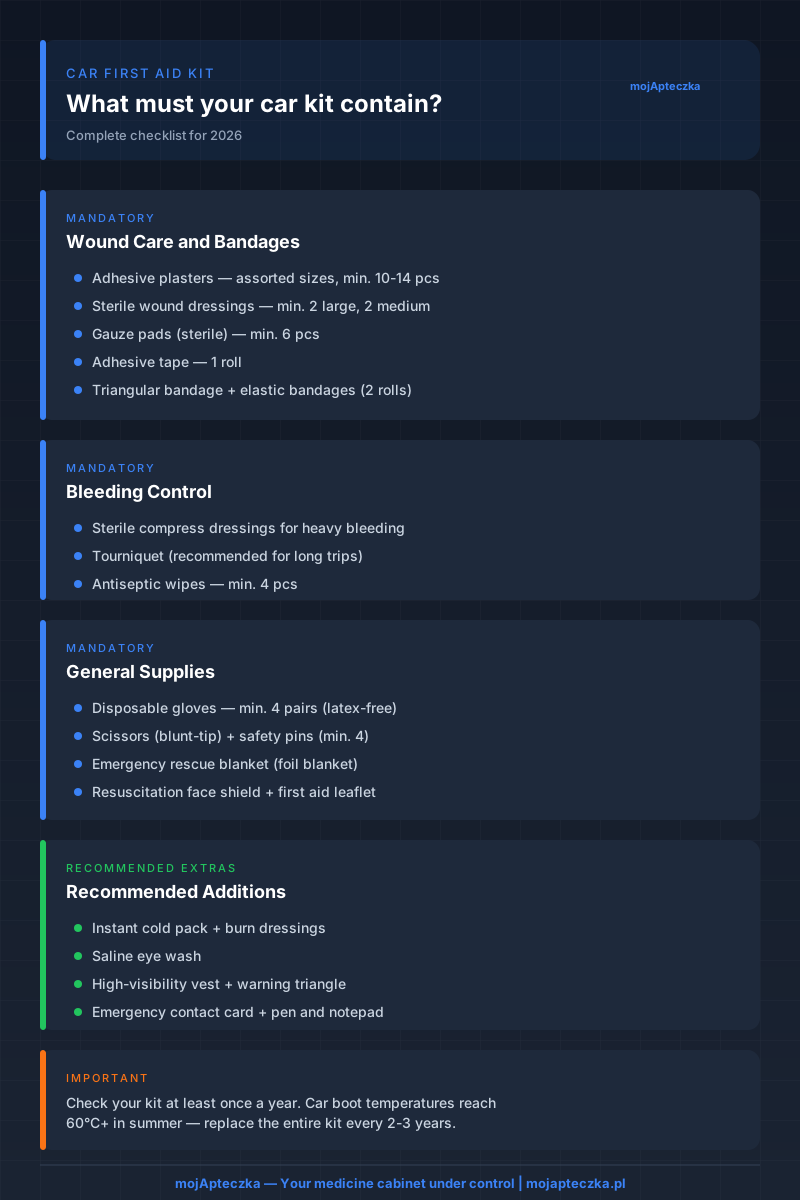
A car first aid kit is one of those things you remember when you buy a car and then forget about for the next five years. It sits in the boot, under the floor, behind the spare wheel, quietly expiring. Only a roadside check, an accident, or an urgent need in a car park makes you realise that what you have in the car is no longer useful.
In many European countries, a car first aid kit is mandatory, and not having one can lead to a fine. In Poland, the position is slightly different: the law does not directly require private passenger cars to carry a first aid kit, but having one should definitely be standard. Whatever the regulations say, a well-equipped first aid kit in the car is a safety measure that costs little and can matter enormously in an emergency.
Regulations in Poland: what the rules say
In Poland, there is no statutory obligation to carry a first aid kit in a private passenger car. The Road Traffic Act requires a warning triangle and a high-visibility vest, but formally not a first aid kit.
That does not mean you can forget about it. Company vehicles, buses, minibuses, taxis, and vehicles used for driving instruction are covered by different rules, and a first aid kit is mandatory in them. If you run a business and use a company car, check the requirements for your vehicle category.
If you are planning to drive abroad, however, the situation is completely different. In many EU countries, a first aid kit is mandatory in every vehicle:
- Germany — a first aid kit compliant with DIN 13164; the fine for not having one is around 10 EUR.
- Austria — a first aid kit is mandatory; the fine is up to 72 EUR.
- Czech Republic — mandatory; the fine is up to 2000 CZK.
- Slovakia — mandatory; the fine is up to 66 EUR.
- Croatia — mandatory; the fine is up to 260 EUR.
- Greece — mandatory; the fine is up to 150 EUR.
Before driving abroad, check the current rules for your destination country and any countries you will pass through. Requirements for first aid kit contents can vary: some countries require specific standards, such as DIN 13164 in Germany, while others provide a general contents list.
What a car first aid kit should contain
The list below combines the requirements of European standards with the practical needs of drivers and passengers. It is a set that covers the most common situations on the road, from minor cuts to giving first aid while waiting for an ambulance.
Dressings and bandages
- Elastic bandage (at least 2, in different widths: 6 cm and 8 cm).
- Triangular bandage — for immobilising a limb or as an improvised sling.
- Sterile dressings (gauze compresses) — at least 2.
- Adhesive plasters with dressing pads (various sizes) — at least 8.
- Adhesive tape for securing dressings (roll).
- Individual dressing (large pressure dressing) — for controlling bleeding.
Personal protection
- Disposable gloves (latex or nitrile) — at least 2 pairs.
- Resuscitation face shield (CPR mouthpiece) — protects the rescuer during CPR.
- NRC emergency foil blanket (thermal blanket) — silver and gold, protects against hypothermia and overheating.
Tools
- Rescue shears — for cutting clothing, seat belts, or dressings.
- Safety pins — for securing bandages.
- First aid instruction leaflet — short and illustrated. Under stress, it is easy to forget the order of steps.
Disinfectants
- Disinfectant wipes or wound disinfectant liquid.
- Wipes soaked in a wound-cleaning solution.
OTC medicines: a practical addition
European standards for car first aid kits focus on dressings and first aid tools. Medicines are not formally required. But from a day-to-day usefulness perspective, keeping a few basic medicines in the car can be extremely convenient.
- Paracetamol or ibuprofen — a headache in a traffic jam, a child’s fever in the back seat. One blister pack in the kit is enough.
- Travel sickness medicine — especially if you travel with children. Giving the medicine half an hour before the journey is a better plan than looking for a pharmacy by the roadside.
- Electrolytes in sachets — for vomiting or diarrhoea during a trip, especially in summer.
- Allergy medicine (cetirizine, loratadine) — a wasp sting at a rest stop, or a sudden allergic reaction.
- Eye drops (artificial tears) — tired eyes after many hours of driving, or a foreign body such as an insect or pollen.
Keep medicines in a separate, sealable container inside the first aid kit. Label it clearly and remember to check the expiry dates.
The biggest problem: temperature in the car
A car first aid kit has to cope with extreme conditions that a home medicine cabinet will never experience.
In summer, the temperature inside a closed car standing in the sun can reach 60-80 degrees Celsius. The boot is slightly cooler than the cabin, but it still far exceeds the 15-25 degree range in which medicines should be stored. In these conditions, sterile dressings can lose sterility as adhesives melt and packaging cracks, while medicines degrade many times faster than they would at home.
In winter, temperatures fall below zero. Some liquid preparations may freeze and change their properties after thawing. Solutions may separate; suspensions may precipitate.
Humidity in a car changes dramatically, from very low on hot days to condensation on cold surfaces in autumn and winter.
What this means in practice:
- Check your car first aid kit at least twice a year — in spring and autumn. Check expiry dates, the condition of the packaging, and whether the kit is complete.
- Replace sterile dressings every 2-3 years, even if they look intact. Adhesives and sterile packaging have a limited life in changing temperatures.
- Do not keep temperature-sensitive medicines in the car permanently. If you are going on a longer journey and taking medicines with you, put them in an insulated bag with a cooling insert. At stops, take the bag with you.
- Store the first aid kit in the boot, not in the cabin. The boot is less exposed to direct sunlight. Avoid keeping the kit under the rear window or on the shelf behind the rear seats.
The car kit as an extension of your home cabinet
Your car first aid kit does not exist in isolation. It is a natural extension of your home medicine cabinet, and that is how it is worth thinking about it.
When you restock supplies at home, also check what is in the car. When you replace expired medicines in a drawer, look in the boot too. When you buy plasters at the pharmacy, take an extra pack for the car.
The biggest problem with car first aid kits is not putting them together; it is neglecting them afterwards. You buy a ready-made kit, throw it in the boot, and forget about it. Three years later, you open it at an accident scene and discover that the bandages are coming apart and the scissors have rusted.
How mojApteczka helps
If you use mojApteczka to manage your home medicine cabinet, add a separate “Car” kit in the app. Scan the contents — dressings, medicines, tools — and keep a complete view of what you have in the car. Expiry date alerts will remind you when something needs replacing, before anything expires.
It is a simple way to avoid discovering during a roadside check in Austria that your first aid kit expired two years ago. Or, worse, discovering it at an accident scene, when every minute counts.
Final checklist
Before you close the boot, make sure you have:
- Elastic bandages (2).
- Triangular bandage.
- Sterile dressings (2).
- Plasters (8+).
- Adhesive tape on a roll.
- Pressure dressing.
- Disposable gloves (2 pairs).
- CPR face shield.
- NRC foil blanket.
- Rescue shears.
- Safety pins.
- Disinfectant wipes.
- First aid instructions.
And if you want to be sure nothing quietly expires, scan the kit contents in mojApteczka. A few minutes now means peace of mind on the road all year. The Android app is also available on Google Play.
Do you have questions about a car first aid kit or your home medicine cabinet? Write to us at kontakt@mojapteczka.pl — we will be happy to help!