Medicine Terms Glossary: Plain-Language Guide
Active ingredient, form, strength, OTC vs Rx, substitute, PIL, SmPC, reimbursement — what the words on the box and leaflet actually mean, in plain English.
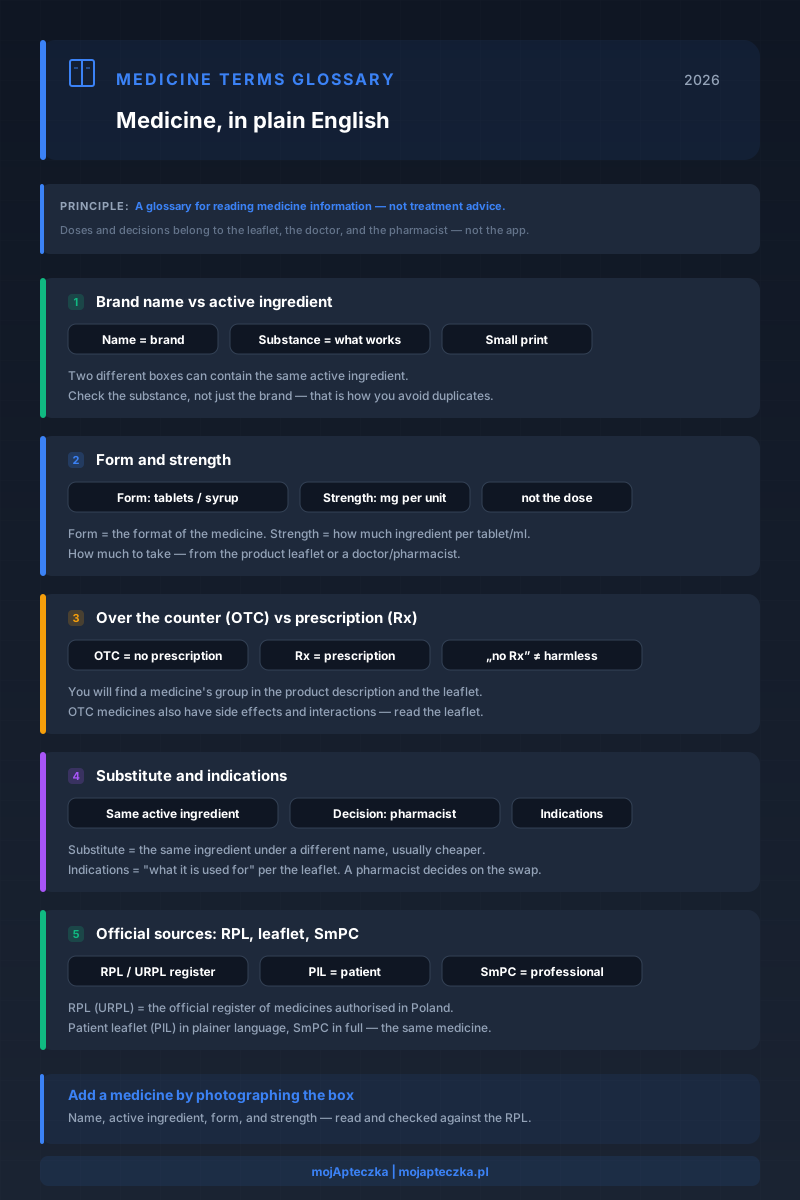
You pick up a box and a leaflet, and there they are: words that read like a foreign language. “Active ingredient”, “pharmaceutical form”, “OTC”, “30% reimbursement”, “SmPC”. You know they matter, but nobody ever explained what they actually mean. And without that, it is hard to keep a home medicine cabinet under control — and easy to slip up, for example by buying the same medicine twice under two different names.
This guide explains the key terms from the box, the leaflet, and the official registers — in plain language, with a note on where to find each one. It is a glossary for reading medicine information, not a treatment guide: you will not find doses to take or therapeutic decisions here, because those belong to a doctor and a pharmacist.
Brand name vs active ingredient
This distinction matters most of all.
- Brand name is the brand — the large print on the front of the box. It is the name a medicine is advertised and sold under.
- Active ingredient is the component responsible for what the medicine does. You will find it in smaller print, usually just below the brand name (for example, “paracetamol”, “ibuprofen”, “loratadine”).
Why does this matter? Because two different boxes, two different brands, can contain the same active ingredient. That is the main reason duplicates pile up at home — we buy “something for pain” without checking that the same component is already sitting in a drawer. Checking the active ingredient, not just the name, is the first step to an orderly cabinet.
Pharmaceutical form
This is the form a medicine is made in: tablets, capsules, syrup, suspension, suppositories, drops, ointment, patch, spray. The same active ingredient often comes in several forms — the same “something for a fever” can be a syrup, a suppository, and a tablet.
The form is printed on the box and in the leaflet. It tells you how the medicine is prepared, not how much of it to use.
Strength, or the “mg” number
A number with a unit — most often mg (milligrams) — is the strength: how much active ingredient one tablet, capsule, or millilitre contains. “Ibuprofen 400 mg” means one tablet contains 400 mg of the active ingredient.
Important: strength is a content label, not a guide to how much to take. You will find that information in the leaflet for the specific product, or from a doctor or pharmacist. For the same reason, you should never assume “by eye” that two lower-strength tablets stand in for one stronger one — that is a question for a pharmacist.
Over-the-counter (OTC) vs prescription (Rx) medicines
- OTC (over the counter) is a medicine available without a prescription — you can buy it at a pharmacy, and often at a shop or petrol station too.
- A prescription medicine (Rx) is dispensed only against a prescription written by a doctor.
Which group a given medicine belongs to follows from the product description and the leaflet. One thing is worth remembering: “without a prescription” does not mean “harmless to your health”. OTC medicines also have side effects and interactions — which is why the leaflet matters just as much as it does for prescription medicines.
Substitute (generic equivalent)
A substitute is a different preparation with the same active ingredient, usually in the same strength and form — and usually cheaper. That is why a pharmacist may offer “a cheaper equivalent”.
In mojApteczka you will see substitutes with the same active ingredient for the medicines in your cabinet. But the line is clear: the decision to actually swap one medicine for another is made by a pharmacist or doctor — the app only shows that the same component is available under a different name. The information about a substitute is not, in itself, a recommendation to use it.
Indications — “what it is used for”
In the leaflet, the section “What X is and what it is used for” describes the indications — the situations in which a given medicine is used. It is a description from the product documentation, not a suggestion that you, specifically, need it.
In the app, search by use helps with this — you organise your cabinet by what each medicine is “for”, instead of memorising names alone. It is an organisational tool; it does not suggest what to take for a particular symptom.
RPL and URPL — the official source
RPL stands for the Register of Medicinal Products — the public database of every medicine authorised for sale in Poland, maintained by URPL (the Office for Registration of Medicinal Products, Medical Devices and Biocidal Products). This is where the official, up-to-date data on a medicine lands: name, active ingredient, form, strength, marketing authorisation holder, and documents.
For more on what the register holds and where the data comes from, see the guide to Poland’s Register of Medicinal Products (RPL).
Patient leaflet (PIL) vs SmPC
These two documents describe the same medicine, but for different readers:
- Patient leaflet (PIL) — the document for patients, in plainer language. This is the one you find inside the box.
- SmPC (Summary of Product Characteristics, called ChPL in Polish) — the fuller, more technical document for doctors and pharmacists.
Both come from the same official source. For how to find your way around them — section by section — see the guide on how to read a medicine leaflet. And when you are wondering “can I…?”, the piece on where to check medicine information will help.
Reimbursement levels
On a prescription, a medicine may carry a reimbursement level: “free”, “flat fee”, “30%”, “50%”, or “100%”. This is billing information — it tells you what share of the price you cover when a medicine is reimbursed. The level depends on the indication and the list of reimbursed medicines, and the doctor sets it on the prescription. It has nothing to do with how a medicine is used — it is purely about the price.
How this information looks in mojApteczka
Instead of decoding each box on its own, you add a medicine by photographing the box: the app reads the name, active ingredient, form, and strength, then verifies the data against the Register of Medicinal Products. For each medicine you can also open the leaflet, so you do not have to hunt for the paper concertina. That way the terms from this glossary all sit in one place, described in the same language, for the whole family medicine cabinet.
What the app does not do
mojApteczka organises information — it shows what you have, what the active ingredient is, the form and the strength, and it makes the leaflet easy to reach. It does not match a medicine to a symptom, does not set a dose, does not decide on a swap to a substitute, and does not replace a conversation with a doctor or pharmacist. The glossary helps you understand what you are reading — the decision about what to do with it belongs to you and to a professional.
Quick cheat sheet
- Brand name = the brand; active ingredient = the component that works (smaller print beneath the name).
- Form = the format (tablets / syrup / suppositories…); strength (mg) = how much ingredient in one unit.
- OTC = without a prescription; Rx = on prescription. “Without a prescription” does not mean “harmless”.
- Substitute = same ingredient, different name — a pharmacist or doctor decides on the swap.
- RPL/URPL = the official register; patient leaflet (PIL) for patients, SmPC for professionals.
- Reimbursement (100% / 50% / 30% / flat fee) = how much you pay, not how you use it.
Once these words stop being a code, it gets easier to keep your cabinet under control: you know what you have, what it is, and where to check the rest — and for details about your own situation, you go to a pharmacist or doctor with a specific question.
Frequently asked questions
- What is the difference between a brand name and an active ingredient?
- The brand name is the label a medicine is sold under (the large print on the box). The active ingredient is the component responsible for the effect — usually in smaller print beneath the name. Two different boxes can contain the same active ingredient. This tells you where to look, not whether the medicines can be swapped — that is decided by a pharmacist or doctor.
- What does pharmaceutical form mean?
- It is the form a medicine comes in: tablets, capsules, syrup, suspension, suppositories, drops, ointment, patch. The same active ingredient is often available in several forms. The form is printed on the box and in the leaflet; it tells you how the medicine is made, not how much of it to use.
- What does the mg number on the box mean?
- It is the strength — how much active ingredient one tablet, capsule, or millilitre contains. For example, 400 mg is the amount in a single unit. It does not work out how much you should take — that depends on the leaflet for the specific product, or on a doctor or pharmacist.
- What is the difference between an OTC medicine and a prescription medicine?
- OTC (over the counter) is a medicine available without a prescription. A prescription medicine (Rx) is dispensed only against a prescription from a doctor. You will find which group a medicine belongs to in the product description and the leaflet. Available without a prescription does not mean harmless — it is still worth reading the leaflet.
- What is a medicine substitute (generic equivalent)?
- A substitute is a different preparation with the same active ingredient, usually in the same strength and form, and often cheaper. mojApteczka can show substitutes with the same active ingredient, but the decision to swap one medicine for another is always made by a pharmacist or doctor — not the app, and not the reader alone.
- What is the difference between the patient leaflet (PIL) and the SmPC?
- The patient leaflet (PIL) is the document written for patients in plainer language. The SmPC (Summary of Product Characteristics, called ChPL in Polish) is the fuller document for doctors and pharmacists. Both describe the same medicine, but the SmPC is more detailed. You will find both in the official medicines register.
- What do the reimbursement levels on a prescription mean (100%, 50%, 30%, flat fee)?
- They are the level at which you pay for a reimbursed medicine: free, flat fee, 30%, 50%, or 100% (full price). The level depends on the indication and the list of reimbursed medicines, and the doctor sets it on the prescription. This is billing information, not guidance on how to use the medicine.