Missed a Medication Dose — What to Do
Missed a dose and unsure what to do next? mojApteczka shows the facts — dose counter, today's schedule, low stock — and the verdict stays with your pharmacist.
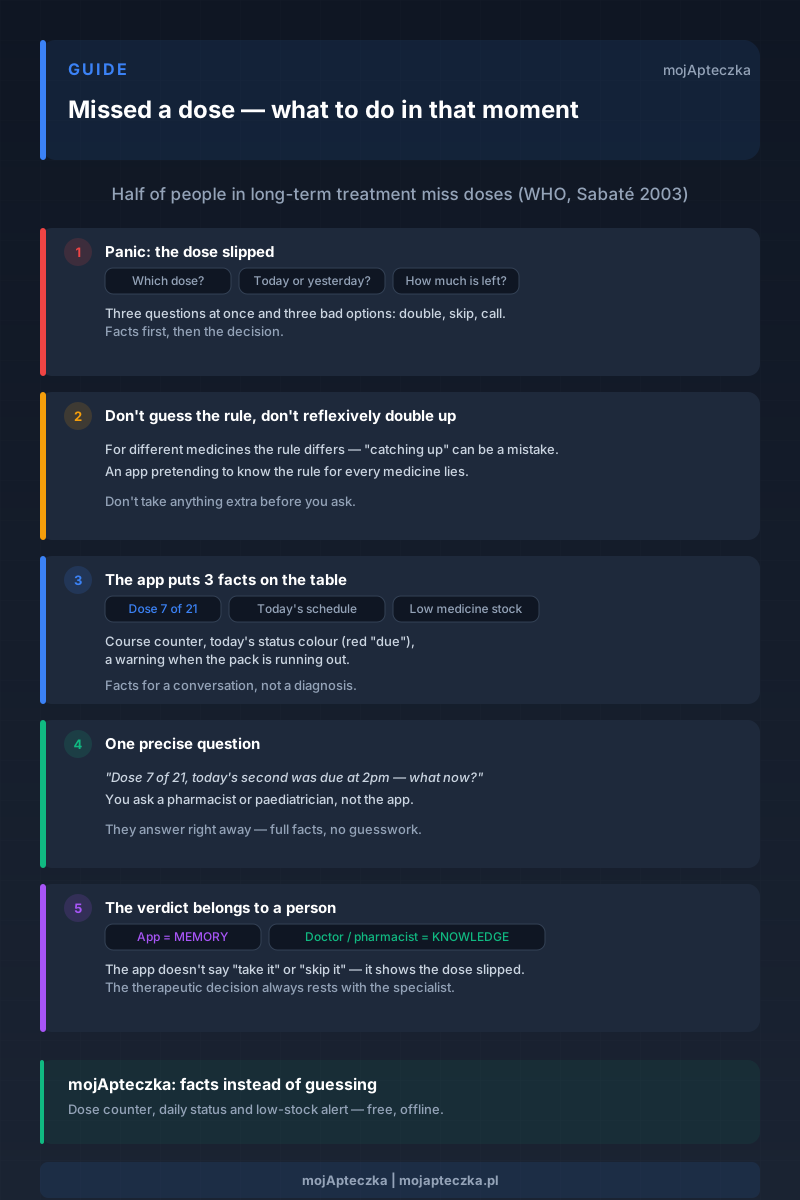
Friday, half past seven in the evening. Nine-year-old Leon is on day three of an antibiotic — three doses a day. And the one at two o’clock, in the middle of the fever, the phone calls and dinner, simply vanished. The measuring cup stayed on the worktop, unopened. Mum puts her son to bed and does not know: give a double dose now to catch up? Skip it? Call the paediatrician on a Friday night?
This article is about that one moment — when a dose has already been missed and three bad options swirl in your head at once. Not about why we miss doses (that is another topic), but what to do once it has happened. Because a missed dose is not an exception. In long-term treatment, half of all people miss doses (World Health Organization, after Sabaté 2003), and during short antibiotic courses the share of unfinished treatment is often even higher.
We will show the line that many “health” apps do not respect. mojApteczka does not prescribe. It will not tell you whether to double the dose — because that is a decision for a pharmacist or doctor. The app does something else: it turns panic into one precise question.
First rule: don’t guess the rule, don’t reflexively double up
The most common reflex after a missed dose is: “I’ll take a double dose and catch up.” And that is exactly the reflex worth avoiding as an automatic response. For different medicines the rule is different, and “catching up just in case” can be the very thing that does harm. An app that pretended to know one rule fitting every medicine would be an app that lies.
That is why the safe move is always the same and does not depend on which medicine it is:
- Don’t take anything extra “just in case.”
- Gather the facts — the app lays them in front of you in a few seconds.
- Ask one question of a pharmacist or doctor.
That is the whole philosophy of this piece. The app is a tool of memory. The doctor and pharmacist are knowledge. These are two different things and they do not replace each other.
Three facts the app puts on the table
Panic comes from not knowing: which dose was it, was it really today, how much is left. When you have those three things in front of you, the question for your pharmacist becomes short and specific.
A dose counter on the medicine card. Instead of “I think I took it, but I’m not sure” you see “dose 7 of 21”. You know where you are in the course and how much is left. With medication reminder tracking, every marked dose moves that counter, so the history does not depend on memory.
Today’s schedule with status. Each dose of the day has a colour: green is taken on time, a red “due” item is the one that is late or missed. At a single glance you see what is missing today — you are not reading it off a note on the fridge.
A low-stock warning. If it turns out along the way that the pack is running out, the low medicine stock alert flags it in time — before the antibiotic runs out on a Sunday evening with the pharmacies closed.
These are facts for a conversation, not a diagnosis. The app decides nothing — it shows the state of things.
One precise question instead of three guesses
With these facts, you call or walk into the pharmacy not with “I think I missed something”, but with a ready sentence:
“My son is on this antibiotic, three times a day, we’re at dose seven of twenty-one, today’s second dose was due at two o’clock and I didn’t give it. What now?”
The pharmacist gets the full set of information and can answer right away, instead of drawing it out of you piece by piece. The decision — take it, skip it, shift it — is theirs. You supplied the facts, they add the knowledge. This is the division of labour that lifts the burden of guessing off a parent.
”Taken” in one tap — even with no signal
When a dose is given, you tap “Taken” on the notification and the record is made instantly, locally on the device. The dosing log works offline — at a cabin in the countryside, in a basement, on a train with no signal, everything is saved the same way, and syncing with the second caregiver’s phone catches up on its own when the internet returns. So in the evening you don’t ask yourself “did I take it today or not” — the answer is on the card.
It is a small thing that shows up most clearly with people taking the same medicine every day at a fixed time: no more taking a second tablet for certainty because the first one vanished from memory.
At the doctor: the report is a treatment schedule, not a judgement of the parent
The hardest part of a missed dose is often emotional. A parent or caregiver easily slips into “I gave it diligently”, because the shame in front of the doctor is real — and that is exactly what fuels a vicious circle: the doctor does not know about the missed doses, so reaches for a stronger medicine that may not be needed.
The PDF report for the doctor defuses this mechanism. It is a treatment schedule — medicine, dose, active ingredient, schedule — not a judgement of how well you are coping. You say plainly “twenty of twenty-one, I missed one”, rather than reconstructing it from memory under the pressure of the consulting room. The doctor works on the full picture, not on an embarrassed approximation. How to gather such a set before a visit, we describe separately in the piece on how to prepare a medicine list for a doctor’s visit.
A senior on many medicines: the app rightly doesn’t judge which dose is dangerous
For someone with polypharmacy — many medicines at once a missed dose has one more layer. A missed heart medicine is not the same as a missed vitamin D — but judging which of them matters clinically belongs to a doctor or pharmacist, not to an app.
And here mojApteczka does something that may look like a gap but is an asset: it does not distinguish which missed dose is dangerous. It shows each one just as clearly and leaves the verdict to a person with knowledge. An app that “reassured” you about one missed item and “alarmed” you about another would be making a medical decision — and it should not do that. For a caregiver running a parent’s medicine cabinet from another city (the caregiver’s role), something else matters: that nothing disappears from view and that every doubt can be checked with the facts in hand.
What the app does NOT do — plainly
It is worth saying this without dressing it up, because trust depends on it:
- It doesn’t say “take it now” or “skip it.” It shows that a dose was missed; the verdict belongs to a person.
- It doesn’t diagnose or assess your condition. It does not know whether the fever is rising and whether that matters for this particular dose.
- It doesn’t replace a pharmacist or doctor. It is a layer of memory and order, not a clinical decision system.
The line is simple: the app reminds and organises, the person assesses and decides. The higher the stakes — medicines where a missed dose really can matter — the less room there is for guessing, and the sooner it is worth reaching for the phone to call a pharmacist or doctor, rather than asking the app something it deliberately does not answer.
Better that a dose never slips at all
The calmest scenario is the one where you don’t have to catch up on anything, because the dose was never lost. That is a separate topic, and we cover it in the guide on how to avoid forgetting your medicines — setting up alerts and times so a dose does not slip. This article is for the “it already happened” moment; that one is for the “so it doesn’t happen” moment. Together they close the topic.
mojApteczka is free and works offline. And next time a dose slips, instead of three guesses you’ll have one fact and one question.
mojApteczka is an organizational and informational tool. It helps you keep your medicine cabinet in order and reminds you about a dose, but it does not replace the advice of a doctor, pharmacist or nurse. Therapeutic decisions — whether to take a missed dose, in what amount, when to skip it — always belong to the specialist in charge of your care.
Listen to the podcast: Episode 3 — “I missed the antibiotic dose. What now, mum?” — a conversation between Tomasz and Iza about this same missed-dose moment, about the myth of “doubling up to catch up”, and about why the app gives you the facts and leaves the decision to your pharmacist. Also available on YouTube.
Frequently asked questions
- Will the app tell me whether to take a missed dose?
- No. mojApteczka is an organizational and informational tool — it shows the facts (which dose you missed, at what time, how much is left in the pack), but it does not make a therapeutic decision. Whether to take, skip or adjust a missed dose is always decided by a pharmacist or doctor, because it depends on the specific medicine and your situation. The app simply organises the information so you can ask one precise question instead of guessing.
- What does the app show the moment a dose is missed?
- Three facts. First, a counter on the medicine card, for example dose 7 of 21, so you know exactly how many doses have been taken and how many are left in the course. Second, today's schedule colour-coded by status — green for taken, a red due item for a late or missed dose. Third, a low-stock warning if the pack is running out. These are facts to discuss with your pharmacist, not advice.
- Can I just double the next dose to catch up on the one I missed?
- Do not assume that. Doubling up to catch up is one of the most common reflexes, and it can be wrong — for many medicines the rule is different, and an app that pretended to know one rule for every medicine would mislead you. The safe move is always the same: gather the facts from the app and ask a pharmacist or doctor before you take anything extra.
- How do I log a dose when I have no signal?
- You tap Taken in the app and the dose is recorded instantly, locally on the device — even with no internet. Syncing with other devices in the family catches up on its own when the signal returns. So in the evening you do not have to reconstruct from memory whether the medicine was given; you can see it on the card.
- What should I bring to the doctor after a missed dose?
- A PDF report from the app. It is a treatment schedule — medicine, dose, active ingredient and schedule — not a judgement of how well you are coping. You say plainly twenty of twenty-one, I missed one, instead of reconstructing it from memory. The doctor gets the full picture and bases the decision on it.
- How is this article different from the one about reminders?
- The reminders guide is about prevention — how to set up alerts so a dose does not slip by. This piece is about the moment when a dose has already been missed and you need to calm the panic and ask the right question. These are two different moments: one before, one after. It is best to use both.
- Does the app tell which missed dose is dangerous?
- No — and that is deliberate. A missed heart medicine is not the same as a missed vitamin D, but judging which dose matters clinically belongs to a doctor or pharmacist, not to an app. mojApteczka shows every missed item just as clearly and leaves the verdict to a person with medical knowledge.