Home Medicine Cabinet — The Complete Guide to Managing Medicines at Home
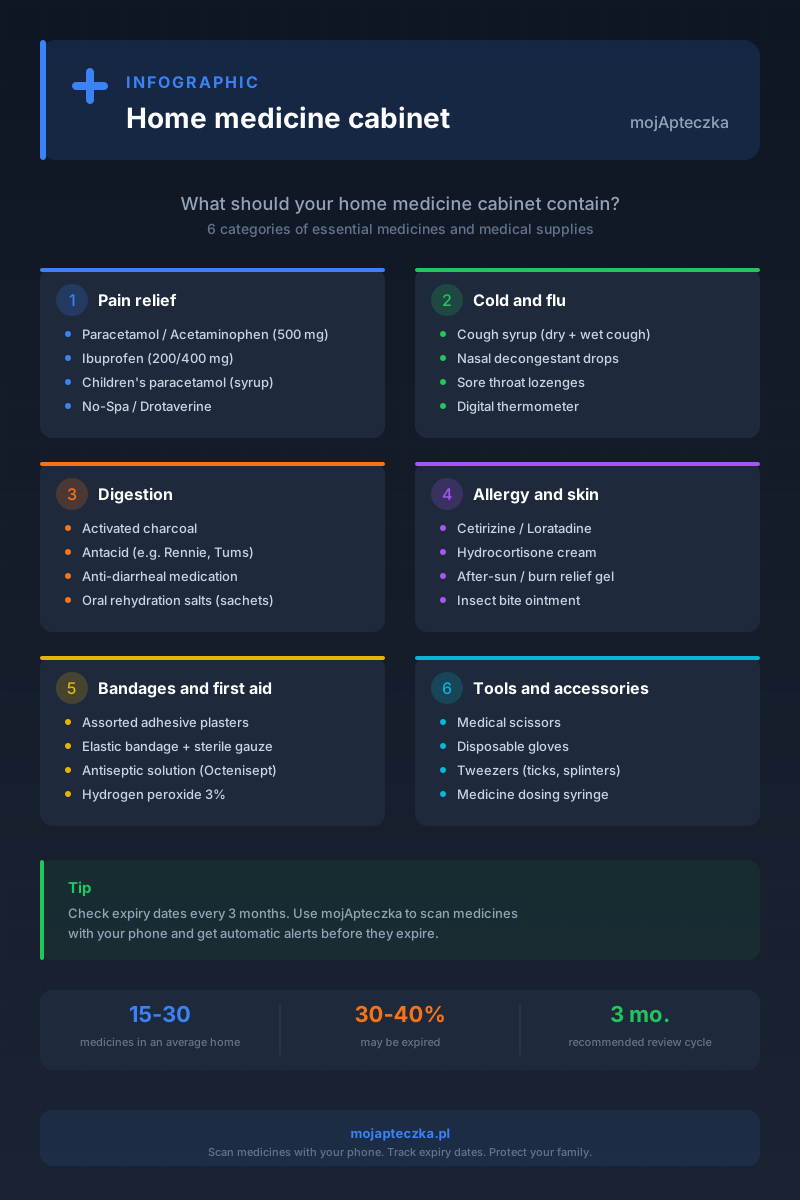
Every home has one. A bathroom shelf, a kitchen drawer, a plastic box shoved into the back of a wardrobe. The home medicine cabinet is one of the most universal household items — and one of the most neglected. We stock it when someone falls ill, forget about it when they recover, and repeat the cycle until it becomes a graveyard of half-used blister packs, sticky syrup bottles, and medicines that expired two winters ago.
This guide is about doing it properly. We will cover what your cabinet should contain, how to organise it, where and how to store medicines, what to do when things expire, how to adapt your cabinet to the seasons, and how modern digital tools can take the guesswork out of the entire process. If you manage medicines for a family — children, elderly parents, pets — this is your reference page.
Why Your Medicine Cabinet Deserves Attention
A poorly managed cabinet is not just messy. It is a health risk. Research consistently shows that the majority of households keep expired medicines at home, often without realising it. Expired medicines lose potency. In rare cases, chemical degradation products can be actively harmful. And when you reach for something in an emergency — a child’s fever at midnight, a sudden allergic reaction — you need it to work.
Beyond safety, there is a practical argument. Knowing exactly what you have means you stop buying duplicates. You know when stock runs low. You can hand a doctor or pharmacist an accurate list of what the household is taking. A well-managed cabinet saves money, saves time, and reduces waste.
For a step-by-step walkthrough of how to get started, see our practical guide: How to Properly Manage Your Home Medicine Cabinet.
What Should a Home Medicine Cabinet Contain?
The answer depends on your household, but there is a solid baseline that covers the most common situations.
Over-the-Counter Medicines
These are the workhorses of any home cabinet:
- Pain relievers and fever reducers — paracetamol and ibuprofen in appropriate formulations for every household member (adult tablets, children’s syrup).
- Antihistamines — for allergic reactions, insect stings, and hay fever. A non-drowsy option for daytime and a sedating one for nighttime itching.
- Digestive remedies — antacids, anti-diarrhoeal medication, oral rehydration salts.
- Cold and cough medicines — a decongestant, a cough suppressant, and throat lozenges.
- Topical treatments — antiseptic cream, hydrocortisone cream for bites and rashes, burn gel.
- Eye drops — basic lubricating drops for dry or irritated eyes.
First-Aid Supplies
A medicine cabinet without first-aid supplies is incomplete:
- Adhesive plasters in multiple sizes.
- Sterile gauze pads and rolls.
- Elastic bandages.
- Medical tape.
- Scissors and tweezers.
- Disposable gloves.
- A digital thermometer.
- Instant cold packs.
Prescription Medicines
If anyone in the household takes prescription medication, it belongs in the cabinet too — clearly labelled with the patient’s name, dosage, and prescribing instructions. Keep these separate from OTC medicines to avoid confusion.
Supplements and Vitamins
Vitamin D, iron, folic acid, and other commonly used supplements should have their own section. They are not medicines in the strict sense, but they expire, they interact with drugs, and they need to be tracked.
For a detailed shopping list tailored to families, read: Family Medicine Cabinet — What to Buy.
Organising Your Cabinet
Having the right contents is only half the job. Organisation determines whether you can actually find what you need when you need it.
Group by Purpose
Divide medicines into logical categories: pain and fever, digestive, respiratory, allergy, first aid, prescription, children’s medicines, and topical treatments. Physical dividers, small boxes, or labelled zip bags all work. The method matters less than the consistency.
Separate by Household Member
In a multi-person household, especially one with children and elderly members, it is critical to know whose medicines are whose. A children’s ibuprofen suspension and an adult ibuprofen tablet are not interchangeable. Colour-coded containers or shelf labels help.
Keep Leaflets Accessible
Patient information leaflets are your first reference in a dosing question. Do not throw them away. If the original leaflet is lost, you can usually find the PIL online through official medicine registries — or through apps like mojApteczka that link directly to the leaflet for every scanned medicine.
For a deep dive into organisation strategies, see: Medicine Grouping and Organisation Guide.
How to Store Medicines Correctly
Storage is where most people go wrong. The bathroom — the most popular location for a medicine cabinet — is often the worst. Bathrooms are warm and humid, and both heat and moisture accelerate medicine degradation.
Temperature
Most medicines should be stored between 15 and 25 degrees Celsius. Some require refrigeration (certain antibiotics, insulin, some eye drops). Check the packaging: “Store below 25 C” means room temperature is fine; “Store between 2 and 8 C” means the fridge.
Light
Many medicines are photosensitive. This is why they come in opaque or amber-coloured packaging. Storing medicines in a clear container on a sunny windowsill defeats the purpose of that packaging. Keep them in a dark or enclosed space.
Humidity
Moisture is the enemy of tablets and capsules. Avoid bathrooms, kitchens near the stove, and any location prone to condensation. A bedroom cupboard or a hallway closet is usually the best choice.
Child Safety
If children live in or visit your home, medicines must be stored out of reach and ideally in a locked cabinet. Child-resistant caps are a last line of defence, not a primary one — determined toddlers can defeat them.
You might be surprised how many common storage mistakes people make. We catalogued the most frequent ones: 10 Medicines You Probably Store Wrong.
For a comprehensive storage guide, read: How to Store Medicines at Home.
Expiry Dates — The Unavoidable Reality
Every medicine has an expiry date. After that date, the manufacturer no longer guarantees the product’s potency, safety, or quality. Some medicines degrade gradually and simply become weaker. Others can form harmful breakdown products — tetracycline antibiotics are the classic example.
How Big Is the Problem?
Bigger than most people think. Studies and surveys across Europe suggest that a significant percentage of medicines in the average home cabinet are past their expiry date. Many of these are medicines people would reach for in an emergency — painkillers, antihistamines, cold remedies — bought during a previous illness and then forgotten.
We investigated this in detail: How Many Expired Medicines Do You Really Have at Home?.
What to Do with Expired Medicines
Do not flush them. Do not throw them in the household bin. Medicines that enter the water supply or landfill cause environmental contamination. In Poland and most EU countries, pharmacies are required to accept expired medicines for safe disposal — free of charge.
For a full guide on disposal options and regulations, see: What to Do with Expired Medicines.
Tracking Expiry Dates
Manually checking every box in the cabinet is tedious, which is why most people do it once a year at best — or never. Digital tools change this equation. mojApteczka’s expiry date alerts notify you before a medicine expires, so you can use it while it is still effective or dispose of it and restock in time.
Seasonal Maintenance
A medicine cabinet is not a set-and-forget system. Its contents should shift with the seasons and with your family’s plans.
Spring Cleanup
Spring is the natural time for a full audit. Winter cold medicines you no longer need, expired flu remedies, half-used cough syrups — all of these accumulate over the colder months. A spring cleanup means emptying the cabinet, checking every expiry date, disposing of what has expired, and restocking what is running low.
We wrote a complete spring protocol: Spring Medicine Cabinet Cleanup.
Summer and Vacation Preparation
Travelling with a family means building a portable medicine kit. The contents differ from your home cabinet — you need travel-specific items like motion sickness tablets, higher-SPF sunscreen, insect repellent, and rehydration salts for hot climates. You also need to consider the legal status of certain medicines in your destination country.
Our vacation checklist covers everything: Vacation Medicine Kit 2026 — Complete Checklist.
Allergy Season
If anyone in the household suffers from hay fever or seasonal allergies, stock up on antihistamines before the pollen season begins. Check that last year’s supply has not expired.
Winter Cold and Flu Season
Restock cold and flu medicines, throat lozenges, and fever reducers before winter hits. If you have elderly family members, confirm that their flu vaccination is up to date and that their regular prescriptions are filled.
Special-Purpose Cabinets
Not every medicine cabinet is in the home.
The Car First-Aid Kit
Many countries require a first-aid kit in the vehicle. Even where it is not legally mandated, keeping one is common sense. The contents differ from a home cabinet — the emphasis is on trauma supplies (bandages, tourniquets, thermal blankets) rather than ongoing medication.
Regulations change, and what was compliant last year may not be this year. We maintain an up-to-date guide: Car First-Aid Kit Requirements 2026.
The Travel Kit
Distinct from both the home cabinet and the car kit, a travel medicine kit is built for a specific trip. It should include prescription medicines for every traveller, basic OTC medicines, first-aid supplies, and any destination-specific items (antimalarials, altitude sickness medication, water purification tablets).
The Pet Medicine Section
If you have pets, their medicines should be stored separately from human medicines — clearly labelled and out of reach. Some human medicines are toxic to animals (ibuprofen is dangerous for dogs and cats), and some veterinary medicines are dangerous for humans.
Checking Medicine Availability
Before you go to the pharmacy to restock, it helps to know whether what you need is actually in stock. Medicine shortages are a recurring issue across Europe, and popular OTC brands can be temporarily unavailable.
mojApteczka lets you check medicine availability at nearby pharmacies before you leave the house, saving wasted trips: Check Medicine Availability at a Pharmacy Online.
Digital Tools for Managing Your Cabinet
Pen-and-paper lists and memory are unreliable. Modern apps solve the problem systematically.
What a Good Medicine Management App Does
At minimum, a useful app should let you:
- Add medicines quickly — ideally by scanning the package rather than typing everything manually.
- Track expiry dates — with automatic alerts before medicines expire.
- Organise by person or category — so a family cabinet is not one undifferentiated list.
- Share information — with family members, caregivers, or doctors.
- Access leaflets — so dosing information is always at hand.
mojApteczka does all of the above. Its AI-powered scanning reads the medicine name, dosage, expiry date, and form directly from a photo of the package — no typing, no barcode database dependency. You take a picture, review the pre-filled details, and save.
Why Digital Beats Analogue
The core advantage is automation. You do not need to remember to check expiry dates — the app remembers for you. You do not need to write a list before a doctor’s visit — the app generates one. You do not need to phone a family member to ask what medicines grandma takes — the app shares the list via QR code or PDF.
For a broader look at how these tools work in a family context, read: Family Medication Tracker — Why Every Household Needs One.
Building a Routine
The best cabinet in the world is useless if you do not maintain it. Here is a simple routine that keeps everything in order:
- When you buy a new medicine — add it to your tracking system immediately. Scan the package, set the expiry alert, assign it to the right person or category.
- When you use a medicine — update the quantity. This prevents the unpleasant surprise of reaching for ibuprofen and finding an empty box.
- Once per season — do a quick audit. Check for expired items, restock what is low, and adjust for the upcoming season’s needs.
- Once per year — do a deep cleanup. Empty the entire cabinet, clean the storage space, verify every item, and dispose of anything expired or no longer needed.
Read More
This guide covers the full scope of home medicine cabinet management. For detailed advice on specific topics, explore our in-depth articles:
- How to Properly Manage Your Home Medicine Cabinet — a practical step-by-step walkthrough.
- Family Medicine Cabinet — What to Buy — a shopping list for families.
- How Many Expired Medicines Do You Really Have at Home? — the scale of the expiry problem.
- What to Do with Expired Medicines — safe disposal methods.
- Check Medicine Availability at a Pharmacy Online — avoid wasted pharmacy trips.
- How to Store Medicines at Home — temperature, light, humidity, and child safety.
- Vacation Medicine Kit 2026 — Complete Checklist — what to pack for travel.
- Spring Medicine Cabinet Cleanup — the seasonal audit protocol.
- Car First-Aid Kit Requirements 2026 — regulations and recommended contents.
Start managing your cabinet digitally with mojApteczka — scan your medicines, track expiry dates, and keep your family safe. You can also download the Android app from Google Play.