Holiday Medicine Kit 2026 — Complete Family Checklist
A fever at 3 a.m. in a rented apartment? Do not get caught out. A complete medicine kit checklist for the seaside, mountains, and trips abroad.
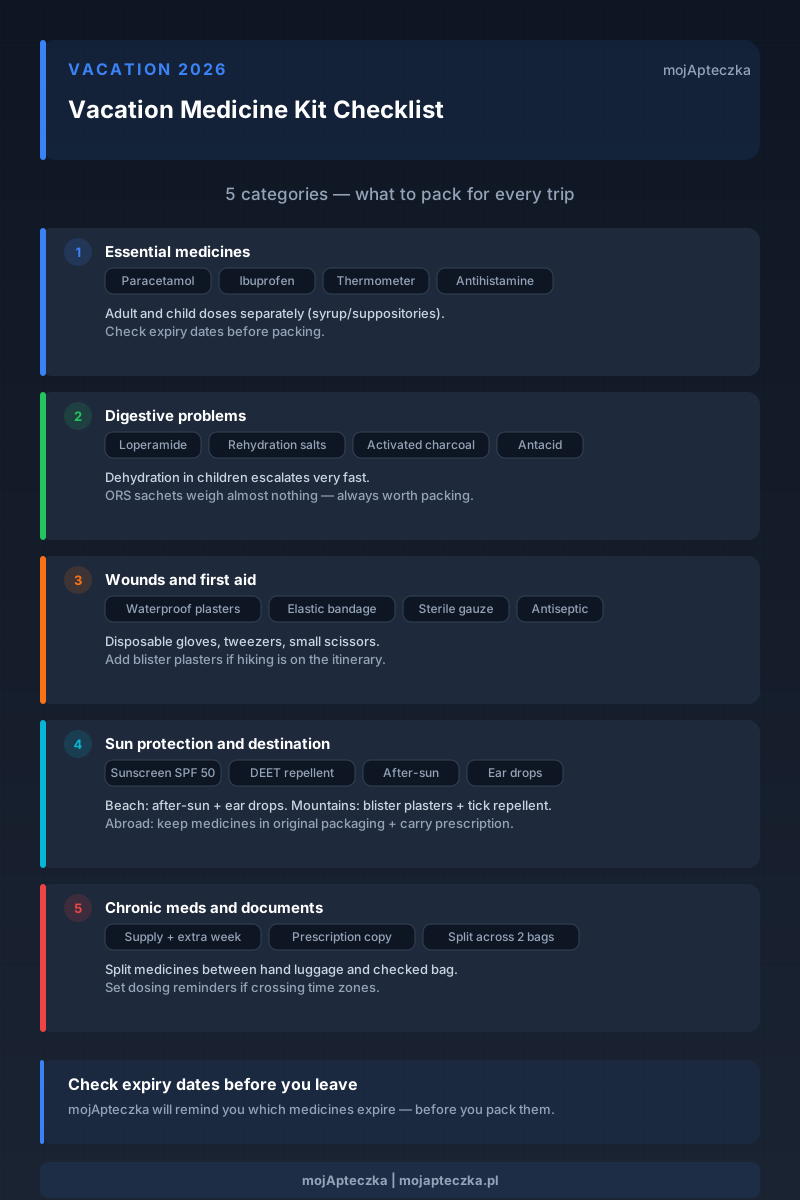
Nothing ruins a family holiday quite as effectively as a sick child and an empty medicine kit. A fever at three in the morning in a rented apartment, with the nearest pharmacy closed and not even paracetamol to hand, is a scenario most parents have been through at least once. You do not need to go through it twice.
A well-stocked travel medicine kit is not a bag full of medicines “just in case”. It is a carefully chosen set that covers the most common health situations while you are away, without weighing ten kilos. Below is a practical list: what to pack, what not to forget, and how to adapt your medicine kit to the type of trip.
What should you pack in a holiday medicine kit?
A basic holiday medicine kit should include: (1) paracetamol and ibuprofen, (2) loperamide for diarrhoea, (3) oral electrolytes, (4) medicine for heartburn, (5) waterproof plasters and a bandage, (6) an antihistamine, (7) a thermometer, (8) SPF 50 sunscreen, (9) an insect bite treatment, (10) a wound disinfectant. For seaside trips, add panthenol and ear drops. For the mountains, add blister plasters and tick repellent.
Before packing, check: the expiry dates of all medicines, a supply of regular medication plus 3 extra days, and split prescription-only medicines between two bags.
Basic checklist — always, whatever the destination
This is the set that should be in your medicine kit for any trip longer than a weekend. No exceptions.
Painkillers and fever reducers
- Paracetamol — in an adult dose and separately for children (syrup or suppositories if you are travelling with young children).
- Ibuprofen — as an alternative to paracetamol or to use alongside it. It also has an anti-inflammatory effect, which is useful for injuries.
Medicines for stomach problems
- Loperamide (for diarrhoea) — an absolute essential, especially on trips abroad.
- Oral electrolytes — dehydration after diarrhoea in a child can escalate very quickly. Electrolyte sachets weigh almost nothing and can be invaluable.
- Activated charcoal or diosmectite — for milder food poisoning.
- Medicine for heartburn or indigestion — especially if you plan to sample the local cuisine.
Dressings and disinfection
- Plasters in different sizes, including waterproof ones.
- Elastic bandage — useful for sprains and strains.
- Sterile gauze pads.
- Wound disinfectant (octenisept, rivanol, or chlorhexidine).
- Disposable gloves — one pair is enough.
Allergy medicines
- Antihistamine (cetirizine, loratadine) — for allergic reactions to a new environment, insect bites, or unfamiliar foods. Even if nobody in the family has allergies day to day, the situation can change while you are away.
Other items
- Thermometer — small and digital. Without a thermometer, a fever is guesswork.
- SPF 50 sunscreen — even if you are going to the mountains, not the beach.
- Insect repellent (with DEET or icaridin).
- Soothing treatment for bites (hydrocortisone gel).
Beach medicine kit — seaside, lake, pool
By the water, there are risks you do not usually have in the city. Sun, sand, jellyfish, sharp stones on the bottom — the list is long.
- High-SPF sunscreen and after-sun lotion — sunburn is the most common complaint on beach holidays. Apply sunscreen every two hours, even on cloudy days.
- Panthenol spray — if sunburn does happen, panthenol soothes pain and supports recovery.
- Ear drops — so-called swimmer’s ear (inflammation of the outer ear canal) is common in children who dive a lot. Use boric alcohol drops or ready-made ear preparations.
- Waterproof plasters — ordinary plasters come off within minutes when they meet water.
- Motion sickness medicines — if you are planning cruises, boat trips, or ferries.
Mountain medicine kit — trails, trekking, camping
The mountains mean distance from medical help and changeable weather conditions. Your medicine kit needs to be more self-sufficient.
- Elastic bandage and compression bandage — a twisted ankle on the trail is a classic.
- Blister plasters (hydrocolloid type) — if you do not have them in your kit, you will regret it after the first day of walking in new shoes.
- Warming ointment or cooling gel — for bruises and overworked muscles.
- Altitude sickness medicine — if you are planning routes above 2500 m above sea level (mainly Alpine or more exotic trips).
- NRC thermal blanket — it weighs a few dozen grams and can protect your health in case of hypothermia.
- Tick repellent — Lyme disease is a real risk in Polish mountains. Use permethrin products on clothing and DEET on skin.
- Tick tweezers — thin and curved. Removing a tick within a few hours reduces the risk of infection.
Abroad medicine kit — what to add when travelling outside Poland
Abroad, several extra problems appear: a language barrier at the pharmacy, different brand names for medicines, and potentially different strains of bacteria and viruses.
- Prescription-only medicines in their original packaging — at the airport or border you may be asked to show a prescription. Original packaging with the pharmacy label is the best protection.
- A copy of the prescription or a doctor’s certificate — especially if you are carrying psychotropic medicines, opioids, or insulin.
- Probiotics — changes in climate, water, and cuisine are a recipe for unsettled gut flora. Starting a probiotic a few days before departure can make the adjustment easier.
- Water purification products — for trips to countries where tap water is not safe to drink.
- Antimalarial medicines — if you are travelling to endemic areas (Sub-Saharan Africa, South-East Asia, Central America). A consultation with a travel medicine doctor is essential — do not improvise.
Children’s medicine kit — extra items
If you travel with children, a standard medicine kit needs a few additions.
- Medicines in age-appropriate forms — syrups instead of tablets, suppositories instead of capsules. Check the dosage for your child’s weight and age before the trip, not during a fever.
- Saline nasal drops — a blocked nose in a baby can turn the night into a nightmare.
- Barrier cream for nappy rash — on longer trips, nappy rash happens more often than at home.
- Teething gel — if your child is the right age, do not count on the issue staying away just because you are on holiday.
- Spare dummy — it is not a medicine, but parents of young children know that a lost dummy is a crisis.
Regular medication — do not leave it until the last minute
If anyone in the family takes medicines every day — for high blood pressure, diabetes, asthma, thyroid disease, depression — preparing for a trip needs extra planning.
- Take enough for the whole trip plus a few extra days. A delayed flight, an extended stay, lost luggage — each of these scenarios is realistic.
- Split medicines between two bags. Keep some in hand luggage and some in the suitcase. If one goes missing, you still have the other.
- Check whether the medicine is available in the destination country. Not every medicine available in Poland is registered abroad. Brand names differ between countries — your “Acard” is “Aspirin Protect” in Germany.
- Set dosage reminders. A change of time zone and a different daily rhythm make it easy to miss a dose on holiday.
Check expiry dates before packing
This is the step most people skip, and it can save the situation. You take ibuprofen from a drawer, throw it into the bag, and only at the seaside discover it expired two months ago.
Before every trip, check the expiry dates of all the medicines you plan to take. If something expires during the trip, leave it at home and buy a new pack.
Expiry date alerts in mojApteczka do this automatically. The app uses colour markers to show which medicines will expire within 30, 60, or 90 days. One glance at the list is enough to know what to take and what to replace.
How to store medicines while travelling
Packing medicines is only half the job. The other half is keeping them in good condition throughout the trip.
- Do not leave the medicine kit in a car in the sun. The temperature inside a closed car in summer can exceed 60 degrees. That is enough to ruin most preparations within a few hours.
- Carry medicines that need refrigeration in a cool bag with ice packs. This applies to insulin, some antibiotics, and probiotics.
- Keep medicines in their original packaging. At the airport this is a safety requirement, but there is also a practical reason — the original blister protects a tablet from moisture and light.
- The medicine kit should be easy to access. Not at the bottom of a suitcase under clothes, but in hand luggage or on top of your bags.
Pack thoughtfully
A good holiday medicine kit is one whose contents you will mostly never use. But on the one occasion when you need it, you will appreciate every minute spent preparing it.
Before your next trip, open mojApteczka, review your medicine list, and check what to take. The app will show you expiry dates, remind you what is missing, and help you assemble your medicine kit in a few minutes instead of a few hours. The Android app is also available on Google Play.
Planning a holiday trip and have questions about your travel medicine kit? Email us at kontakt@mojapteczka.pl — we are happy to help!