Over-the-Counter Medicines — Are They Really Safe?
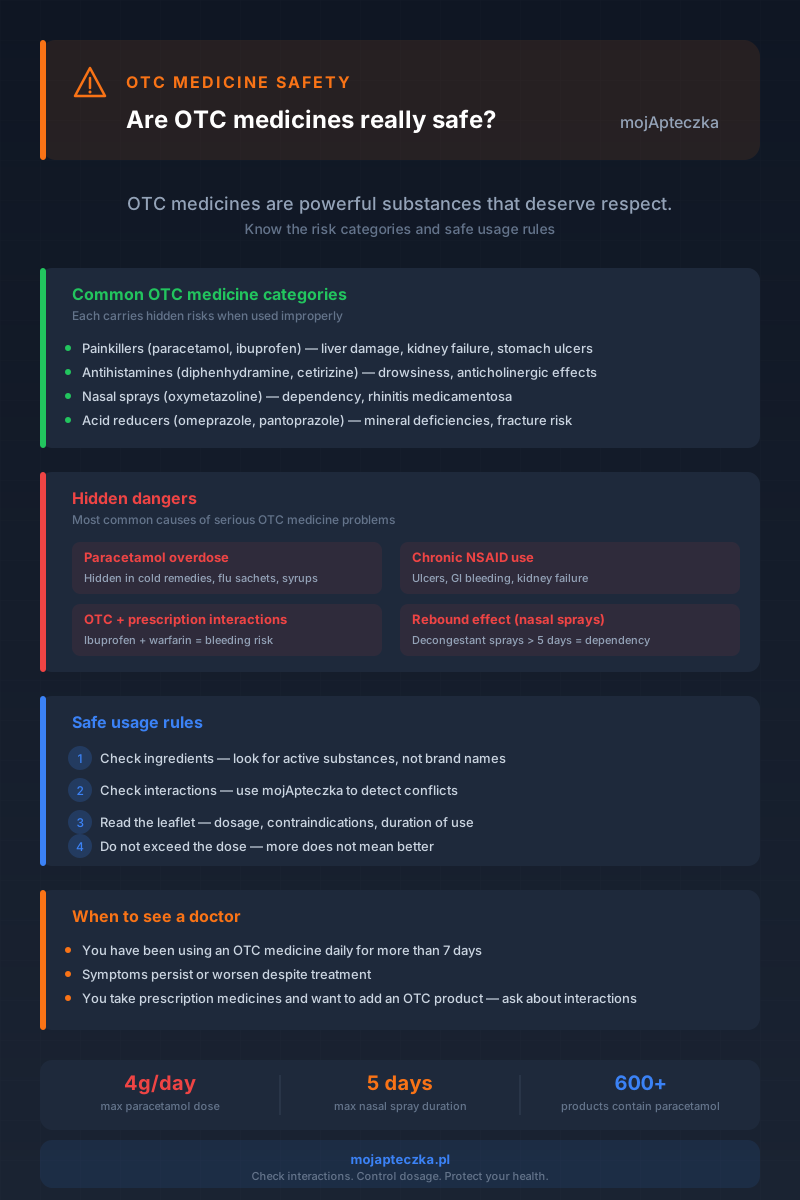
You walk into a pharmacy, pick a box off the shelf, pay without a prescription, and take it home. No doctor involved, no questions asked beyond “Is this for yourself?” The assumption is built into the experience: if it does not require a prescription, it must be safe.
That assumption is wrong. Not entirely wrong — OTC medicines have a strong safety profile when used as directed. But “when used as directed” is doing enormous work in that sentence, and the gap between how these products should be used and how they actually are used is where the danger lives.
Every year, thousands of hospital admissions across Europe are directly linked to over-the-counter medicine misuse. Not illicit drugs. Not prescription errors. Products anyone can buy from a supermarket shelf.
The Myths That Make OTC Dangerous
Myth: “If it is available without a prescription, it cannot really hurt me.”
OTC availability means a medicine has been assessed as safe enough for use without direct medical supervision at recommended doses for short durations in otherwise healthy adults. That is a narrow safety envelope. Step outside it — higher doses, longer use, pre-existing conditions, combination with other drugs — and the safety profile changes entirely.
Myth: “Natural means safe.”
Herbal remedies, homeopathic preparations, and supplements sold alongside conventional OTC medicines are often perceived as inherently gentler. St John’s Wort — a widely available herbal supplement — interacts with oral contraceptives, antidepressants, blood thinners, and immunosuppressants. “Natural” is not a safety classification.
Myth: “I have been taking it for years with no problems.”
Long-term use of many OTC products carries cumulative risks that do not announce themselves with obvious symptoms. Chronic NSAID use silently damages the stomach lining and kidneys. Prolonged use of proton pump inhibitors affects calcium and magnesium absorption. The absence of symptoms is not the absence of harm.
Myth: “More is better when the pain is worse.”
Doubling the dose of paracetamol because a headache is severe does not double the pain relief. It does, however, move you meaningfully closer to the threshold for liver damage. Dose recommendations are not conservative suggestions — they are calculated limits.
The Real Risks, Drug by Drug
Paracetamol (Acetaminophen) — The Silent Liver Threat
Paracetamol is the most widely used OTC analgesic in the world and the leading cause of acute liver failure in many Western countries. In the UK alone, paracetamol overdose accounts for the majority of calls to poison control centres.
The problem is not the drug itself — it is the maths. Paracetamol is present in over 600 different products: cold-and-flu sachets, migraine tablets, combination painkillers, sleep aids, and sinus remedies. A person who takes a paracetamol tablet for a headache, a cold-and-flu sachet four hours later, and a nighttime cold remedy before bed may have consumed three times the safe single dose — without taking “paracetamol” more than once in their mind.
The toxic dose for the liver is not far above the therapeutic dose. In adults, the maximum daily dose is 4 grams. Liver damage can begin at 7.5 grams in some individuals. That margin is narrow for the most casually used medicine in the world.
What to do: Read the active ingredients on every OTC product you use. If it contains paracetamol, count it towards your daily total. Never exceed 4 grams in 24 hours. If you drink alcohol regularly, the safe threshold is lower.
Ibuprofen and Other NSAIDs — The Blood Pressure Trap
Ibuprofen, naproxen, and aspirin belong to the NSAID family. They are effective anti-inflammatories and painkillers, but they carry cardiovascular and gastrointestinal risks that increase with dose and duration.
NSAIDs raise blood pressure. For someone already taking antihypertensive medication, adding regular ibuprofen can partially or fully counteract the blood pressure treatment. Studies show that regular NSAID use can raise systolic blood pressure by 5 mmHg on average — enough to meaningfully increase stroke and heart attack risk in vulnerable patients.
They also damage the gastrointestinal mucosa. Chronic use significantly increases the risk of stomach ulcers and GI bleeding, particularly in adults over 65 or those taking blood thinners concurrently.
What to do: Use NSAIDs at the lowest effective dose for the shortest time needed. If you take blood pressure medication, discuss NSAID use with your doctor. If you are over 65, consider paracetamol as a first-line option instead.
Antihistamines — Drowsiness Is Not the Only Problem
First-generation antihistamines (diphenhydramine, chlorphenamine) cause drowsiness — this is well known and even exploited in OTC sleep aids. What is less appreciated is their anticholinergic burden. In elderly patients, anticholinergic drugs are associated with confusion, urinary retention, constipation, dry mouth, and falls. Cumulative anticholinergic exposure over years has been linked in observational studies to increased dementia risk.
Even second-generation antihistamines (cetirizine, loratadine), while far less sedating, can cause drowsiness in some individuals, particularly at higher doses or in combination with other sedating substances including alcohol.
What to do: Choose second-generation antihistamines as a default. Avoid first-generation antihistamines in elderly adults. Do not combine antihistamines with alcohol, sedatives, or other anticholinergic drugs without medical advice.
Decongestant Nasal Sprays — The Rebound Cycle
Oxymetazoline and xylometazoline nasal sprays provide rapid, effective relief from nasal congestion. They are meant for use over 3 to 5 days maximum. Many people use them for weeks or months.
The result is rhinitis medicamentosa — rebound congestion caused by the spray itself. The nasal passages become dependent on the decongestant. Without it, congestion is worse than the original complaint. Breaking the cycle requires stopping the spray entirely and enduring several uncomfortable days, sometimes with the help of a steroid nasal spray prescribed by a doctor.
What to do: Never use decongestant nasal sprays for more than 5 consecutive days. For chronic congestion, see a doctor. Saline nasal rinses and steroid sprays are effective alternatives for long-term use.
Antacids and Proton Pump Inhibitors — Long-Term Consequences
Calcium-based antacids are generally safe for occasional use. But proton pump inhibitors (PPIs) like omeprazole — now widely available OTC in many countries — were designed for short courses of 2 to 4 weeks. Many people take them daily for months or years.
Long-term PPI use is associated with reduced magnesium absorption, increased fracture risk (possibly through impaired calcium absorption), increased susceptibility to certain gut infections including Clostridioides difficile, and potential vitamin B12 deficiency. These risks are modest for any individual but meaningful across years of continuous use.
What to do: Use antacids for occasional symptoms. If you need acid suppression more than twice a week, see your doctor to identify the underlying cause. Do not self-treat with PPIs for more than 2 weeks without medical review.
The Prescription Interaction Problem
Perhaps the most underappreciated risk of OTC medicines is their interaction with prescription drugs. Many people do not mention their OTC use to their doctor, and many doctors do not ask specifically enough.
Key interactions that catch people out:
- Ibuprofen + warfarin or other anticoagulants — significantly increased bleeding risk
- Antacids + levothyroxine — reduced thyroid hormone absorption if taken at the same time
- St John’s Wort + oral contraceptives — reduced contraceptive effectiveness
- Pseudoephedrine + MAO inhibitors — potentially dangerous blood pressure spike
- Paracetamol + alcohol (chronic use) — increased liver toxicity
These are not rare interactions. They involve some of the most commonly used OTC products and some of the most commonly prescribed medicines.
How mojApteczka Protects You
mojApteczka’s drug interaction checker works for OTC medicines and supplements, not just prescription drugs. Add everything you take — including that “harmless” ibuprofen, the vitamin D supplement, and the herbal sleep aid — and let the system flag potential interactions. This is especially valuable because OTC products are the ones most often left off the list during doctor’s appointments.
The medicine leaflet feature gives you quick access to the full patient information leaflet for any medicine in your cabinet. When you want to check the maximum dose, the duration of use, or the list of conditions that contraindicate a product, the information is one tap away — no searching through crumpled paper inserts or unreliable websites.
A Simple Rule to Live By
Treat every OTC medicine with the same respect you would give a prescription drug. Read the dose instructions. Check the active ingredients. Consider what else you are taking. Do not exceed the stated duration. And if you find yourself needing the same OTC product week after week, that is not a sign that the product works well — it is a sign that you need to see a doctor about the underlying problem.
Take control of your full medicine picture at mojapteczka.pl. You can also download the Android app from Google Play.