Can I Take Medicines with Alcohol? A Practical Guide
Check which medicines must never be combined with alcohol and why. Learn the real risks and how to check medicines for alcohol interactions.
Friday evening. Dinner with friends. A glass of wine, perhaps a beer. A normal scene for millions of adults. And most of them will not think at all about the tablets they took a few hours earlier — because it was “only” ibuprofen for back pain, a blood pressure tablet, or an allergy medicine.
Yet alcohol is not a neutral drink in pharmacological terms. It is a psychoactive substance that follows the same metabolic route as most medicines — through the liver, the same enzymes, the same biochemical pathways. And when alcohol meets a medicine on that narrow route, things can happen that nobody warned you about at the pharmacy counter.
This article is not meant to frighten you or turn you into an abstainer. It is meant to give you specific knowledge: which combinations are genuinely dangerous, and which simply call for caution.
Why alcohol interacts with medicines
To understand the risk, you need to know how alcohol is processed in the body. Ethanol is metabolised mainly in the liver by enzymes from the cytochrome P450 family — the very same enzymes that break down most medicines.
When you drink alcohol occasionally, these enzymes are busy processing ethanol, and medicines remain in your body for longer than they should. Their concentration rises, and so do their effects — both intended and unwanted.
When you drink regularly, the body adapts. Enzyme production increases, medicines are processed faster than normal, their concentration falls, and they may not work as effectively as the doctor expected when prescribing them.
There is also the additive effect on the central nervous system. Alcohol is a depressant — it slows reactions, weakens coordination and has a calming effect. Any medicine with a similar profile (sleep-inducing, anti-anxiety, antihistamine or opioid) produces a stronger effect when combined with alcohol than the sum of the two substances alone.
Medicines you must NEVER combine with alcohol
Some combinations have such a narrow safety margin that even a small amount of alcohol poses a real risk.
Metronidazole and tinidazole
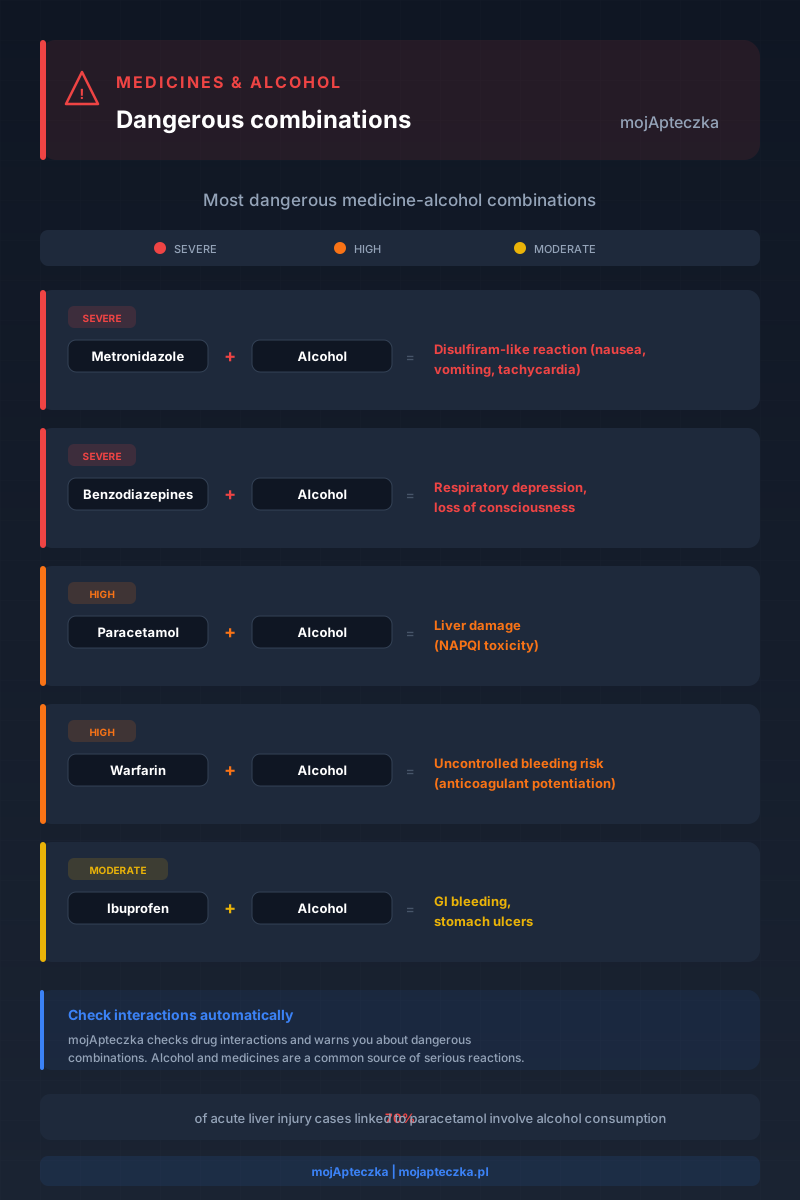
These are antibiotics used for bacterial and parasitic infections. Metronidazole blocks the enzyme aldehyde dehydrogenase — the same enzyme responsible for breaking down acetaldehyde, the toxic metabolite of alcohol. The effect? Even a small glass of wine can cause severe nausea, vomiting, violent headaches, tachycardia and a drop in blood pressure. The reaction is so unpleasant that a similar mechanism is used in a medicine for alcohol dependence (disulfiram). The ban on drinking continues for 48 hours after the last dose of metronidazole.
Psychotropic medications — benzodiazepines, sleeping medicines, opioid painkillers
Benzodiazepines (alprazolam, diazepam, lorazepam), sleeping medicines (zolpidem, zopiclone) and opioid painkillers (tramadol, oxycodone, codeine) inhibit the central nervous system. Alcohol intensifies this effect — not additively, but synergistically. This means that combining two doses that are “safe” separately can result in dangerous respiratory depression, loss of consciousness and, in extreme cases, death.
This is not a theoretical risk. Opioid overdose combined with alcohol is one of the most common causes of overdose death in developed countries.
Warfarin and other anticoagulants
Warfarin (Warfin, Sintrom) is a blood-thinning medicine with a very narrow therapeutic window. Alcohol affects its metabolism in both directions — occasional drinking increases the concentration of warfarin (bleeding risk), while chronic drinking speeds up its elimination (clotting risk). Any change in drinking pattern in a patient taking warfarin requires INR monitoring.
Antidepressants
Combining alcohol with SSRIs (fluoxetine, sertraline, escitalopram) or SNRIs (venlafaxine, duloxetine) increases drowsiness, impairs coordination and worsens symptoms of depression. With MAO inhibitors (moclobemide, and older MAOIs that are now used less often), alcohol — especially beer and wine — can cause a sudden rise in blood pressure because of the tyramine they contain.
Diabetes medicines
Insulin and sulfonylureas (glimepiride, gliclazide) lower blood sugar. Alcohol does the same. The combination can lead to hypoglycaemia — a dangerously low glucose level, with symptoms such as trembling, sweating and confusion, and in severe cases loss of consciousness. The problem is doubled: the symptoms of hypoglycaemia can easily be mistaken for drunkenness, so people nearby may not react in time.
OTC medicines and alcohol — seemingly harmless combinations
Over-the-counter medicines have a reputation for being “mild”. But when alcohol is involved, several of them deserve particular attention.
Paracetamol
Paracetamol is metabolised in the liver. One of its metabolites — NAPQI — is strongly hepatotoxic. Under normal conditions, the body neutralises NAPQI with glutathione. But alcohol depletes glutathione reserves and at the same time induces enzymes that produce more NAPQI. In people who drink regularly, even standard doses of paracetamol can cause subclinical liver damage. “Paracetamol for a hangover” is one of the worst ideas in self-care.
Ibuprofen and other NSAIDs
Ibuprofen irritates the stomach lining on its own. Alcohol does the same. The combination increases the risk of erosions, ulcers and gastrointestinal bleeding. The risk rises with dose and frequency — occasional ibuprofen and an occasional beer are a small risk, but regular use of both substances is a real route to gastroenterological problems.
First-generation antihistamines
Diphenhydramine, clemastine, promethazine — these have a strong sedative effect. Alcohol intensifies that drowsiness to a level that makes driving unsafe and may lead to breathing problems. Even second-generation antihistamines (cetirizine, loratadine) can increase drowsiness when combined with alcohol, although to a much smaller extent.
Dextromethorphan
An ingredient in many cough syrups. Combined with alcohol, it increases dizziness, drowsiness and coordination problems. At higher doses, it can cause hallucinations and confusion.
How to check your medicines for interactions
If you take any medicines — prescription-only or not — and plan to drink alcohol, check a few things.
First, read the leaflet. Specifically, the section on “Taking the medicine with food, drink and alcohol” (or “Interactions”). Every leaflet has this section, and it clearly says whether alcohol is contraindicated or whether caution is needed. In mojApteczka, you have quick access to leaflets — you do not have to search for a crumpled sheet of paper in the box.
Second, check the interactions between all the medicines you take. Even if each one on its own has no serious interaction with alcohol, the combination may create a risk. The drug interaction checker in mojApteczka lets you see potential conflicts between medicines in your home medicine cabinet — grouped by risk level.
Third, ask a pharmacist. This is an underused resource. Pharmacists know about interactions between medicines and alcohol and can tell you whether a specific situation is safe, calls for caution, or absolutely rules out drinking.
Safety rules
You do not have to become an abstainer to use medicines safely. But you do need to be aware of a few rules:
- Check the leaflet for every medicine you take for alcohol interactions.
- Do not take paracetamol for a hangover. If you need a medicine for a headache after drinking, wait a few hours and consider ibuprofen (as long as you do not have stomach problems).
- Never combine alcohol with sleeping medicines, sedatives or opioids. This is a rule with no exceptions.
- If you take medicines long term (for blood pressure, diabetes, depression, epilepsy), talk to your doctor about your drinking pattern. You do not need to lie — your doctor needs this information to choose the right dose.
- Keep a list of your medicines. When someone asks what you take — a doctor, pharmacist or paramedic — you should be able to give a complete answer.
If you want to keep all your medicines in one place, with access to leaflets and interactions, try mojApteczka. Safe use of medicines starts with knowing what you take — and what should not be combined with what. The Android app is also available on Google Play.
Medical disclaimer: This article is for informational and educational purposes only. It is not medical advice and does not replace consultation with a doctor or pharmacist. If you have any doubts about interactions between your medicines and alcohol, consult a specialist. In a life-threatening emergency, call the emergency number 112.
Have questions or suggestions? Write to us: kontakt@mojapteczka.pl
Frequently asked questions
- Can I have one beer while taking an antibiotic?
- It depends on the antibiotic. With metronidazole and tinidazole, absolutely not — even a small amount of alcohol can cause severe symptoms (nausea, vomiting, headaches, tachycardia). With most other antibiotics, a single beer probably will not cause immediate symptoms, but alcohol puts strain on the liver and may weaken the medicine's effect. As a general rule, if you are taking an antibiotic, it is better to wait until you have finished the course before drinking alcohol.
- How long after taking a medicine can I drink alcohol?
- There is no single universal answer. It depends on the medicine's half-life — the time it takes your body to eliminate half the dose. For ibuprofen it is 2-4 hours, for paracetamol 2-3 hours, but for some psychotropic medications it can be several dozen hours. The safest option is to check the patient information leaflet or ask a pharmacist.
- Does alcohol make contraceptive pills less effective?
- Alcohol itself does not directly affect the effectiveness of contraceptive pills. The problem is indirect — if you drink heavily and vomit within 2-3 hours of taking the pill, the medicine may not be absorbed. Alcohol can also make you forget to take your pill. However, there is no direct pharmacological interaction.
- Is paracetamol with alcohol dangerous?
- Yes, especially with regular drinking. Alcohol induces liver enzymes that convert paracetamol into a toxic metabolite (NAPQI). In people who drink regularly, even standard doses of paracetamol may put more strain on the liver. Do not take paracetamol for a hangover — give your liver time to clear the alcohol first.
- Which OTC medicines are most dangerous with alcohol?
- The highest risk comes from sleeping medicines and first-generation antihistamines (diphenhydramine, doxylamine) — alcohol strengthens their sedative effect and can lead to dangerous respiratory depression. Paracetamol (liver damage) and ibuprofen (gastrointestinal bleeding) also carry serious risks.
- Where can I check my medicines for alcohol interactions?
- In the mojApteczka app, you can add your medicines and check interactions between them using the drug interaction checker. You can also find information about alcohol interactions in the patient information leaflet (the section on taking the medicine with food, drink and alcohol) — mojApteczka gives you quick access to leaflets.