Medicine Safety at Home with Young Children
How to keep medicines away from children. Storage tips, paediatric classification, emergency steps, and a 10-point checklist for parents.
Saturday, 10 in the morning. Your three-year-old is playing in the living room. You step into the kitchen for just two minutes to put the kettle on. You come back and find your toddler sitting on the floor with an open box of ibuprofen they pulled from the bedside table. There is something white in their mouth.
Your heart stops.
Scenarios like this happen every day in Polish homes. Not because parents are irresponsible. On the contrary — they happen even to the most attentive parents, because children are resourceful, fast, and incredibly determined to get their hands on things they should not touch.
This article is not here to frighten you. It is here so you know exactly how to secure medicines at home, what to do in an emergency, and how mojApteczka can help — before anything happens.
Why Medicine Safety with Young Children Is a Separate Topic
Saying “keep medicines out of children’s reach” is not enough. That is like saying “be careful on the stairs” — true, but not particularly helpful.
The Scale of the Problem
Data from the Poison Information Centre in Warsaw show that accidental medicine poisoning is one of the most common causes of hospitalisation for children under 6 in Poland. Each year, toxicology centres across the country receive thousands of calls about children who have swallowed a medicine found at home.
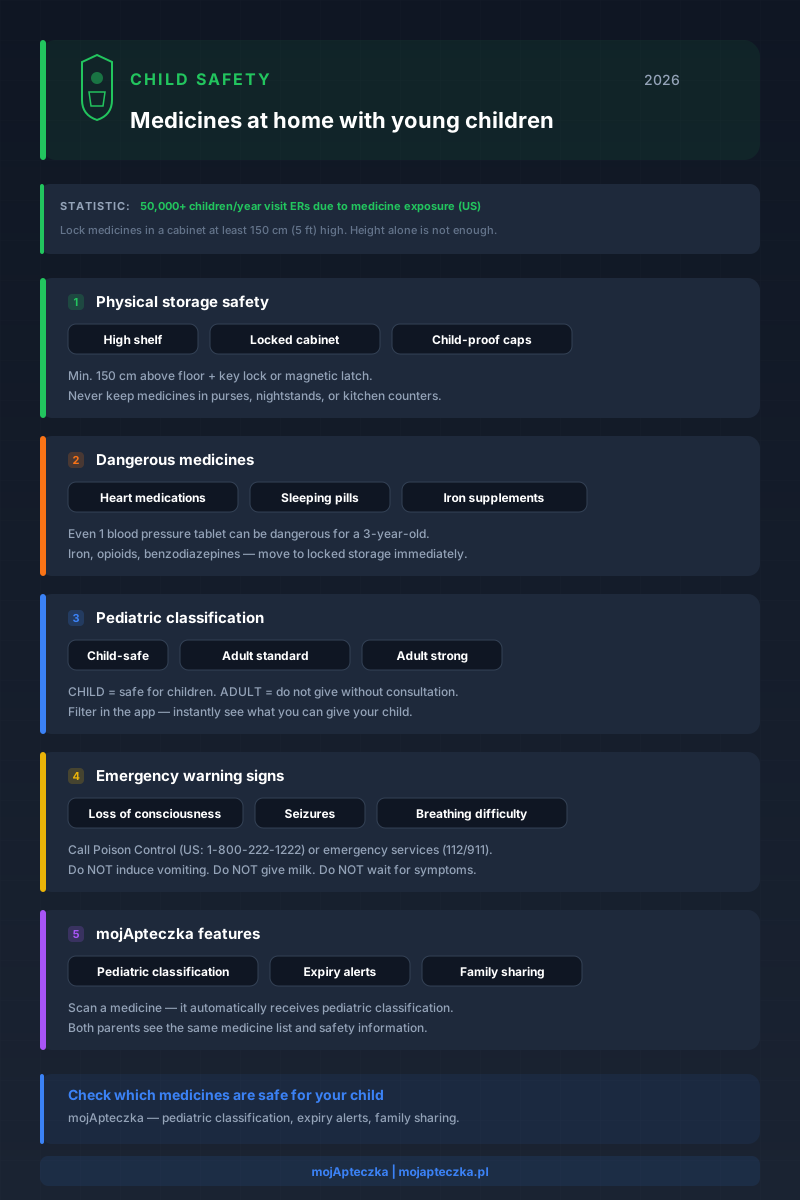
Statistics in Europe and the United States are similar. According to the American Association of Poison Control Centers, in the US alone more than 50,000 children under 6 end up in emergency departments every year because of accidental contact with medicines. More than half of these cases involve medicines found in a handbag, on a bedside table, or in an unlocked drawer.
Why Children Are Especially Vulnerable
Three reasons worth understanding:
-
Physiology. A child weighs 10–15 kg — four to seven times less than an adult. A dose that is standard for an adult can be toxic for a child. A single blood pressure tablet is enough to put a three-year-old in intensive care.
-
Curiosity and imitation. Young children learn by imitation. They see mum take a “sweet” from a box every day — and they want to do the same. Colourful tablets, sweet syrups, vitamin gummies — all of these look like food to a child.
-
No sense of danger. An adult knows that a tablet is medicine. A three-year-old does not understand the difference between a sweet and a sleeping pill. To them, it is a small, colourful object you put in your mouth.
Physical Medicine Storage — The First and Most Important Step
No app and no organisational system can replace physically securing your medicines. This is the foundation for everything else.
Height Is Not Enough
Many parents keep medicines “up high.” The problem is that a two-year-old’s definition of “up high” changes every month. The child who could not reach the kitchen counter yesterday will climb onto a chair, then the counter, then the shelf tomorrow.
Rule: medicines should be at least 150 cm (5 feet) above the floor — AND in a locked cabinet. Height alone is not enough.
A Locked Cabinet — The Only Reliable Solution
The best solution is a cabinet with one of these safeguards:
- Key lock — classic and reliable. Keep the key somewhere only adults know about.
- Magnetic latch — invisible from the outside, requires a special magnetic key. The child does not see the mechanism and does not know how to open it.
- Child-proof latch — requires simultaneous pressing and pulling, which is too difficult for small fingers.
Where NOT to Keep Medicines
- Handbag — one of the most common sources of accidental poisoning. The bag sits on the floor, the child rummages through it — and finds a blister pack.
- Bedside table — the second most common source. You take a tablet in bed, leave the box — the child finds it in the morning.
- Kitchen counter — “I will just leave it here for an hour until my next dose.” That hour is enough.
- Unsecured fridge — syrups, antibiotic suspensions. A child opens the fridge and reaches for the colourful bottle.
- Drawers at a child’s height — even with child-proof latches. Children aged 3–4 can work them out faster than you think.
Child-Proof Packaging — Do Not Rely on It 100%
Child-resistant caps on medicine packaging are an extra layer of protection, not the only one. Studies show that up to 20% of children aged 3–4 can open child-proof packaging within 10 minutes. “Child-proof” does not mean “child-impossible” — it means “harder to open”, which buys you time but gives no guarantee.
What to Keep vs. What to Remove
Reviewing your medicine cabinet for child safety is not the same as a regular expiry check. Here, you look at every medicine from a different perspective: “what happens if my child swallows this?”
Medicines to Remove or Relocate Immediately
These medicines should either be removed from the house (if no one needs them) or moved to a locked cabinet with the highest level of security:
- Heart and blood pressure medicines — beta-blockers, calcium channel blockers. Even one tablet can cause a dangerous drop in blood pressure or heart rhythm disturbances in a child.
- Diabetes medicines — glipizide, glibenclamide. One tablet can cause potentially fatal hypoglycaemia in a child.
- Opioids and codeine-containing medicines — tramadol, codeine. Respiratory depression in a child can be fatal.
- Iron tablets — this surprises many parents, but iron poisoning is one of the most dangerous poisonings in children. A few iron supplement tablets can cause gastrointestinal haemorrhage.
- Sleeping pills and sedatives — benzodiazepines (e.g., diazepam), zolpidem. Deep sedation in a child is a direct threat to life.
- Antidepressants — especially tricyclics (amitriptyline, imipramine). They can cause cardiac arrhythmias.
- Eye and nose drops with imidazoline — e.g., naphazoline, tetryzoline. Swallowing a few millilitres can cause drowsiness, bradycardia, and a drop in blood pressure in a child.
Medicines Requiring Special Supervision
These medicines can be kept at home but should be in a locked cabinet:
- Adult paracetamol — an adult dose (500–1000 mg) is toxic for a small child.
- Adult ibuprofen — same as above.
- Antihistamines — older generations (dimethindene, promethazine) can cause excessive sedation.
- Cough syrups — especially those containing dextromethorphan.
Expired Medicines — A Double Hazard
An expired medicine in a home with children is a double problem. First, it does not work properly (because it is past its date). Second, it is an additional “object” in the cabinet that a child can find and swallow.
Regularly reviewing expiry dates is not just about medicine effectiveness — it is about safety. Fewer unnecessary medicines at home means lower risk. Take expired medicines to the pharmacy — details in what to do with expired medicines.
Paediatric Classification — How to Know What Is Safe
Not every “children’s medicine” is safe for every child. And not every “adult medicine” is automatically dangerous. The key is classification.
Four Medicine Categories
In mojApteczka’s paediatric classification system, every medicine is labelled with one of four categories:
- CHILD — registered for use in children. Appropriate form (syrup, suppositories, drops) and paediatric dosage.
- ADULT_STANDARD — OTC medicine for adults. Do not give to children without consulting a pharmacist.
- ADULT_STRONG — prescription-only medicine for adults, often potent. Absolutely not for children.
- VETERINARY — veterinary medicine. Not for human use.
Why This Matters in Practice
Imagine a typical scenario: you open the medicine cabinet and see 20 packages. It is 2 AM, your child has a fever. Which of those 20 packages can you safely give to your three-year-old?
Without classification — you need to open each package, find the leaflet, read the fine print “dosing in children” section, and check age restrictions. At 2 AM. With a crying child.
With classification in mojApteczka — you open the app, filter for medicines labelled CHILD, and immediately see what you can give. No leaflet hunting, no stress.
Medicines Parents Forget About
Several categories of medicines that parents often overlook when assessing safety:
- Iron-containing supplements — they are not “medicine,” but the iron in them is equally toxic.
- Vitamin D drops — overdosing vitamin D in a child can lead to hypercalcaemia.
- Vitamin gummies — they look like sweets, taste like sweets. A child sees no difference.
- Ointments and creams with active ingredients — steroids, antibiotics. A child can ingest them.
What to Do If a Child Swallows Medicine — Emergency Procedure
This is the section to read NOW — calmly — not when it happens.
Step 1: Do Not Panic (But Act Quickly)
Panic is a natural reaction, but it hinders rational action. Take a deep breath and follow the steps below.
Step 2: Take the Medicine Away from the Child
Take any remaining medicine out of their mouth. Keep the packaging safe — you will need it.
Step 3: Note the Information
- Medicine name (from the package)
- Dose per tablet/capsule (e.g., “500 mg”)
- Approximately how many tablets may have been swallowed (count how many are left)
- What time it happened
- Child’s weight (approximate)
Step 4: Call for Help
Poison Control Centre (Warsaw and Mazovia): tel. 607 218 174
Numbers for the remaining regions are on the official URPL list at gov.pl.
Alternatively: 112 (emergency medical services)
The consultant will ask for the information from Step 3. Based on it, they will assess whether the situation requires a visit to the emergency department, home observation, or activated charcoal.
Step 5: Do NOT Do This
- Do not induce vomiting — unless the consultant specifically advises it. For some substances, vomiting can make things worse (e.g., corrosives, foaming agents).
- Do not give milk “to neutralise” — this is a myth. Milk can speed up absorption of some substances.
- Do not wait for symptoms — for many medicines, symptoms appear only after 2–4 hours, when the medicine is already absorbed. Act immediately.
Warning Signs — When to Go to the Emergency Department Immediately
Go to the emergency department or call 112 immediately if the child:
- loses consciousness or is excessively drowsy,
- has seizures,
- has difficulty breathing,
- vomits blood,
- has a rapid or irregular heartbeat,
- is pale, sweaty, or lethargic.
How mojApteczka Helps Secure Medicines at Home with Children
mojApteczka will not replace a locked cabinet. But it gives you something no cabinet can — information and control.
Paediatric Classification
Every medicine you scan in mojApteczka automatically receives a paediatric classification. You immediately see which medicines in your cabinet are children’s medicines (CHILD) and which are for adults only (ADULT_STANDARD, ADULT_STRONG). This lets you:
- quickly find the right medicine for your child at 2 AM,
- identify medicines that should be in a locked cabinet,
- avoid mistakes: giving a child an adult medicine.
Expiry Alerts
Expiry alerts send you a notification before a medicine expires. An expired medicine in a home with children is a double risk — it does not work properly and is an additional object for accidental ingestion. Fewer unnecessary medicines means a safer home.
Family Sharing
When both parents (and grandparents) have access to the same medicine list in the app, everyone knows what is in the house, what is safe for the child, and what should be under lock and key. No more situations where dad does not know what mum bought at the pharmacy yesterday.
Medicine Scanner
The AI medicine scanner lets you quickly add a new medicine — just scan the package. The app automatically assigns the classification, expiry date, and paediatric category. No manual entry, no mistakes.
Checklist: 10 Steps to Child-Proof Your Medicine Cabinet
Print this list and put it on the fridge. Or take a screenshot. Go through it point by point — now, not “someday.”
1. Move ALL medicines to a locked cabinet at least 150 cm (5 ft) above the floor. This includes supplements, vitamins, ointments, and drops.
2. Remove medicines from handbags, bedside tables, and kitchen counters. These three locations are the most common sources of accidental poisoning in children.
3. Dispose of expired medicines. Take them to a pharmacy. Fewer medicines at home means lower risk.
4. Check the paediatric classification of every medicine. Mark (physically or in mojApteczka) which medicines are CHILD and which are ADULT. ADULT_STRONG medicines — on a separate, locked shelf.
5. Move iron, sleeping pills, and heart medicines to a separate locked container. These are medicines where even one tablet can be dangerous for a child.
6. Check child-proof caps. Do the packages have working caps? Are any blister packs open? Put open blisters in a locked container.
7. Talk to your child. Children from age 3 understand simple messages: “This is not a sweet. This is medicine. Only mum and dad touch medicines.” Repeat it regularly.
8. Save the poison information centre number for your region. For Warsaw and Mazovia: 607 218 174 (other regions: URPL list at gov.pl). Save it in your phone, on a note on the fridge, and tell the babysitter or grandparent.
9. Turn on expiry alerts in mojApteczka. Automatic notifications before the expiry date = fewer unnecessary medicines at home.
10. Review your medicine cabinet every 3 months. Not once a year, not “when you remember.” Every 3 months. The easiest way is to link it to seasonal changes — do it during your spring medicine cabinet cleanup.
When Your Child Grows Up — New Challenges
Child-proofing your medicine cabinet does not end when your child turns 3. Every stage of development brings new risks:
- Ages 2–3 — the child climbs, opens drawers, imitates adults. A locked cabinet is a must.
- Ages 4–5 — the child can open simple locks and understands that “colourful tablets” are forbidden, which makes them even more interesting. Magnetic latches are more effective than simple locks.
- Ages 6–8 — the child may try to “treat themselves” because they see adults doing it. Teach them: “you do not take medicines without asking mum or dad.”
- Ages 9–12 — more independence, but still no full understanding of dosing. Teach your child that “more” does not mean “better” and every medicine has its dose.
Grandparents and Caregivers — The Second Line of Defence
If your child spends time at their grandparents’, with a babysitter, or at preschool — medicine safety applies to those places too.
- Grandparents — often have many medicines, many prescription-only, spread around in various places (bedside table, kitchen, handbag). Talk to them openly about securing medicines before the grandchildren visit.
- Babysitter — should know where the medicine cabinet is, which medicines are for the child, and what number to call in case of poisoning. Share the medicine list with them via mojApteczka.
- Vacation homes, hotels — bring only the medicines you actually need. The fewer medicines that travel, the lower the risk. Check what to pack in a travel medicine kit.
Summary
Medicine safety at home with young children is not paranoia. It is a conscious decision to eliminate one of the most common health hazards for young children — before anything happens.
Three things you can do today:
- Move medicines to a locked cabinet at least 150 cm (5 ft) above the floor.
- Dispose of expired medicines — take them to a pharmacy.
- Save the poison information centre number for your region — official URPL list at gov.pl.
And if you want full control over what is in your medicine cabinet, which medicines are safe for your child, and when they expire — try mojApteczka. The Android app is also available on Google Play.
Related mojApteczka features: Paediatric Classification · Expiry Alerts
Medical disclaimer: This article is for informational and educational purposes only. It does not constitute medical advice and does not replace consultation with a doctor or pharmacist. If a child has been poisoned — immediately call your regional poison information centre or 112. mojApteczka is an organisational and informational tool — it does not replace a doctor, pharmacist, or emergency services.
Read More
- Paediatric Medicine Safety at Home
- Safe Medicine Dosing for Children — A Weight-Based Guide
- Gave Your Child an Expired Medicine? What to Do
- Medicine Safety at Home — Complete Guide
- What to Do with Expired Medicines
- How to Store Medicines at Home
Questions or suggestions? Email us: kontakt@mojapteczka.pl
Sources
- Ośrodki informacji toksykologicznej — gov.pl (URPL)
- Bond GR et al., The growing impact of pediatric pharmaceutical poisoning (J Pediatr 2012) — PubMed
- Lovegrove MC et al., Emergency hospitalizations for unsupervised prescription medication ingestions by young children (Pediatrics 2014) — PubMed
- Jak przechowywać leki — pacjent.gov.pl
Frequently asked questions
- Where should I store medicines to keep them away from children?
- Medicines should be stored in a locked cabinet at least 150 cm (5 feet) above the floor. The best solution is a cabinet with a lock or child-proof latch in a bedroom or hallway — never in the bathroom (humidity) or kitchen (heat). Even children's medicines should be stored out of reach.
- What should I do if my child swallows an adult medicine?
- Do not induce vomiting. Keep the medicine packaging with you, note the name, dose per tablet, and the approximate amount swallowed. Call the regional poison information centre (Warsaw and Mazovia: 607 218 174; the current list of centres for all regions is on gov.pl) or 112. If the child loses consciousness or has seizures, go to the emergency department immediately.
- Which home medicines are most dangerous for young children?
- The most dangerous are heart medicines, diabetes medicines, opioids, iron tablets (iron poisoning can be fatal), sleeping pills and benzodiazepines, antidepressants, and some eye or nose drops with imidazoline. Even a single tablet of some of these can be dangerous for a child.
- How does mojApteczka help protect children from medicines?
- mojApteczka labels every medicine with a paediatric classification (child, adult standard, adult strong, veterinary), so you can immediately see what is safe for your child. Expiry alerts help remove expired medicines. Family sharing gives both parents an up-to-date list of medicines at home.