Vacation Medicine Kit 2026 — A Complete Family Checklist
Nobody plans to get sick on holiday. Yet every year, thousands of families find themselves searching for a pharmacy in a foreign town, trying to explain a headache in a language they do not speak, or paying tourist-season prices for a box of plasters they could have packed from home. A well-prepared travel medicine kit takes fifteen minutes to assemble and can save hours of stress during a trip.
This checklist covers what every family should pack — whether you are heading to a Mediterranean beach, a mountain hiking trail, or a city break abroad.
Step 1: Start from Your Home Cabinet
Before buying anything new, open your medicine cabinet and look at what you already have. Many of the medicines you need for travel are the same ones you keep at home: painkillers, fever reducers, plasters, antiseptic. There is no point buying duplicates at the airport pharmacy when a perfectly good box is sitting on your shelf.
Pull out the items you plan to take and check two things:
- Quantity — do you have enough to last the entire trip plus a few extra days in case of delays?
- Expiry date — does the medicine remain valid through the end of your holiday?
If you use mojApteczka, you can check both of these from your phone without physically opening the cabinet. The app shows the quantity and expiry date of every medicine in your inventory. The expiry date alerts flag anything that expires soon, so you will not accidentally pack a fever reducer that goes out of date mid-trip.
Step 2: Pack the Base Kit
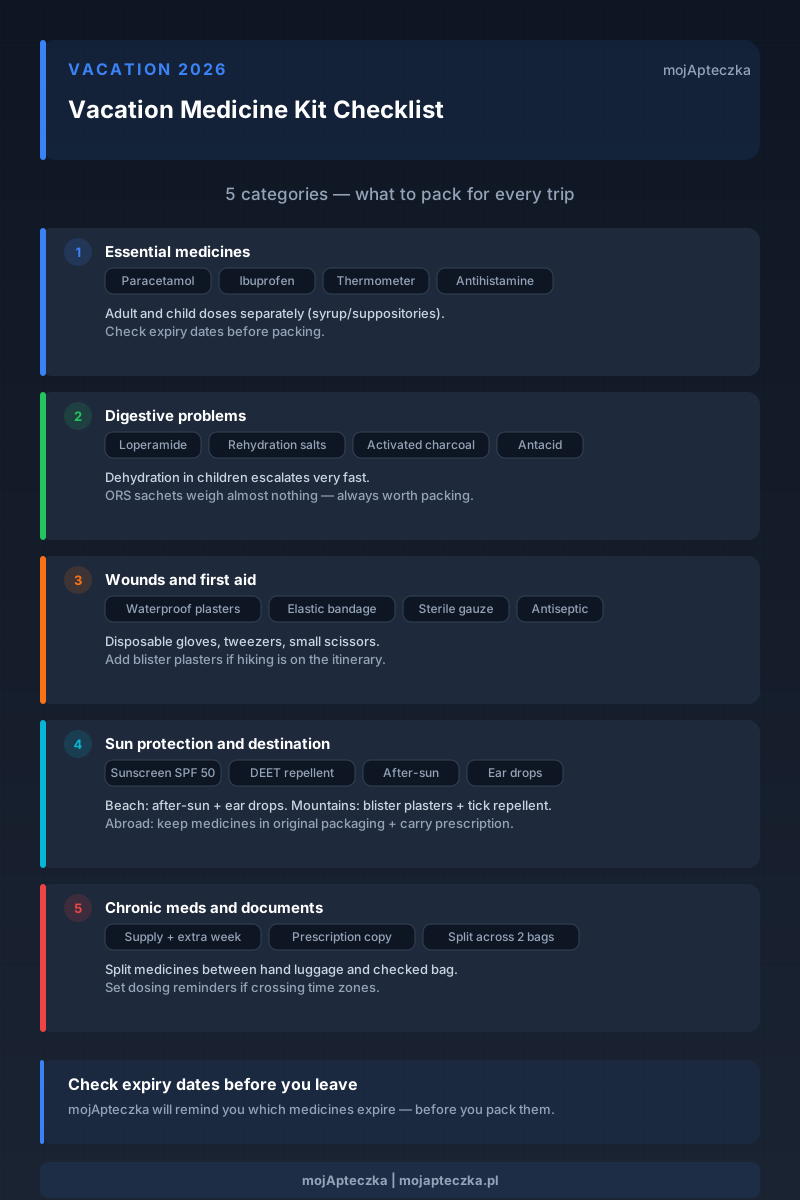
These are the essentials that belong in every travel medicine kit, regardless of destination.
Pain relief and fever
- Paracetamol (tablets for adults, syrup or suppositories for children)
- Ibuprofen (tablets for adults, syrup for children)
- A thermometer — a compact digital model takes up almost no space
Digestive problems
- Loperamide (for acute diarrhoea in adults)
- Oral rehydration salts (at least 4-6 sachets — vital for dehydration from heat, diarrhoea, or vomiting)
- Activated charcoal tablets
- An antacid for heartburn or indigestion
Wounds and skin
- Adhesive plasters in multiple sizes
- Sterile gauze pads and a small roll of adhesive tape
- Antiseptic spray or solution
- Tweezers (for splinters, ticks, and sea urchin spines)
- A small pair of scissors
Other basics
- Antihistamine tablets (cetirizine or loratadine)
- Hydrocortisone cream (for insect bites and minor allergic reactions)
- Eye drops (for irritation from chlorine, sea water, or dry air on flights)
- Hand sanitiser
- A few pairs of disposable gloves
This base kit covers the majority of minor health problems that arise during travel. Everything on this list is available over the counter and should already be partly stocked in your home cabinet.
Step 3: Add Destination-Specific Items
Where you are going determines what else you need.
Beach and seaside holidays
- High-SPF sunscreen — SPF 50 for children and fair-skinned adults, SPF 30 minimum for everyone else. Buy it before you leave; resort shops charge double.
- After-sun lotion — for when someone inevitably underestimates the midday sun.
- Insect repellent — DEET-based for tropical or subtropical destinations, icaridin-based for European coastlines.
- Antihistamine cream — for jellyfish stings and insect bites.
- Waterproof plasters — standard plasters fall off in the sea or pool within minutes.
Mountain and hiking holidays
- Blister plasters — the thicker, gel-type variety that stays on during continued walking.
- Elastic bandage — for ankle sprains, the most common hiking injury.
- Altitude sickness remedies — if you are going above 2,500 metres, consult your GP before the trip.
- Lip balm with SPF — UV exposure increases at altitude and chapped lips are uncomfortable.
- Cold packs (instant) — the chemical type that activates when squeezed, no freezer needed.
Tropical and long-haul destinations
- Antimalarial tablets — prescription required; start the course before departure as directed by your doctor.
- Oral rehydration salts (extra supply) — traveller’s diarrhoea is common and dehydration happens fast in hot climates.
- Broad-spectrum antibiotic — your GP may prescribe one as a precaution for remote destinations where medical help is far away.
- Mosquito net and DEET repellent — essential in malaria and dengue zones.
- Water purification tablets — for destinations where tap water is not safe.
City breaks in Europe
The base kit is usually sufficient for European city trips, but add:
- Comfortable footwear insoles — long days of walking on cobblestones take their toll.
- Throat lozenges — air-conditioned museums and dry hotel air irritate throats.
- Motion sickness tablets — if your itinerary includes boats, winding roads, or theme parks.
Step 4: Children’s Additions
If you travel with children, your kit needs age-appropriate versions of several items.
- Children’s paracetamol and ibuprofen — in syrup form for younger children, junior tablets for older ones. Check that the dosage matches the child’s current weight, not the weight they were when you last bought it.
- Children’s antihistamine syrup — for allergic reactions and insect bites.
- Saline nasal drops — especially for babies and toddlers who cannot blow their own nose.
- Nappy rash cream — for babies and young toddlers.
- Electrolyte solution for children — adult formulations are not suitable for small children.
- Insect repellent suitable for children — check the age recommendation on the label; DEET products are not always appropriate for young children.
A dedicated zip-lock bag or small pouch for children’s medicines prevents confusion between adult and child formulations — especially in the middle of the night in a dark hotel room.
Step 5: Chronic Medications
If anyone in the family takes daily medication, holiday planning requires extra care.
- Pack more than you need. Bring enough for the entire trip plus at least one extra week. Flights get delayed, trips get extended, and luggage gets lost.
- Carry medicines in hand luggage. Never put prescription medicines in checked baggage. If your suitcase goes missing, your medication goes with it.
- Bring the prescription or a doctor’s letter. For controlled substances and injectable medicines, some countries require proof that the medicine is prescribed to you. A letter from your GP (in English, ideally) prevents problems at customs.
- Keep medicines in original packaging. Loose pills in an unmarked bag can raise questions at airport security and make it impossible to verify what you are carrying.
- Check import rules. Some medicines that are legal in Poland may be restricted or banned in your destination country. This applies especially to codeine-containing painkillers and certain psychiatric medications. Check the destination country’s embassy website or consult your GP.
Step 6: Check Expiry Dates
This is the step people skip. You pack the medicines, zip the bag, and never look at the dates. Then halfway through the holiday, you need the antihistamine and discover it expired three months ago.
Before packing, check the expiry date on every item. Remove anything that will expire during the trip or within one month of your return. Replace it with a fresh supply.
If your home medicines are already tracked in mojApteczka, this check takes under a minute. The expiry date alerts show a colour-coded overview of your entire cabinet, so anything close to expiry is immediately visible. You can also add a note to each medicine — for example, “packed for July holiday” — so other family members know what has been taken from the shared cabinet.
Step 7: Storage During Travel
Medicines are more vulnerable during travel than at home. A car boot in August can exceed 60 degrees Celsius. A beach bag in direct sun is not much better.
In the car
- Keep medicines in the passenger cabin, not the boot. Use a small cooler bag for temperature-sensitive items.
- Never leave medicines in a parked car, even for short stops.
On the plane
- Carry medicines in hand luggage. Cargo holds can drop well below freezing on long flights.
- Liquid medicines over 100 ml need to be declared at security. Prescription liquids are usually exempted with supporting documentation.
At the hotel
- Store medicines in a cool, dry spot — a bedside drawer or wardrobe shelf, not the bathroom.
- Use the minibar fridge (if available and clean) for items that need refrigeration.
On the beach
- Keep medicines in a shaded bag, wrapped in a towel or insulated pouch.
- Take only what you might need for the day, not the entire kit.
Build the Habit
A well-packed travel medicine kit is a one-time effort that pays off on every trip. Once you have assembled it for the first time, maintaining it between holidays is straightforward: restock what you used, replace what expired, and adjust for your next destination.
With mojApteczka, you can manage both your home cabinet and your travel kit from a single inventory. Scan medicines in, get alerts before they expire, and share the list with your travel companion so both of you know what has been packed.
Start organising your medicine cabinet at mojapteczka.pl — and make your next holiday one less thing to worry about. You can also download the Android app from Google Play.
Planning a trip and have questions about travel medicines? Write to us at kontakt@mojapteczka.pl — we are happy to help!