Summer Medicine Kit 2026 — Sunburn, Insect Bites, Diarrhoea and Heatstroke
July, 34 degrees in the shade, a beach somewhere in the Mediterranean. Your child is running barefoot across the sand while you close your eyes for a moment. Two hours later — angry red shoulders, a crying child, and no after-sun lotion in the bag. That evening, a friend returns from dinner with stomach cramps, and the only electrolytes anyone bought are back at the hotel. The next morning, mosquitoes have feasted on your partner’s legs — and nobody packed even a basic anti-itch gel.
These scenes play out every summer in millions of households. And every time the solution is the same: twenty minutes of preparation before the trip would have saved an entire day of holiday misery. A summer medicine kit is not overcaution — it is the minimum amount of practical sense that fits inside a single toiletry bag and covers ninety per cent of typical summer ailments.
This guide gives you specific medicines and remedies for four main categories of summer hazards: sunburn, insect bites, traveller’s diarrhoea, and heat-related illness. No generalities, no unnecessary theory — just practical advice you can act on today.
Sunburn and UV Protection
The sun is summer’s star attraction — and its primary source of trouble. Sunburn is not just an uncomfortable reddening of the skin. It is DNA damage to skin cells that increases melanoma risk with every episode. Children’s skin is thinner and more vulnerable: a single severe sunburn in childhood doubles the risk of skin cancer in adulthood.
Prevention — before the problem starts
- SPF 50 sunscreen — for your face and sensitive areas (ears, neck, tops of feet). SPF 30 for the rest of the body. Apply twenty to thirty minutes before exposure and reapply every two hours and after every swim.
- Mineral sunscreen for children — zinc oxide or titanium dioxide. Gentler on delicate skin and effective immediately upon application.
- UV400 sunglasses — they protect not just against glare but against corneal damage from ultraviolet radiation.
- Lightweight, breathable long-sleeved clothing — especially between 11:00 and 15:00 when UV radiation peaks.
When sunburn has already happened
- Panthenol (foam or cream) — accelerates skin regeneration, cools, and relieves pain. This is the number one remedy for sunburn. Apply three to four times a day to dry skin.
- Ibuprofen — works as both anti-inflammatory and painkiller. Take 400 mg as soon as you notice the burn — it will reduce swelling and pain.
- Antihistamine (cetirizine or loratadine) — helps when sunburn triggers an allergic reaction such as itching or hives. Some people are particularly sun-sensitive and develop polymorphous light eruption (PMLE).
- Hydrocortisone 0.5% cream — for localised inflammatory reactions after intense exposure. Apply a thin layer once or twice a day, for a maximum of seven days.
Important: If the burn covers a large area of the body, blisters form, or fever develops, see a doctor. That is a second-degree burn requiring professional care.
Remember that sunscreens have a limited shelf life. A tube opened last summer may have lost its effectiveness. Check the expiry date before you leave — in mojApteczka you can do this in a single tap using the expiry date alerts feature.
Insect Bites — Mosquitoes, Ticks and Wasps
Summer is insect season. Mosquitoes by the lake, ticks in the forest, wasps at the barbecue — each scenario calls for a different approach, but the basic set of medicines is the same.
Prevention — avoiding bites in the first place
- DEET repellent (20-30%) — the most effective substance for repelling mosquitoes and ticks. Safe for adults and children over three years of age. Apply to exposed skin every four to six hours.
- Icaridin — an alternative to DEET that is gentler on the skin. Effective for six to eight hours. A good choice for people with sensitive skin.
- Coils and plug-in vaporisers — for terraces, balconies and hotel rooms. They do not replace skin repellents but make a useful supplement.
- Light-coloured long-sleeved clothing — ticks are easier to spot on light fabric, and mosquitoes are less likely to bite covered skin.
When a bite has already happened
- Dimetindene (Fenistil) gel — apply directly to the bite. It acts as a topical antihistamine, reducing itching, redness and swelling. Effective against mosquito, midge and wasp stings.
- Cetirizine or loratadine (tablets) — if there are many bites or the reaction is widespread, an oral antihistamine works systemically and is more effective than gel alone.
- Hydrocortisone 0.5% cream — for stronger reactions where the bite remains significantly swollen, itchy and unresponsive to antihistamine gel.
- Antiseptic (octenisept or chlorhexidine) — every bite is a potential entry point for infection. Disinfect before applying any gel.
Special situations
- Tick bite: Remove the tick with fine-tipped tweezers or a tick remover (pull straight upwards, do not twist). Disinfect the area. Monitor the site for four weeks — a rash around the bite (larger than 5 cm, expanding outward) may indicate Lyme disease. See a doctor.
- Wasp or bee sting in someone with a known allergy: If you have ever had a severe allergic reaction to insect venom, carry an adrenaline auto-injector (EpiPen) with you at all times during summer. This is a life-saving medicine for anaphylaxis and requires a prescription.
- Standard wasp sting reaction: Apply a cold compress for fifteen minutes, use antihistamine gel, and take a painkiller (ibuprofen). Swelling may persist for two to three days — this is normal.
Not sure what to use as a substitute for a specific antihistamine if it is unavailable at a foreign pharmacy? The medicine substitutes feature in mojApteczka shows you alternatives with the same active ingredient.
Traveller’s Diarrhoea — Your Digestive System Under Pressure
Traveller’s diarrhoea is the most common ailment among tourists. It affects thirty to fifty per cent of people travelling to countries with lower sanitation standards, but it can just as easily strike after a change of water, street food in Barcelona, or an overenthusiastic tasting session at a Greek taverna. In children, diarrhoea is especially dangerous because dehydration sets in faster than in adults.
Medicines for diarrhoea — what to pack
- Loperamide (Imodium) — slows intestinal motility, reducing the frequency of loose stools. The first medicine to reach for during acute diarrhoea. Dosage: two tablets initially, then one after each loose stool, up to a maximum of eight tablets per day. Do not give to children under six.
- Diosmectite (Smecta) — coats and protects the intestinal lining. Safe for children and adults. Interacts with other medicines — take with a two-hour gap.
- Activated charcoal — adsorbs toxins in the digestive tract. Useful for mild food poisoning. Dosage: three to six tablets, repeat after four hours.
- Nifuroxazide (Enterofuryl) — an intestinal antiseptic that acts locally in the gut. It is not absorbed into the bloodstream, so side effects are minimal. Effective for bacterial diarrhoea.
- Travel probiotic (Saccharomyces boulardii) — the only probiotic strain with proven efficacy in preventing traveller’s diarrhoea. Start taking it five days before departure.
Rehydration — more important than medicine
- Oral rehydration salts (ORS) — sachets to dissolve in water. They contain sodium, potassium, glucose and chloride in proportions optimised for absorption. For children, ORS is the number one treatment for diarrhoea — more important than loperamide.
- Drink in small sips, frequently — 200 ml every fifteen minutes.
- Avoid fruit juice (its osmolarity worsens diarrhoea), coffee and alcohol.
- If you have no ORS: one teaspoon of salt plus six teaspoons of sugar in a litre of boiled water. Not ideal, but in an emergency it can be life-saving.
When to see a doctor
- Diarrhoea lasts longer than three days.
- Blood or mucus in the stool.
- Fever above 38.5 degrees Celsius.
- Signs of dehydration in a child: dry mouth, no tears when crying, reduced urine output, drowsiness.
For more on building a complete travel medicine kit — including customs regulations and prescription medicines — see our guide: Travel Medicine Kit — What to Pack for a Trip Abroad.
Heat, Dehydration and Heatstroke
European summers are getting hotter. Heatwaves with temperatures above 35 degrees Celsius are no longer rare — 2025 broke records in several cities. Heat threatens children, the elderly and people taking certain medications (diuretics, blood-pressure medicines, antipsychotics) most, but it can catch anyone who underestimates the need for hydration.
Dehydration — the first warning sign
Dehydration begins before you feel thirsty. The first symptoms are:
- Headache, dizziness.
- Dark, concentrated urine.
- Dry mouth, reduced skin elasticity.
- Fatigue, irritability, difficulty concentrating.
What to keep in your summer kit for the heat
- Oral rehydration salts (ORS) — the same item as for diarrhoea, but for a different reason. During heavy sweating you lose not only water but also sodium and potassium. Water alone is not enough — you need electrolytes.
- Magnesium and potassium tablets — a daily supplement during heatwaves, especially if you exercise or work outdoors.
- Thermometer — measuring body temperature lets you distinguish simple overheating from heatstroke.
- Paracetamol — for headache associated with dehydration and overheating. Ibuprofen is not optimal during dehydration because it places additional strain on the kidneys.
Heatstroke — a medical emergency
Heatstroke is a life-threatening condition in which body temperature exceeds 40 degrees Celsius and the body loses its ability to regulate heat. Symptoms include:
- Hot, dry, flushed skin (no sweating!).
- Confusion, altered consciousness.
- Rapid pulse, nausea, vomiting.
- Body temperature above 40 degrees Celsius.
First aid:
- Call emergency services (112 in Europe, 911 in the US).
- Move the person into shade or a cool room.
- Cool the body — wet towels on the neck, armpits and groin. Use a fan or air conditioning.
- Give small amounts of cool water if the person is conscious.
- Do NOT give aspirin or paracetamol — they do not work on heatstroke and may worsen the situation.
People on medication — take note: Some medicines increase the risk of heatstroke. Diuretics accelerate dehydration. Beta-blockers limit the body’s ability to regulate heat. Antipsychotics disrupt thermoregulation. If you or someone close to you takes such medicines, exercise extra caution on hot days.
Summer Checklist — Everything in One Place
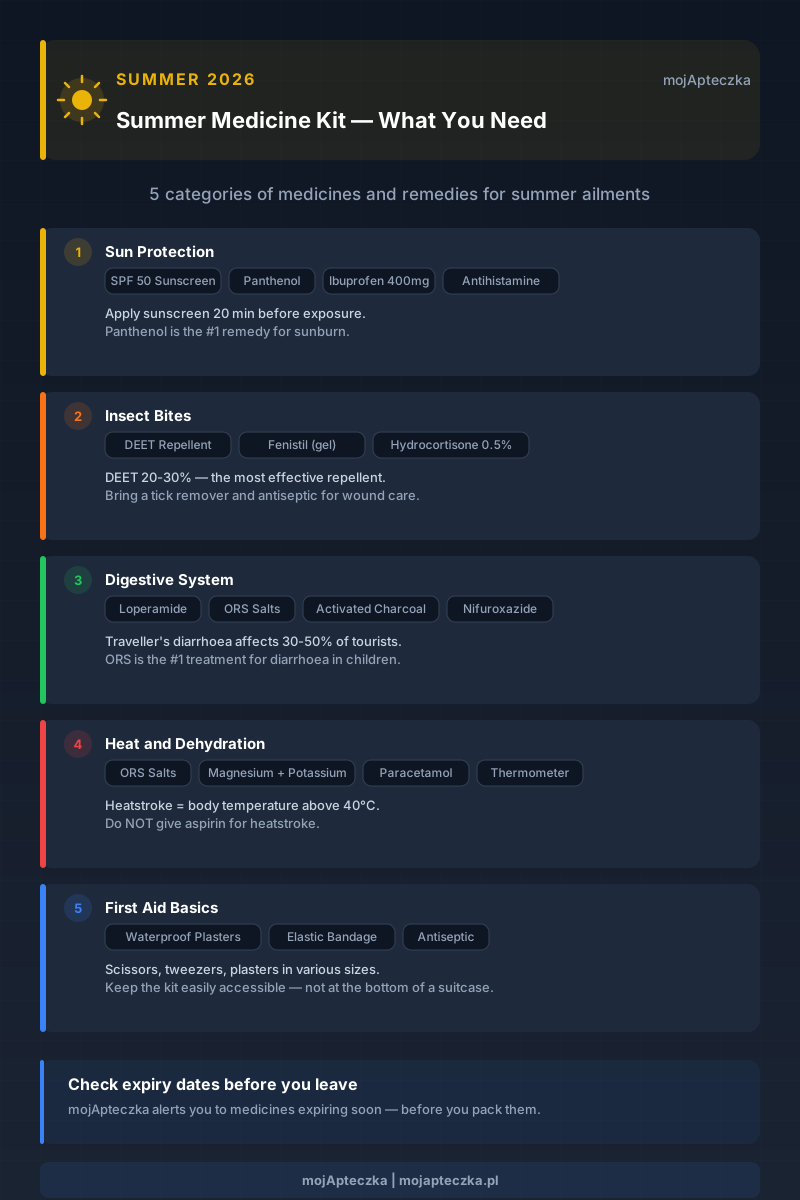
Below is the complete list of medicines and supplies that should be in your summer kit. Print it, screenshot it, or — better still — add these medicines to mojApteczka and have them at your fingertips at all times.
Sun protection
- SPF 50 sunscreen (face) and SPF 30 (body)
- Panthenol (foam or cream)
- Ibuprofen 400 mg
- Antihistamine (cetirizine or loratadine)
Insects
- DEET or icaridin repellent
- Dimetindene (Fenistil) gel
- Hydrocortisone 0.5% cream
- Tick remover
- Antiseptic
Digestive system
- Loperamide (Imodium)
- Diosmectite (Smecta)
- Activated charcoal
- Nifuroxazide
- Probiotic (S. boulardii)
- Oral rehydration salts (ORS) — at least 6 sachets
Heat and dehydration
- Oral rehydration salts (extra supply)
- Magnesium and potassium
- Paracetamol
- Thermometer
First aid basics
- Waterproof plasters (assorted sizes)
- Elastic bandage
- Wound antiseptic
- Scissors, tweezers
Before you leave: Check the expiry dates of every medicine. If you use mojApteczka, open the app and in seconds you will see what is expiring soon — thanks to expiry date alerts. If something is missing, the medicine substitutes feature will suggest available alternatives at your local pharmacy.
Pack Your Kit in Twenty Minutes
Most of the medicines on this list are probably already in your home cabinet. You might be missing one cream and one box of rehydration salts. But without a system — without a list, without date tracking — you do not know what you have and what you are missing. And so every year you end up buying the same items again at the airport for three times the price.
Open mojApteczka, scan your medicines and see what to take with you. The app shows you expiry dates, stock levels and any interactions between your medicines. The whole process takes less time than packing a toiletry bag. The Android app is also available on Google Play.
Have questions about your summer medicine kit? Write to us at kontakt@mojapteczka.pl — we are happy to help!