Medicines in Pregnancy — What to Discuss with Your Doctor Before Taking Anything
The use of medicines in pregnancy is a topic where every decision belongs with your doctor. See how clinicians assess different product groups and what to ask during a consultation.
Two lines on a pregnancy test change everything. Your diet changes, your routine changes, your priorities change. But there is one shift many women forget about in the first weeks: looking at the home medicine cabinet from a completely different angle.
Paracetamol, ibuprofen, a retinol cream, nasal drops or a multi-symptom cold medicine: each of these groups has a different safety profile in pregnancy and raises different points to discuss with your doctor. This article does not tell you “what to take”, because that is always a decision for a doctor or pharmacist. Instead, it shows how clinicians look at particular groups and what to ask during a consultation.
Important: This article is for information only. It is not meant to help you decide on your own whether to start, continue or stop a medicine. During pregnancy and breastfeeding, every combination, including OTC products, supplements and herbal preparations, should be discussed with your doctor or pharmacist.
Pregnancy does not mean you have to suffer without any medicines for nine months. It does mean that before taking any product, you should check with a healthcare professional what is appropriate in your specific situation.
Why Pregnancy Changes the Rules
When you are pregnant, your body works differently. Blood volume increases, liver metabolism changes and your kidneys filter faster. That means the same medicine at the same dose can behave differently than it did before pregnancy.
But the main concern is different. Most medicines cross the placenta. Your baby is exposed to some of what you take, and developing organs cannot handle that exposure in the same way an adult body can.
The risk also changes by trimester. The first trimester is when organs are forming, so sensitivity to teratogens is highest. The second and third trimesters come with different risks: growth problems, premature closure of the ductus arteriosus, or foetal kidney complications.
The key rule is this: no medicine is fully studied in pregnant women in the traditional clinical-trial sense, because for obvious ethical reasons nobody runs randomised trials in pregnant women. What we know comes from observational data, pregnancy registries and animal studies.
Safety Categories — A Simplified Guide
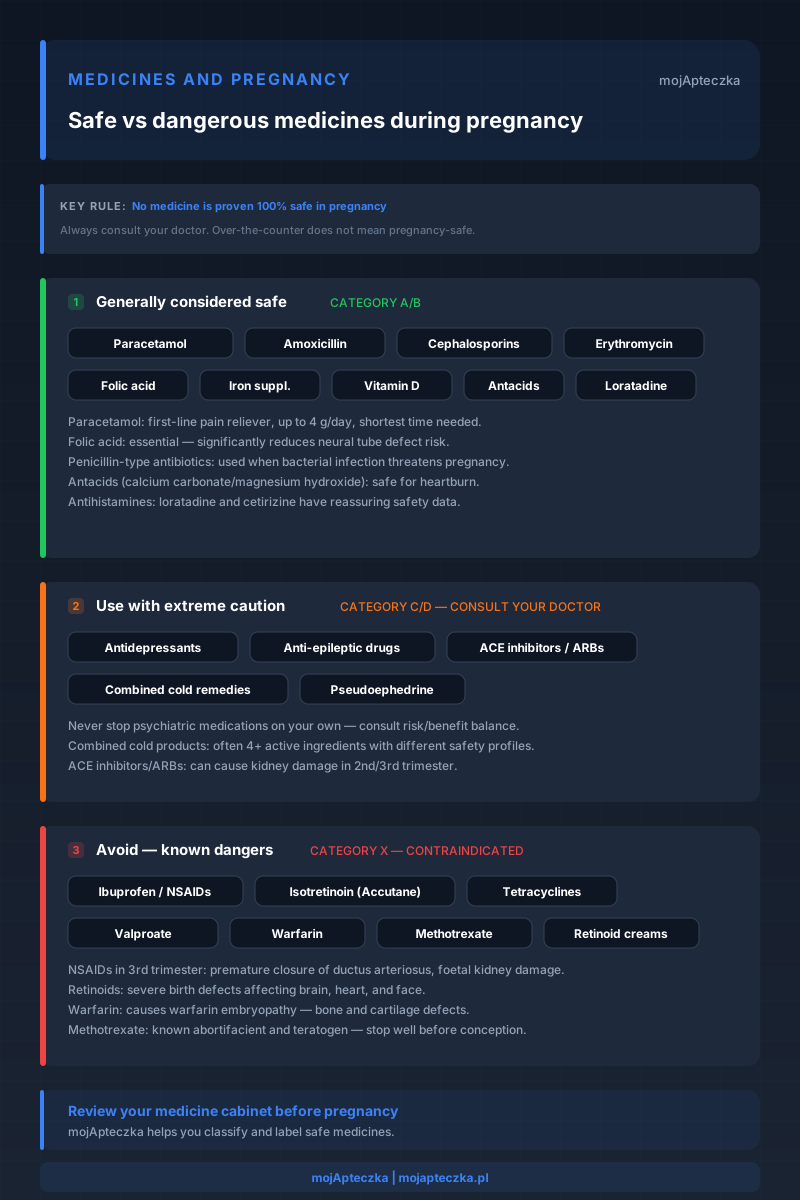
The US FDA used to apply the old A-to-X category system, where A meant low risk and X meant clearly contraindicated. That system was officially replaced in 2015 with more descriptive labelling, but many sources still refer to it because it feels intuitive.
In simplified form:
- Category A — controlled studies did not show risk. This is a very small group of medicines, such as folic acid or levothyroxine at the right dose.
- Category B — animal studies did not show risk, but adequate human data are limited. This includes paracetamol and many penicillin antibiotics.
- Category C — animal studies showed some risk. Use depends on whether the benefit outweighs the risk. Many prescription medicines fall here.
- Category D — there is evidence of risk, but in some situations the benefit may still outweigh it. Example: some anti-epileptic medicines, when uncontrolled epilepsy threatens pregnancy more than the medicine itself.
- Category X — clearly contraindicated. The risk outweighs any potential benefit.
You do not need to memorise the categories. The point to remember is that a medicine being available over the counter does not automatically mean you can decide on your own that it is fine to take during pregnancy.
Medicine Groups Doctors Most Often Discuss During Pregnancy
The overview below shows how clinicians look at different product categories. It is not a list of recommendations or a substitute for a consultation. It is a starting point for a conversation with your doctor or pharmacist.
Paracetamol (acetaminophen) is one of the most commonly discussed pain-relief medicines in pregnancy, with a large amount of observational data collected over decades. Dose, duration and whether it is genuinely needed are all part of a medical decision, not something to settle on your own.
Some antibiotics — groups such as penicillins and cephalosporins are used in clinical practice during pregnancy when a doctor diagnoses a bacterial infection. At the same time, an untreated infection may be more dangerous than the antibiotic itself, which is another reason why the choice belongs with a specialist.
Some heartburn medicines — acid-neutralising products, for example those based on aluminium and magnesium hydroxide, are often discussed during pregnancy. Omeprazole and similar products are considered more cautiously, so the choice and duration should be reviewed with your doctor.
Supplements — folic acid, iron when indicated, and vitamin D at the recommended dose. These products often appear in a standard prenatal care plan, but the exact schedule should still be set by the doctor managing your pregnancy.
Medicine Groups That Need a Particularly Careful Conversation
Ibuprofen and other NSAIDs (naproxen, diclofenac, ketoprofen) — in the first trimester there are data suggesting a small increase in miscarriage risk. In the third trimester, the literature describes more serious concerns: premature closure of the ductus arteriosus, low amniotic fluid and foetal kidney injury. If you have an NSAID in your home medicine cabinet and you are pregnant, talk to your doctor before reaching for it.
Aspirin (acetylsalicylic acid) at pain-relief doses carries concerns similar to ibuprofen. Low-dose aspirin, by contrast, is sometimes prescribed by doctors in selected situations as part of pre-eclampsia prevention, but that is always a medical decision rather than self-treatment.
Retinoids (isotretinoin, tretinoin, adapalene) — used to treat acne, these belong to the group of medicines with a high teratogenic potential described in the literature. Oral products such as isotretinoin need especially close attention. You should also ask your doctor about cosmetics and dermatological products that contain retinol.
Tetracyclines (doxycycline, minocycline) — antibiotics described in the literature as requiring particular caution in the second half of pregnancy because of their potential effect on the baby’s teeth and bones. The choice of antibiotic belongs with your doctor.
Some antidepressants and anti-anxiety medicines — this is a complex area because untreated severe depression or anxiety disorders can also be dangerous. That is why the key rule is: do not stop psychiatric medicines on your own after finding out you are pregnant. Speak with a doctor who can assess the balance of benefits and risks.
Anti-epileptic medicines — the literature clearly describes differences between individual products when it comes to pregnancy safety profiles. If you are planning a pregnancy or have just found out you are pregnant and you use anti-epileptic medicines, talk to your neurologist and do not stop them on your own.
The Symptom-Relief Trap — Multi-Symptom Cold Medicines
This is easy to miss. You buy a “cold medicine” as a single product, but inside there is a cocktail of active ingredients, for example paracetamol, pseudoephedrine, dextromethorphan or phenylephrine. Each one has a different safety profile in pregnancy.
One product, several active ingredients, several separate conversations to have with your doctor.
That is exactly why, before taking a multi-symptom medicine during pregnancy, you should speak with your doctor or pharmacist instead of assuming that a general “for colds” label translates into one shared safety profile.
How mojApteczka Helps Expectant Mothers
When you have 30 or 50 medicines and supplements in a home medicine cabinet, checking each one manually for pregnancy safety is unrealistic. That is where technology starts to matter.
In mojApteczka, every medicine in your cabinet is automatically classified by the paediatric classification system, which includes CHILD, ADULT_STANDARD, ADULT_STRONG and VETERINARY categories. It is not a pregnancy classification in itself, but it gives you an immediate picture of what medicines you have at home and which group they belong to.
More importantly, you can use the notes feature to mark medicines as “safe in pregnancy” or “avoid in pregnancy” after speaking with your doctor. That way you create a personalised filter matched to your medical situation. The next time you reach into the cabinet with a headache at three in the morning, you do not have to rely on memory. You can just check.
When to Call Your Doctor
Do not hesitate to call your doctor or your maternity unit if:
- You accidentally took a medicine that you have now read requires special attention in pregnancy. Do not panic and do not stop anything on your own. Call so your doctor can assess the situation calmly.
- You have a fever above 38 degrees Celsius. The fever itself, not only the cause, may be risky for the baby in the first trimester.
- You have severe pain that you cannot manage at home. Your doctor has therapeutic options available that you should not try to choose on your own.
- Someone has suggested a herbal or “natural” product to you. Many herbal preparations are not studied in pregnancy, and “natural” does not mean “safe.”
Plan Before the Need Arises
The best time to review your medicine cabinet is when you find out you are pregnant, or even earlier if you are planning to grow your family. Sit down with the doctor managing your pregnancy, go through the full list of medicines you have at home and learn what to keep, what to discard and what might need to be replaced with a safer equivalent.
Do it once, properly and calmly. Write down the plan. Then keep it close when that three-in-the-morning moment arrives.
If you want a tool that helps you keep your home medicine cabinet under control and gives you more peace of mind during pregnancy, take a look at mojApteczka. You scan medicines, see their classification, add notes from your doctor and keep everything in one place instead of in your head. The Android app is also available on Google Play.
If several products come together in your medicine cabinet during pregnancy, also read our article on drug interactions in pregnancy — it shows what to check before you reach for any of them.
Second important disclaimer: If you are pregnant or breastfeeding, do not interpret the medicine groups described in this article as a yes-or-no answer for a specific product. Every combination, including OTC products and supplements, should be discussed with your doctor or pharmacist.
Questions or suggestions? Write to us at: kontakt@mojapteczka.pl