How to Store Medicines at Home — Temperature, Humidity, and Light
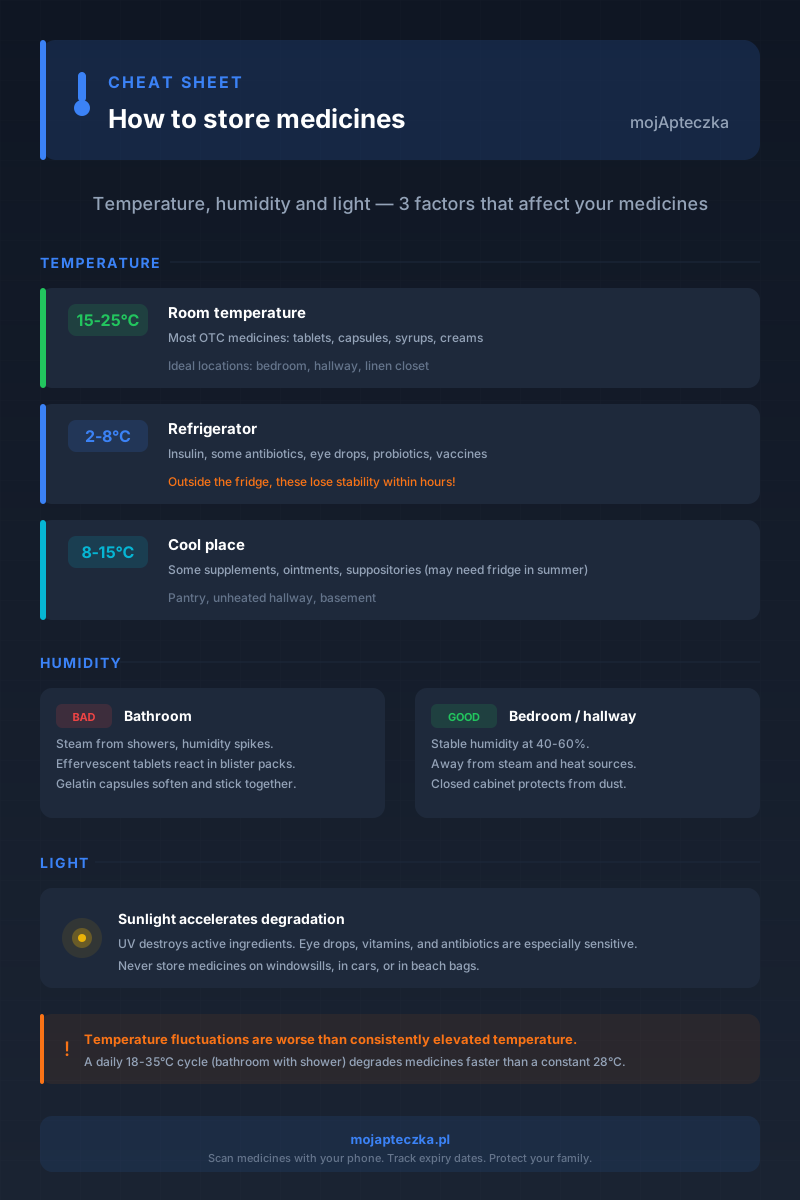
The bathroom cabinet is the most popular spot for storing medicines at home. It is also one of the worst. Steam from the shower, temperature swings every time someone runs a bath, and overhead lighting that stays on for hours — all of these quietly degrade the medicines inside. Yet most people never think twice about where they keep their pills.
Storing medicines correctly is not complicated, but it does require understanding three environmental factors that accelerate degradation: temperature, humidity, and light. Get these wrong and your medicines may lose effectiveness well before the printed expiry date. Get them right and you protect both your health and your household budget.
Why Storage Conditions Matter
A medicine’s expiry date assumes that the product has been stored according to the manufacturer’s instructions. Those instructions are printed on the packaging and in the patient information leaflet — but very few people read them beyond the dosage section.
When storage conditions are not met, the active ingredients in a medicine can break down faster than expected. This does not always mean the medicine becomes dangerous (although in some cases it can). More commonly, it simply becomes less effective. A painkiller that should work in 30 minutes takes an hour or does not work at all. A fever reducer that should bring a child’s temperature down by two degrees barely makes a difference.
The problem is invisible. A tablet that has degraded due to heat or moisture usually looks identical to a fresh one. You only notice something is wrong when the medicine fails to do its job — often at the worst possible moment.
Temperature: The Most Important Factor
Most medicines should be stored between 15 and 25 degrees Celsius. This is standard room temperature in a well-heated home, and it covers the vast majority of over-the-counter and prescription products.
Some medicines require refrigeration, typically between 2 and 8 degrees Celsius. These include certain insulin formulations, some eye drops, specific antibiotics after reconstitution, and certain vaccines. The packaging always states this clearly — look for phrases like “store in a refrigerator” or “store below 8 degrees Celsius.”
What many people do not realise is that heat damage is cumulative. A box of paracetamol left in a hot car for one afternoon may survive mostly intact. But if it regularly sits on a windowsill that gets direct afternoon sun, or lives in a kitchen cabinet next to the oven, the repeated heat exposure adds up over weeks and months.
Key temperature rules
- Never leave medicines in a parked car. Interior temperatures can exceed 60 degrees Celsius in summer, even with windows cracked. This applies to both the cabin and the boot.
- Keep medicines away from heat sources. Radiators, ovens, dishwashers, and boilers all create localised heat zones. A shelf above a radiator can easily reach 30 degrees or more.
- Do not freeze medicines unless instructed. Freezing can physically damage tablets and alter the composition of liquids and creams. A fridge set too cold can cause problems for medicines stored inside.
- Refrigerated medicines need a consistent spot. Place them in the main body of the fridge, not the door. The door experiences the largest temperature fluctuations every time the fridge is opened.
Humidity: The Silent Destroyer
Humidity is the reason the bathroom is a poor choice for medicine storage. Every shower generates a burst of warm, moist air. Even in a well-ventilated bathroom, humidity levels spike well above the 40-60% range that most medicines tolerate.
Moisture affects medicines in several ways:
- Tablets and capsules absorb water. This can cause them to soften, crumble, or stick together. Effervescent tablets may begin to react inside the tube. Gelatin capsules become tacky and deform.
- Powders clump. Oral rehydration salts, antibiotic powders for reconstitution, and similar products are particularly susceptible.
- Blister packs are not waterproof. The aluminium and plastic layers provide some protection, but prolonged humidity can cause condensation inside individual blisters.
- Labels and packaging degrade. You cannot follow dosage instructions if the ink has smeared or the cardboard has warped beyond readability.
Where to store medicines instead
The best location is a cool, dry room away from the bathroom and kitchen. A bedroom cupboard, a hallway closet, or a dedicated shelf in a living room cabinet all work well. The key criteria are stable temperature, low humidity, and a door or cover that limits air circulation.
If you have children, the storage location also needs to be out of reach or secured with a child-proof lock. The combination of “cool, dry, and inaccessible to toddlers” narrows the options, but a high shelf in a bedroom closet usually ticks all three boxes.
Light: Especially UV Exposure
Some medicines are sensitive to light — particularly ultraviolet light from the sun, but also prolonged exposure to artificial lighting. This is why many medicines come in amber or opaque containers, and why the patient leaflet often instructs you to keep the medicine in its original packaging.
Light-sensitive medicines include certain antibiotics, vitamins (especially vitamin A and vitamin B2), some heart medications, and various topical creams and ointments. If you remove tablets from their original box and put them in a weekly pill organiser on the kitchen counter, they may be exposed to more light than the manufacturer intended.
Practical guidance
- Keep medicines in their original packaging. The box and blister pack provide UV protection by design.
- Do not transfer medicines to clear containers. Decorative glass jars or transparent organisers look tidy but offer no light protection.
- Store cabinets with doors closed. An open shelf near a window exposes its contents to hours of sunlight each day.
Five Common Storage Mistakes
1. The bathroom medicine cabinet
Already covered above, but it bears repeating: the bathroom is the single most popular and single worst location for medicine storage. Move your medicines to a drier room and use the bathroom cabinet for toiletries instead.
2. The kitchen windowsill
People put medicines on the windowsill as a visual reminder to take them. The result is daily UV exposure and heat from the sun. Use a phone reminder instead of a windowsill.
3. Leaving medicines in the car
Whether in the glove compartment, door pocket, or boot — a car is an oven in summer and a fridge in winter. Neither extreme is acceptable for medicine storage. Take your medicines inside when you arrive.
4. Removing medicines from original packaging
You throw away the box to save space and keep the blister strip loose in a drawer. Now you have no patient leaflet, no batch number, no expiry date reference, and reduced light and moisture protection. Always keep the original packaging.
5. Ignoring opened-medicine shelf life
Many medicines have a shorter shelf life once opened. Eye drops typically expire 28 days after opening, regardless of the printed expiry date. Syrups, creams, and nasal sprays often have similar restrictions. The period-after-opening symbol (a small jar icon with a number like “6M”) tells you how many months the product lasts once unsealed.
How mojApteczka Helps You Stay on Top of Storage
Knowing the rules is one thing. Remembering to apply them across 15 or 20 different medicines — each with its own requirements — is another. This is where a digital medicine cabinet becomes genuinely useful.
With mojApteczka, you can:
- Track expiry dates automatically. The expiry date alerts feature sends you a notification before any medicine in your cabinet goes out of date. You choose the lead time — 30, 60, 90, or 180 days.
- Add storage notes to each medicine. The notes feature lets you record storage instructions directly on the medicine entry — “refrigerate after opening”, “discard 28 days after first use”, “keep out of sunlight.” This information stays attached to the medicine and is visible to every family member who shares the cabinet.
- Scan medicines without typing. The AI recognition feature reads the medicine name, dosage, and expiry date from a photo of the package. No manual data entry needed.
Instead of relying on memory or periodically emptying the entire cabinet onto the kitchen table, you maintain a living record of what you have, when it expires, and how it should be stored.
A Small Habit, a Large Difference
Proper medicine storage is not about perfection. It is about avoiding the handful of common mistakes that cause the most damage: the steamy bathroom, the sunny windowsill, the forgotten car boot, the discarded packaging.
Move your medicines to a cool, dry spot. Keep them in their original boxes. Pay attention to opened-product shelf life. And let a tool handle the expiry tracking so you do not have to.
Your medicines are only as reliable as the conditions you keep them in.
Start tracking your cabinet at mojapteczka.pl. You can also download the Android app from Google Play.
Questions about storing or managing your medicines? Write to us at kontakt@mojapteczka.pl — we are happy to help!