Supplements and Medicines — Drug Interactions You Need to Know
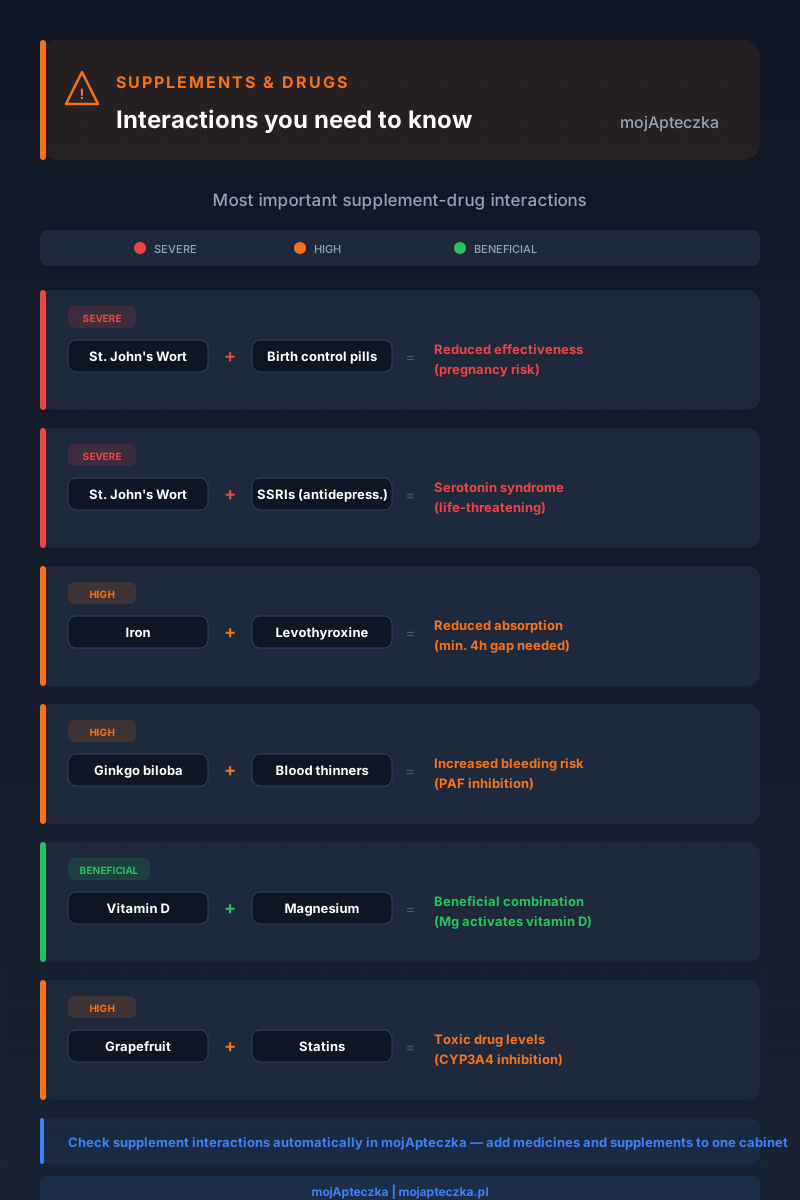
Vitamin D from your family doctor, magnesium from a TV commercial, iron on a friend’s recommendation, omega-3 for heart health, and turmeric for joints. In many households, dietary supplements have become as routine as a morning cup of coffee. A 2024 survey by the Council for Responsible Nutrition found that over 74% of adults regularly take at least one dietary supplement.
At the same time, research published in the Journal of Clinical Pharmacy and Therapeutics indicates that nearly 40% of supplement users combine them with prescription medicines — often without telling their doctor. This is a significant problem because dietary supplements are not pharmacologically inert. They can reduce the effectiveness of medicines, intensify side effects, and in extreme cases — pose a direct threat to health.
In this article, we cover the most important interactions between popular supplements and medicines, explain the mechanisms behind these interactions, and offer practical advice on how to safely combine supplementation with pharmacotherapy.
Why Can Supplements Interact with Medicines?
Dietary supplements contain biologically active substances — vitamins, minerals, amino acids, plant extracts — that undergo the same metabolic processes as medicines. Interactions can occur on several levels:
Absorption (pharmacokinetic interactions)
Some supplements physically or chemically block the absorption of medicines in the digestive tract. Iron, calcium, and magnesium form insoluble complexes with many drugs, reducing their blood concentration by as much as 50-80%.
Liver metabolism (cytochrome P450 enzymes)
Many herbal supplements affect the activity of liver enzymes from the CYP450 family — the same ones that metabolise medicines. St. John’s Wort is the best-known example: it strongly induces CYP3A4, accelerating the breakdown of many drugs and reducing their effectiveness.
Pharmacodynamic effects
A supplement can enhance or weaken a drug’s action at the receptor level. For example, omega-3 fatty acids and ginkgo biloba have antiplatelet properties — combined with anticoagulants, they can excessively increase the risk of bleeding.
Vitamin D, Magnesium, and Other Popular Supplements — Drug Interactions
Vitamin D
Vitamin D is one of the safest supplements in terms of interactions, but several combinations require attention:
- Vitamin D + thiazide diuretics (hydrochlorothiazide) — may lead to hypercalcaemia (excessive blood calcium levels), as both increase calcium absorption
- Vitamin D + cardiac glycosides (digoxin) — secondary hypercalcaemia can enhance digoxin toxicity, leading to arrhythmias
- Vitamin D + magnesium — this combination is beneficial: magnesium is essential for converting vitamin D to its active form. Without adequate magnesium levels, vitamin D supplementation may be ineffective
Takeaway: Vitamin D is generally safe, but patients taking diuretics or digoxin should monitor their blood calcium levels.
Magnesium
Magnesium is one of the most commonly purchased supplements. Unfortunately, it is also one of the most common causes of pharmacokinetic interactions:
- Magnesium + antibiotics (tetracyclines, fluoroquinolones such as ciprofloxacin) — magnesium forms insoluble chelates with antibiotics, reducing their absorption by up to 50%. This can mean ineffective antibiotic therapy
- Magnesium + levothyroxine — magnesium reduces levothyroxine absorption, which can lead to inadequate control of hypothyroidism
- Magnesium + bisphosphonates (alendronate) — reduced absorption of the osteoporosis medication
- Magnesium + blood pressure medicines (ACE inhibitors, calcium channel blockers) — magnesium can enhance the hypotensive effect, leading to excessive blood pressure drops
General rule: Maintain a minimum 2-hour gap between magnesium and other medicines. Ideally: magnesium in the evening, medicines in the morning.
Iron
Iron is one of the most problematic supplements when it comes to interactions:
- Iron + levothyroxine — iron reduces levothyroxine absorption by 30-50%. Patients with hypothyroidism should maintain a minimum 4-hour gap
- Iron + antibiotics (tetracyclines, fluoroquinolones, penicillamine) — like magnesium, iron forms chelates that reduce antibiotic absorption
- Iron + antacids and proton pump inhibitors (omeprazole) — these drugs reduce stomach acidity, and iron requires an acidic environment for absorption
- Iron + levodopa (Parkinson’s disease drug) — iron reduces levodopa absorption, which can worsen symptom control
Tip: Iron is best taken on an empty stomach with vitamin C (which improves absorption). All other medicines — at least 2 hours later.
Omega-3 (EPA and DHA fatty acids)
Omega-3 fatty acids at supplemental doses (1-3 g daily) are generally safe, but at higher doses they can cause significant interactions:
- Omega-3 + anticoagulants (warfarin, heparin) — omega-3 has antiplatelet properties, which combined with anticoagulants increases bleeding risk
- Omega-3 + aspirin — both substances have antiplatelet effects, which compounds the result
- Omega-3 + blood pressure medicines — omega-3 has a mild hypotensive effect, which can enhance antihypertensive drugs
Note: At doses below 3 g daily, omega-3 is generally safe. Higher doses require a doctor’s consultation, especially for patients on anticoagulants.
Supplements and Contraception — What Reduces Pill Effectiveness?
This topic is particularly important because loss of contraceptive effectiveness can lead to unplanned pregnancy. Here are supplements and preparations that may interact with hormonal contraception:
St. John’s Wort (Hypericum perforatum)
This is the most dangerous supplement for contraception. St. John’s Wort strongly induces the CYP3A4 enzyme in the liver and P-glycoprotein (P-gp) in the intestines, accelerating the metabolism of ethinylestradiol and progestogen. The effect:
- Significant reduction in hormone blood levels
- Breakthrough bleeding as a signal of weakened protection
- Real risk of unplanned pregnancy
The European Medicines Agency (EMA) and contraceptive pill manufacturers explicitly warn against combining St. John’s Wort with contraception. The effect persists for up to 2 weeks after stopping St. John’s Wort.
Activated charcoal
Activated charcoal taken within 2 hours of a contraceptive pill can absorb the drug and reduce its absorption. If you use detox products containing activated charcoal, maintain a minimum 4-hour gap.
Soy supplements (isoflavones)
Preparations containing phytoestrogens from soy can theoretically compete with synthetic oestrogens in contraceptive pills. Scientific evidence is limited, but caution is advised at high doses.
Herbal Remedies and Medicines — Dangerous Combinations
Herbal preparations are often perceived as “natural and safe” by many people. This is a dangerous belief — many herbs contain potent pharmacologically active substances.
St. John’s Wort — the interaction champion
St. John’s Wort is the most widely used herbal supplement for treating mild depression and mood disorders. Unfortunately, it is simultaneously the most common cause of herb-drug interactions:
- St. John’s Wort + SSRI antidepressants (sertraline, fluoxetine, citalopram) — risk of serotonin syndrome, a potentially fatal condition with symptoms including agitation, seizures, hyperthermia, and tachycardia
- St. John’s Wort + hormonal contraception — reduced effectiveness (described above)
- St. John’s Wort + immunosuppressants (ciclosporin, tacrolimus) — accelerated metabolism can lead to organ transplant rejection
- St. John’s Wort + antiviral drugs (HIV protease inhibitors) — drastic reduction in drug levels
- St. John’s Wort + warfarin — reduced anticoagulation effectiveness
- St. John’s Wort + digoxin — reduction in digoxin levels by up to 25%
- St. John’s Wort + statins — reduced cholesterol treatment effectiveness
The list is much longer. St. John’s Wort interacts with over 70% of drugs metabolised by CYP3A4. If you take any prescription medicines, do not use St. John’s Wort without consulting your doctor.
Ginkgo biloba
Ginkgo biloba is popular as a supplement for supporting memory and circulation. Its main interaction risks:
- Ginkgo + anticoagulants (warfarin, clopidogrel, aspirin) — ginkgo inhibits platelet-activating factor (PAF) and can significantly increase bleeding risk, including intracranial haemorrhages
- Ginkgo + NSAIDs (ibuprofen, naproxen) — cumulative antiplatelet effect
- Ginkgo + antiepileptic drugs — ginkgo may lower the seizure threshold
- Ginkgo + hypoglycaemic drugs — may affect blood glucose levels
Warning: If you have a scheduled surgical procedure, stop ginkgo at least 2 weeks beforehand due to the risk of excessive bleeding.
Ginseng (Panax ginseng)
Ginseng is used as a tonic and energising agent. Interactions include:
- Ginseng + warfarin — ginseng may reduce warfarin’s effectiveness, increasing the risk of blood clots
- Ginseng + antidiabetic medicines (insulin, metformin) — may enhance hypoglycaemic action, leading to dangerously low blood sugar
- Ginseng + MAO inhibitors (antidepressants) — risk of insomnia, seizures, headaches
- Ginseng + stimulant drugs — may enhance agitation and raise blood pressure
Garlic in high doses
Garlic supplements at therapeutic doses (not dietary garlic) can:
- Enhance the effect of anticoagulants — garlic has antiplatelet properties
- Interact with HIV drugs (saquinavir) — reducing their concentration
- Enhance the effect of antihypertensive drugs — garlic lowers blood pressure
Grapefruit and Statins — A Classic Food-Drug Interaction
Although grapefruit is not strictly a supplement, grapefruit juice is one of the best-documented examples of food-drug interactions and deserves discussion in this context.
Mechanism: Grapefruit contains furanocoumarins that irreversibly inhibit the CYP3A4 enzyme in the intestines. Because the enzymes must be produced anew, the effect of a single glass of juice can persist for up to 72 hours.
Drugs affected by grapefruit interaction:
- Statins (atorvastatin, simvastatin) — drug concentration can increase by 3-5 times, raising the risk of rhabdomyolysis (muscle breakdown) and liver damage
- Calcium channel blockers (felodipine, amlodipine) — excessive blood pressure reduction
- Ciclosporin — toxic levels of the immunosuppressant
- Some benzodiazepines (midazolam, triazolam) — enhanced sedative effect
Important: Not all statins are equally sensitive. Pravastatin and rosuvastatin are metabolised via different pathways and do not have significant grapefruit interactions.
When to Tell Your Doctor About Supplements
The answer is straightforward: always. But in practice, many patients do not treat supplements as medicines and fail to mention them during medical appointments.
Situations where supplement information is critical:
- Before a new medicine is prescribed — your doctor needs the full pharmacological picture
- Before surgery — supplements with antiplatelet properties (ginkgo, garlic, omega-3, vitamin E) can increase bleeding risk
- When new symptoms appear — seizures, bleeding, heart rhythm disturbances may result from interactions
- When changing medicine doses — if you simultaneously added or stopped a supplement, it may affect drug levels
- When planning pregnancy — interactions with contraception and pregnancy medicines are particularly important
How to prepare a supplement list for your doctor
- Write down the brand name and active ingredient of each supplement
- Provide the dose and frequency of intake
- Include supplements taken irregularly (e.g. melatonin occasionally)
- Count herbal teas — they also contain active substances
The easiest way? Add all your supplements to mojApteczka alongside your prescription medicines. During your appointment, simply show the doctor the list from the app — they will have the full picture.
Rules for Safely Combining Supplements with Medicines
Here are practical guidelines that minimise interaction risk:
The timing rule
- Minerals (iron, magnesium, calcium, zinc) — minimum 2-hour gap from medicines (4 hours from levothyroxine)
- Activated charcoal — minimum 2-4 hours from any medicine
- Fibre (psyllium husk) — minimum 1-2 hours from medicines
The disclosure rule
- Every doctor should know your supplement list
- Your pharmacist can quickly check interactions when you buy a new product
- Do not add supplements on your own to complex drug regimens (e.g. immunosuppressants, oncology drugs, anticoagulants)
The source rule
- Buy supplements from reputable manufacturers
- Avoid supplements with unknown herbal extracts
- Check that the manufacturer provides a full ingredient list
How mojApteczka Helps Check Supplement Interactions
Many people do not know that supplements can also be checked for interactions. mojApteczka allows you to add both prescription medicines and dietary supplements to one medicine cabinet, then automatically checks interactions between all products.
How it works:
- Add medicines and supplements — scan the packaging with your camera or type the name manually
- Automatic checking — the system compares every product against the DDInter 2.0 database (over 1.3 million interaction pairs)
- Classified results — each interaction is labelled with a severity level (severe, high, moderate, low)
- Descriptions and recommendations — not just information that an interaction exists, but what to do about it
The app is available free at mojapteczka.pl and on Google Play.
Learn more about checking drug interactions: How to check drug interactions at home
Summary — Key Interactions Table
| Supplement | Medicine | Risk | What to do |
|---|---|---|---|
| St. John’s Wort | Contraception | Loss of effectiveness | Do not combine |
| St. John’s Wort | SSRIs (antidepressants) | Serotonin syndrome | Do not combine |
| Iron | Levothyroxine | Reduced absorption | 4h gap |
| Ginkgo biloba | Anticoagulants | Bleeding risk | Consult your doctor |
| Magnesium | Antibiotics | Reduced absorption | 2h gap |
| Omega-3 | Warfarin | Bleeding risk | Consult your doctor |
| Grapefruit | Statins | Toxic drug levels | Avoid grapefruit |
| Ginseng | Antidiabetic drugs | Hypoglycaemia | Monitor glucose |
| Vit. D + Magnesium | — | Beneficial combination | Recommended |
Protect Your Family — Check Interactions Today
Dietary supplements are not harmless. They can help, but they can also harm — especially in combination with medicines. The key is conscious combining and a complete picture of what you and your family are taking.
You do not need to be a pharmacist to check the safety of your combinations. You just need the right tool.
Check your medicine and supplement interactions in mojApteczka — it is free and takes a few seconds. Add your first medicine by scanning its packaging, and AI will read the name, dose, and expiry date for you.
Download the app on Google Play or use it directly at mojapteczka.pl.
Related: Drug interactions — mojApteczka feature · How to check drug interactions at home
Have questions? Write to us: kontakt@mojapteczka.pl