An Older Adult's Home Medicine Cabinet — What It Should Include
A complete list of medicines and accessories for an older adult's home medicine cabinet. Managing multiple medicines, the caregiver role, and avoiding dosage mistakes.
In Poland, more than 9 million people are over 65. Most of them take at least two prescription-only medicines every day. One in five people in this age group takes five or more — a situation known in medicine as polypharmacy.
An older adult’s home medicine cabinet is not an ordinary household kit with paracetamol and plasters. It is a medicine management system that needs to work reliably every day — because a dosage mistake, an overlooked expiry date, or an unnoticed drug interaction can have serious health consequences.
This article is a practical guide to what an older adult’s home medicine cabinet should contain, how to avoid the most common mistakes, and how technology can help with day-to-day medicine management.
Why an older adult’s home medicine cabinet needs special attention
As we age, the body changes the way it processes medicines. The liver metabolises active substances more slowly, the kidneys excrete them more gradually, and body composition shifts (more fat tissue, less water). This means that the same doses can act more strongly and last longer in an older person than in a younger one.
There are also specific challenges:
- Polypharmacy — the more medicines, the more potential interactions. An older adult taking 7 medicines may have a dozen or more drug pairs to check.
- Memory impairment — forgetting a dose, taking a double dose, or confusing one medicine for another.
- Vision problems — difficulty reading small print on packaging and leaflets.
- Manual difficulties — opening packaging, splitting tablets, or measuring liquids.
- Living alone — many older adults live alone and have no one to help manage their medicines.
What an older adult’s home medicine cabinet should contain
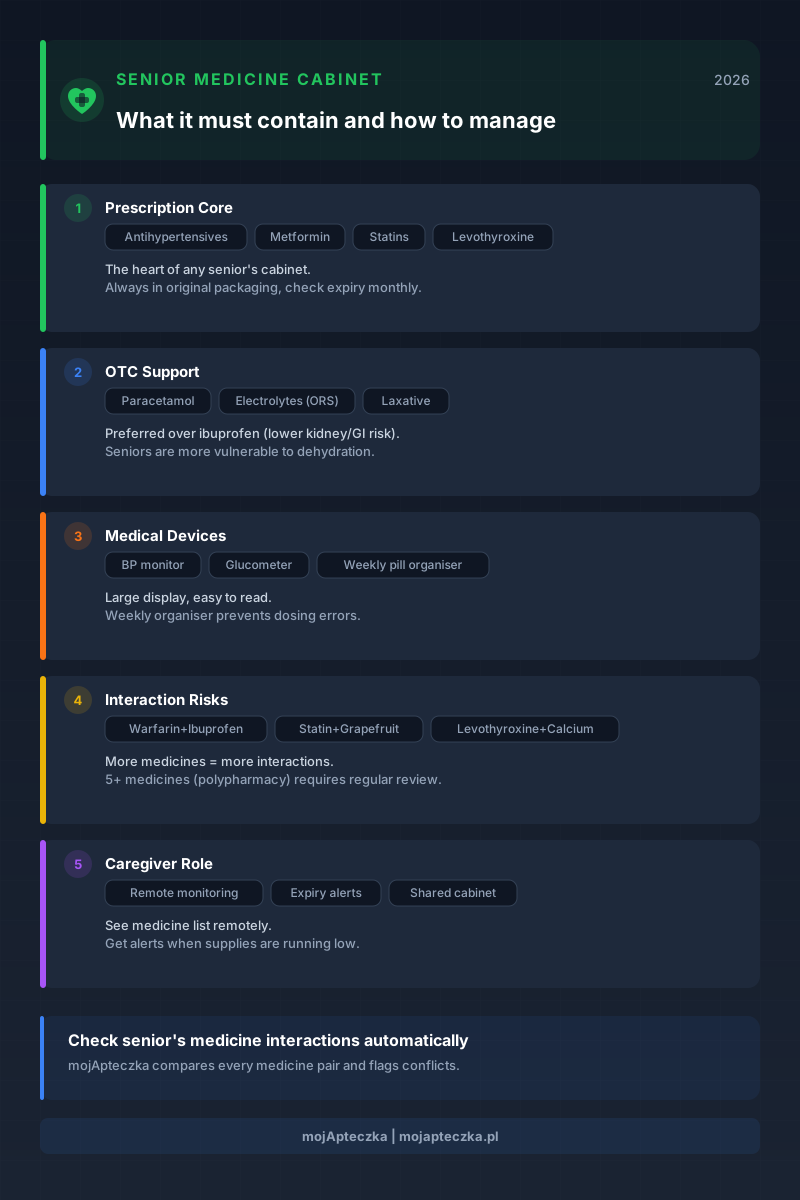
Prescription medicines — the core of the cabinet
This is the most important part. Common prescription-only medicines for older adults include:
- Medicines for high blood pressure (ramipril, amlodipine, losartan).
- Medicines for diabetes (metformin, gliclazide, insulin).
- Statins (atorvastatin, rosuvastatin).
- Thyroid medicines (levothyroxine).
- Medicines for osteoporosis (alendronic acid).
- Anticoagulants (warfarin, apixaban, rivaroxaban).
Rules:
- Store medicines in their original packaging with a legible label.
- Do not mix different medicines in one container (apart from a weekly pill organiser).
- Check expiry dates every month.
- Keep at least a two-week supply — do not wait until a medicine runs out.
OTC medicines — everyday support
- Paracetamol — for pain and fever. Preferred over ibuprofen for older adults because of lower kidney and stomach risk.
- Electrolytes (ORS) — older adults are more prone to dehydration.
- A medicine for constipation — a common problem in older adults, especially when taking opioids.
- Lubricating eye drops — dry-eye syndrome is common.
- Moisturising cream — older adults’ skin is drier and more easily damaged.
Medical accessories
- Blood pressure monitor — choose one with a large, easy-to-read display. Regular monitoring is fundamental for anyone taking blood pressure medicine.
- Glucose meter — if the older adult has diabetes.
- Thermometer — electronic and easy to use.
- Weekly pill organiser — with compartments for different times of day. This is one of the simplest and most effective tools for preventing dosage mistakes.
- Magnifying glass — for reading leaflets and labels.
How to avoid dosage mistakes
Dosage mistakes in older adults can be prevented with simple habits:
1. Weekly pill organiser — every Sunday (or another fixed day), lay out all the medicines for the whole week. If the compartment for a given day is full, the older adult has not taken the medicine. If it is empty, they have. Simple and effective.
2. Fixed time — medicines taken at the same time every day become a habit. Link them to daily activities (breakfast, lunch, bedtime).
3. One list of all medicines — with the name, dose, time, and reason for use. In mojApteczka, you can keep this list digitally — accessible from your phone and easy to share with a doctor or caregiver.
4. Reminders — the reminders feature in mojApteczka displays a notification for each medicine at the scheduled time. For an older adult taking 5 medicines a day at different times, this can be the difference between correct dosing and a missed dose.
5. Medicine review with a doctor — every 6-12 months, it is worth arranging a review of all medicines. The doctor may discontinue medicines that are no longer needed, adjust doses, or replace products that cause interactions.
Drug interactions — the invisible danger
The more medicines, the more interactions. Some pairs are particularly dangerous:
- Warfarin + ibuprofen — dramatically increases the risk of bleeding.
- Metformin + NSAIDs that put strain on the kidneys — risk of lactic acidosis.
- Statins + grapefruit — raises the statin concentration to a toxic level.
- Levothyroxine + calcium/iron — reduces absorption of the thyroid hormone.
In mojApteczka, you can automatically check interactions between all medicines in the medicine cabinet. The system compares every pair of medicines and flags potential conflicts by severity level.
The caregiver role — managing medicines remotely
If you care for an older parent who lives alone, managing their medicines from a distance is one of the biggest challenges. You cannot check every day whether they have taken their medicines, whether something has expired, or whether an important medicine is running out.
The caregiver role in mojApteczka lets you:
- See the older adult’s full medicine list remotely.
- Receive expiry date alerts for their medicines.
- Check interactions between medicines.
- See when the supply of a medicine is low.
This does not replace personal contact and visits, but it gives peace of mind between visits — and lets you react before the problem gets worse.
Scan your parent’s medicine cabinet
You do not have to wait for a problem. The next time you visit an older family member, spend 10 minutes reviewing their medicine cabinet. Check what is there, what has expired, whether there are duplicates, and whether all prescription-only medicines are in stock.
If you want to do it quickly and have the result on your phone, scan the packaging in mojApteczka. The app recognises medicines, checks dates, and shows the full picture. You can then share that medicine cabinet with other family members — because caring for an older adult is often a team effort.
Check mojApteczka for seniors — because good medicine management starts with knowing what the older adult takes and when. The Android app is also available on Google Play.
Medical disclaimer: This article is for informational and educational purposes only. It does not constitute medical advice and does not replace consultation with a doctor or pharmacist. If you have concerns about an older person’s medicines, consult the doctor responsible for their care.
Have questions or suggestions? Write to us: kontakt@mojapteczka.pl
Frequently asked questions
- Which OTC medicines should every older adult have at home?
- The basics include paracetamol (for pain relief), blood pressure medicine (if prescribed), electrolytes (for dehydration), plasters and antiseptic, a thermometer, and a blood pressure monitor. It is important that OTC medicines do not interact with prescription-only medicines — you can check this in mojApteczka.
- How can I avoid dosage mistakes for an older adult?
- Three things are essential — a weekly pill organiser, fixed times for taking medicines, and a central list of all medicines with their dosage. In mojApteczka, you can set medicine reminders and keep a complete list that is also accessible to the caregiver.
- Can a caregiver remotely check an older adult's medicines?
- Yes — in mojApteczka, a caregiver can be added to a shared medicine cabinet and remotely view the medicine list, expiry dates, and alerts. This is especially useful when the older adult lives alone and the caregiver cannot physically check the medicine cabinet.
- What is polypharmacy and why is it dangerous?
- Polypharmacy means taking 5 or more medicines at the same time. It is common among older adults and increases the risk of drug interactions, side effects, and dosage mistakes. Regular interaction checks (for example in mojApteczka) and medicine reviews with a doctor are essential.