Car First Aid Kit — What It Must Contain in 2026
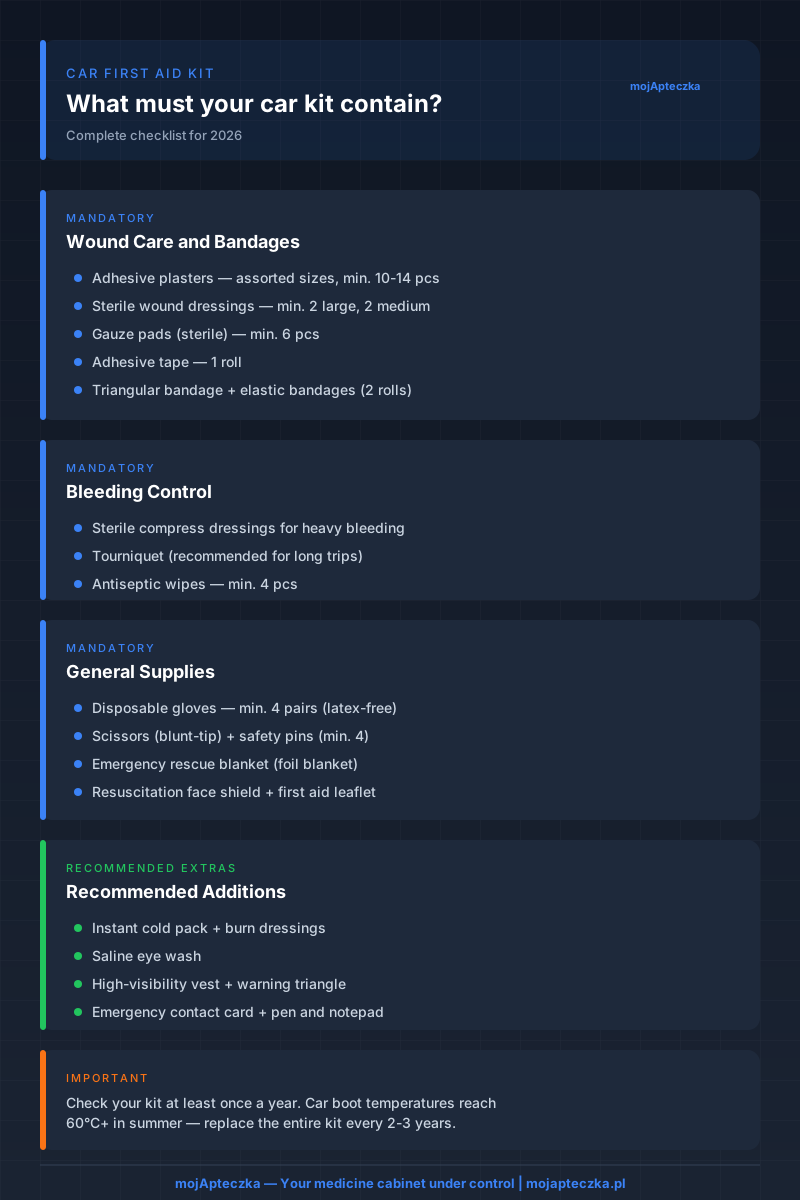
A car first aid kit sits in the boot for months, sometimes years, untouched and unexamined. It is the item drivers assume is fine until they actually need it — at which point they discover that the plasters have dried out, the gloves have cracked, and half the contents expired two years ago.
In many European countries, carrying a first aid kit in your vehicle is not optional. It is a legal requirement, and failing to have one — or having one with expired or incomplete contents — can result in a fine during a routine traffic stop or roadside inspection. More importantly, in a genuine roadside emergency, a well-stocked and current first aid kit can make a real difference before professional help arrives.
Legal Requirements Across Europe
The rules vary significantly by country. If you drive across borders — and many Polish drivers regularly travel to Germany, the Czech Republic, Austria, and beyond — it is worth knowing what each country expects.
Countries where a first aid kit is mandatory
- Germany — a DIN 13164 certified first aid kit is required. Fines for non-compliance range from approximately 5 to 10 euros, but the amount increases if you cannot provide first aid at an accident scene due to missing equipment.
- Austria — a first aid kit conforming to ONORM V 5101 is required. The fine for driving without one can reach up to 72 euros.
- Czech Republic — a first aid kit is mandatory and must include specified contents. Fines apply.
- Croatia — required, with additional items sometimes specified for the summer tourist season.
- France — a first aid kit is officially recommended but not mandatory. However, a warning triangle and a high-visibility vest are required.
- Italy — a warning triangle and high-visibility vest are mandatory. A first aid kit is strongly recommended but not legally required in private vehicles.
- Spain — similar to France and Italy, not mandatory but recommended alongside mandatory warning triangles and vests.
Poland
In Poland, carrying a first aid kit is not legally mandatory for private passenger vehicles. However, it is mandatory for certain vehicle categories, including commercial transport and vehicles used for driver training. Despite the lack of a legal requirement for private cars, the Polish Red Cross and road safety organisations strongly recommend that every vehicle carry one.
The practical reality is simple: legal or not, having a working first aid kit in your car is a basic safety measure that costs very little and can matter enormously when something goes wrong.
What Should a Car First Aid Kit Contain?
Whether you buy a pre-made kit or assemble your own, the contents should cover the most common roadside first aid scenarios: wound care, bleeding control, burn treatment, and patient stabilisation while waiting for emergency services.
Wound care
- Adhesive plasters (assorted sizes, at least 10-14 pieces)
- Sterile wound dressings (individually wrapped, at least 2 large and 2 medium)
- Gauze pads (sterile, at least 6 pieces)
- Adhesive tape (one roll)
- Antiseptic wipes (individually packaged, at least 4)
Bleeding control
- Triangular bandage (for arm slings and pressure dressings, at least 2)
- Elastic bandage (at least 2 rolls, 6-8 cm width)
- Sterile compress dressings for heavy bleeding (at least 1 large)
- Tourniquet (recommended, especially for longer road trips)
Burns
- Burn dressings or gel pads (at least 1-2 pieces)
- Sterile non-adhesive dressings (useful for covering burns without sticking to the wound)
General supplies
- Disposable gloves (at least 4 pairs — latex-free to avoid allergic reactions)
- Scissors (blunt-tip, for cutting clothing and dressings)
- Safety pins (at least 4)
- Emergency rescue blanket (foil blanket — one per usual number of occupants)
- Resuscitation face shield or pocket mask
- First aid instruction leaflet
Recommended additions beyond the standard
A basic kit covers the minimum. If you regularly drive long distances, travel with children, or drive in remote areas, consider adding:
- Instant cold pack — no refrigeration needed, useful for sprains and swelling.
- Saline eye wash — for flushing debris from eyes after an accident or breakdown.
- High-visibility vest — legally required in many countries and essential for roadside safety. Keep one per passenger in the cabin, not the boot — you should not be walking around a busy road in the dark without one.
- Warning triangle — legally required in most EU countries. Many kits include one.
- Pen and notepad — for recording details at an accident scene.
- Emergency contact card — a laminated card listing each occupant’s name, blood type, allergies, and emergency contact number. This is especially useful if you travel with children or elderly passengers.
Maintenance: The Part Everyone Forgets
A first aid kit is only useful if its contents are current and intact. This is where most drivers fail — not in the initial purchase, but in the ongoing maintenance.
Expiry dates
First aid supplies expire. Sterile dressings lose their sterility guarantee. Antiseptic wipes dry out. Adhesive plasters lose their stickiness. Gloves become brittle. Most pre-made kits have an overall expiry date printed on the case, but individual items inside may expire at different times.
Check the expiry dates of your car first aid kit at least once a year. An easy habit is to check it when you change between winter and summer tyres, or during your annual vehicle inspection.
Heat and temperature damage
This is a car-specific problem that does not affect your home medicine cabinet (or at least should not). A car boot can reach 60 degrees Celsius or more on a hot summer day. Over winter, it can drop below freezing. These temperature extremes accelerate the degradation of almost everything in the kit:
- Adhesive products lose their grip.
- Sterile packaging can become compromised.
- Latex and nitrile gloves crack and tear.
- Antiseptic solutions can change in composition.
- Plastic cases become brittle in cold and warp in heat.
There is no perfect solution — the kit needs to stay in the car, and cars experience temperature extremes. What you can do is:
- Store the kit in the cabin rather than the boot when possible (the cabin is usually better insulated and closer to climate control).
- Replace the entire kit more frequently than you would replace a home medicine cabinet — every 2-3 years as a baseline, or sooner if you notice damage.
- Choose a kit with a hard case rather than a soft fabric pouch. Hard cases provide better insulation and protection.
After every use
If you use any item from the kit, replace it as soon as possible. A first aid kit missing its only pair of gloves or its last sterile dressing is a kit that will fail you when you need it next.
Pre-Made Kit vs. DIY: Which Is Better?
Pre-made kits
The advantage of a pre-made kit is compliance. Kits labelled DIN 13164 (Germany) or meeting ONORM V 5101 (Austria) are certified to contain the legally required contents. If you drive across borders, a certified kit removes the guesswork.
Pre-made kits typically cost between 15 and 40 euros depending on the quality and completeness. Budget options often contain the bare minimum with lower-quality materials. Mid-range kits from reputable first aid suppliers tend to offer better dressings, more gloves, and sturdier cases.
DIY kits
Building your own kit lets you include items that pre-made kits often omit: instant cold packs, eye wash, extra gloves, a pocket mask, and items tailored to your family’s needs (children’s supplies, allergy medications). The downside is that you need to verify compliance yourself if you drive in countries with specific legal requirements.
A practical compromise: buy a certified pre-made kit for the legal baseline, then supplement it with additional items based on your travel patterns.
The Connection to Your Home Cabinet
Your car first aid kit and your home medicine cabinet are related inventories. When you audit one, it makes sense to audit the other. Plasters from your home kit can restock the car kit. Expired items from the car should go to the same pharmacy disposal point as expired home medicines.
If your household medicines are tracked in mojApteczka, you can create a separate kit for your car and manage both from the same account. The expiry date alerts work across all your kits, so you receive a notification when the car kit’s dressings are approaching their expiry date — not just when the kitchen paracetamol runs low.
This is particularly useful because car first aid kits are easy to forget. They sit in the boot, out of sight, and only come to mind during the annual inspection or when you actually need one. An automated alert six weeks before the contents expire is far more reliable than human memory.
A Simple Annual Routine
Here is a practical maintenance schedule for your car first aid kit:
- Spring (tyre change / inspection) — open the kit, check all expiry dates, inspect gloves and adhesive items for heat or cold damage. Replace anything that has degraded.
- Before summer holidays — confirm the kit is complete and current, especially if you are driving to a country with mandatory kit requirements. Add any extras needed for your destination.
- Autumn (tyre change) — quick check after the summer heat. Replace items that have been in a hot boot for months.
- After any use — restock immediately. Do not wait until the next scheduled check.
Be Prepared Without Overthinking It
A car first aid kit is one of those things that feels unnecessary until it is not. The cost is modest, the space it takes is minimal, and the maintenance is a fifteen-minute job a few times a year. The alternative — being at the roadside with nothing useful to offer — is something no driver should have to experience.
Check your kit this week. Replace what has expired. Track it alongside your home cabinet at mojapteczka.pl. You can also download the Android app from Google Play.
Questions about first aid kits or medicine tracking? Write to us at kontakt@mojapteczka.pl — we are happy to help!